Hugo Aerts
Hugo Aerts is a medical AI researcher who applies machine learning to medical images for cancer research. He earned an engineering master's at Eindhoven Institute of Technology, completed a PhD at Maastricht University in 2010, and held a postdoctoral fellowship at Harvard School of Public Health. His work has included the PyRadiomics platform, a cancer-imaging foundation model, and FaceAge studies that use facial photographs to estimate biological age and examine cancer outcomes. As of October 2026, he is a Harvard Medical School professor of radiation oncology at Dana-Farber Cancer Institute, directs the Artificial Intelligence in Medicine (AIM) Program at Mass General Brigham, and is an adjunct professor at Maastricht University.
- Now at
- Harvard University, Dana-Farber Cancer Institute, Mass General Brigham and Maastricht University
- Works
- 624
- Citations
- 63,581
- h-index
- 94
- Badges
Publication numbers from OpenAlex, as of 27 October 2026.
Timeline
-
2010
A PhD in medical imaging
At Maastricht University's Faculty of Health, Medicine and Life Sciences, he defends a doctoral thesis on molecular imaging and drug uptake in 2010, with supervisors Ph. Lambin and D.K. De Ruysscher and co-supervisor A.L.A.J. Dekker. His training includes an engineering master's at Eindhoven Institute of Technology and a postdoctoral fellowship at Harvard School of Public Health.
-
2014–2017
Radiomics and PyRadiomics
His 2014 study measures 440 radiomic features from CT scans of 1,019 patients with lung or head-and-neck cancer and finds prognostic value in many features. A 2017 paper he coauthors introduces PyRadiomics, an open-source Python platform for extracting features from medical images, demonstrated on lung lesions.
-
2020
An ERC grant in oncology
A 2020 international consortium led by Aerts and AIM investigators receives an ERC grant from the European Union's Horizon program. With Maastricht University collaborators, the team applies AI and deep learning to tumor images to develop imaging biomarkers that can help guide cancer-treatment decisions.
-
2022
Top 1% citation recognition
Web of Science recognizes him among the world's top 1% most-cited scientists in 2022.
-
2024
A cancer imaging model
In 2024, he serves as corresponding author of a paper on a cancer-imaging foundation model. It uses self-supervised pretraining on 11,467 lesions identified on CT imaging and supports downstream diagnostic and prognostic biomarker tasks, especially when training data are small.
-
2025
FaceAge from photographs
FaceAge uses facial photographs to estimate biological age and cancer-survival time; in 2025, he co-senior authors the study. It finds that FaceAge scores above chronological age are associated with worse outcomes across several cancer types.
-
April 2026
A second FaceAge study
In April 2026, he co-senior authors the Nature Communications follow-up study, which introduces FaceAge 2.0 and links slower face aging between two photographs to better cancer survival. FaceAge 2.0 is trained on 40 million images of faces from around the world, 700,000 images of faces of known age, and images of 24,000 cancer patients with known outcomes.
-
As of October 2026
Harvard professor and AIM director
As of October 2026, he is a Harvard Medical School professor of radiation oncology at Dana-Farber Cancer Institute, directs the Artificial Intelligence in Medicine (AIM) Program at Mass General Brigham, and is an adjunct professor at Maastricht University.
Career
- NowHarvard UniversityProfessor of Radiation Oncology
- NowDana-Farber Cancer InstituteProfessor of Radiation Oncology, Harvard Medical School at Dana-Farber Cancer Institute
- NowMass General BrighamDirector, Artificial Intelligence in Medicine (AIM) Program
- NowMaastricht UniversityAdjunct Professor
- Harvard UniversityPostdoctoral Fellow
Education
- 2010Maastricht UniversityPhD
- Eindhoven University of TechnologyMaster's in engineering
Colleagues
Sources and credits
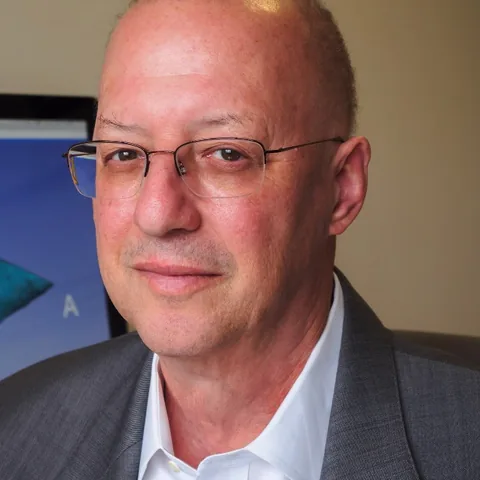
Photo: We have no published photo of Hugo Aerts yet. Send us a free-licensed photo.
- Wetenschapsagenda december 2010 — Maastricht University
- Hugo Aerts — AIM - Harvard
- AI Key to Noninvasive Biomarker Development in Lung Cancer — RSNA
- Computational Radiomics System to Decode the Radiographic Phenotype — PMC
- Horizon 2020 ERC awarded to AIM scientists — AIM - Harvard
- Artificial Intelligence Drives New Approaches to Cancer Care — Mass General Brigham
- New AI tool predicts biological age by looking at a face — Harvard Gazette
- Predicting cancer outcomes with a selfie — Harvard Gazette