Hongseok Namkoong
Also known as Hong
Researcher Hongseok Namkoong builds trustworthy AI for real-world decision-making. In 2019, he was a Stanford PhD candidate, with an M.S. in statistics from Stanford and a B.S. in industrial engineering and mathematics from KAIST. He coauthored a 2017 NeurIPS best-paper work on variance regularization and a 2018 ICML runner-up paper on fairness without demographic labels. He later coauthored Model Soups at ICML in 2022, PersonalLLM at ICLR in 2025, and MBABench, a NeurIPS 2026 benchmark for LLM agents. Before joining Columbia, he spent a year as a research scientist on Meta's Adaptive Experimentation team; he is an associate professor in Columbia Business School's Decision, Risk, and Operations division and a member of the Columbia Data Science Institute.
Timeline
-
2017
Variance-based regularization
With John C. Duchi, he coauthors Variance-based Regularization with Convex Objectives in 2017. The paper develops a convex surrogate for variance in risk minimization and stochastic optimization, and its conference version wins the NeurIPS 2017 Best Paper Award.
-
2018
Fairness without demographics
In 2018, he coauthors Fairness Without Demographics in Repeated Loss Minimization with Tatsunori Hashimoto, Megha Srivastava, and Percy Liang. The method uses distributionally robust optimization to control minority-group risk at each step while remaining oblivious to group identity. The paper wins an ICML Best Paper Runner-up Award.
-
February 2019
A Stanford PhD candidate
In February 2019, he presents work on learning models with uniform subpopulation performance as a PhD candidate in Stanford's Department of Management Science & Engineering, advised by John Duchi and Peter Glynn. He already holds an M.S. in statistics from Stanford and a B.S. in industrial engineering and mathematics from KAIST.
-
2022
Model soups
In 2022, he coauthors Model Soups at ICML, showing that averaging weights from fine-tuned models can improve accuracy and robustness.
-
2025
PersonalLLM at ICLR
In 2025, he coauthors PersonalLLM: Tailoring LLMs to Individual Preferences, an ICLR paper on adapting language models to individual preferences.
-
2026
MBABench for LLM agents
In 2026, he coauthors MBABench, a NeurIPS 2026 paper that evaluates LLM agents on end-to-end finance spreadsheet tasks. The benchmark finds that even the strongest agents fall short of professional finance standards, and performance drops as tasks become harder.
-
As of October 2026
Associate professor at Columbia
As of October 2026, he is an associate professor in Columbia Business School's Decision, Risk, and Operations division and a member of the Columbia Data Science Institute. Before joining Columbia, he spends a year as a research scientist on Meta's Adaptive Experimentation team. His research builds trustworthy AI systems for real-world decision-making.
Colleagues
Sources and credits
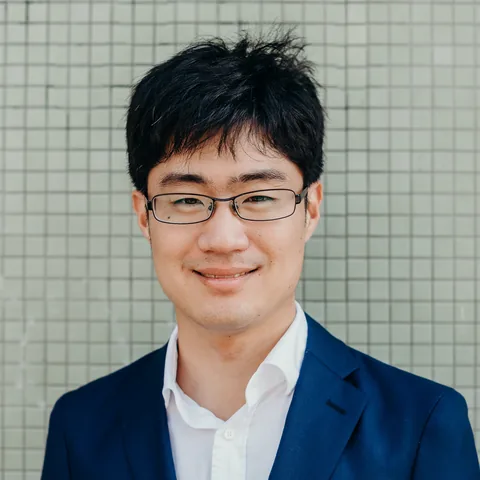
Photo: We have no published photo of Hongseok Namkoong yet. Send us a free-licensed photo.
- Papers | Hongseok Namkoong
- Variance-based Regularization with Convex Objectives
- Fairness Without Demographics in Repeated Loss Minimization
- ORIE Colloquium: Hongseok Namkoong (Stanford) - Learning Models with Uniform Subpopulation Performance
- Model soups: averaging weights of multiple fine-tuned models improves accuracy without increasing inference time
- MBABench: Evaluating LLM Agents on End-to-End Spreadsheet Tasks in Finance
- Formal Bio | Hongseok Namkoong
- Hongseok Namkoong