Herbert Gelernter
Also known as Herb Gelernter, Herbert Leo Gelernter, Herbert L. Gelernter
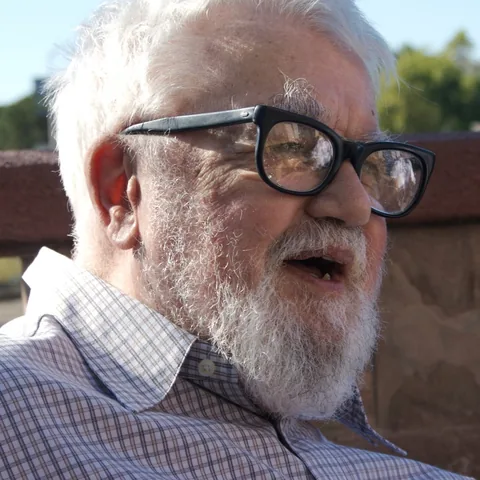
Herbert Gelernter was an American computer scientist who wrote some of the first artificial intelligence software, including a machine that proved theorems in plane geometry. After a Ph.D. at the University of Rochester in 1957, he worked at IBM, where he teamed with Nathaniel Rochester on the Geometry Theorem Prover in 1958. For the program, he and Carl Gerberich created FLPL, a list processing language built within FORTRAN. From 1966 to 1997 he served on the faculty of Stony Brook University, where he was a founding member of the computer science department and led SYNCHEM, an expert system that searched for routes to synthesize organic molecules. He died in 2015.
Timeline
-
1929–1957
A Ph.D. at Rochester
Born in December 1929, he earns a B.S. at Brooklyn College in 1951 and a Ph.D. at the University of Rochester in 1957. His research spans theoretical physics, artificial intelligence, expert systems and machine learning.
-
1958
The Geometry Theorem Prover
At IBM, he writes some of the first artificial intelligence software, in projects supervised by Nathaniel Rochester. In 1958, the two team up on the Geometry Theorem Prover, a machine that proves theorems in elementary Euclidean plane geometry with the ingenuity of a clever high school student. Like Logic Theorist, it searches for proofs with heuristics, handling parallel lines, congruence, and equality and inequality of segments and angles.
-
By 1960
The FORTRAN List Processing Language
For IBM's plane geometry project, he and Nathaniel Rochester decide on John McCarthy's advice to implement a list processing language within FORTRAN. With Carl Gerberich, he creates FLPL, which the geometry program uses successfully. In 1960, he publishes a paper on the language in the Journal of the ACM with J. R. Hansen and C. L. Gerberich.
-
1960–1961
A vidicon system at CERN
During an extended visit to CERN in 1960 and 1961, he develops a prototype vidicon system that records spark-chamber events with a television-camera tube and stores them as digitized data on magnetic tape. The work stimulates the development of a data-handling system for spark chambers in early 1961.
-
1966–1997
Professor at Stony Brook
He is a founding member of the Department of Computer Science at Stony Brook University and serves on its faculty from 1966 to 1997.
-
1970s–1990
The SYNCHEM synthesis planner
In the early 1970s, he leads the development of SYNCHEM at Stony Brook, an expert system that searches for routes to the total synthesis of organic molecules using a knowledge base of graph transforms, rules and heuristics for organic reactions. He reports experiments with it in Science in September 1977, and in 1978 he coauthors a paper on chemical transforms in SYNCHEM2. In 1990, he coauthors work on building and refining a knowledge base for synthetic organic chemistry through inductive and deductive machine learning.
-
2015
Professor emeritus at Stony Brook
He dies in May 2015, a Professor Emeritus of Computer Science at Stony Brook.
Colleagues
Sources and credits
Photo: We have no published photo of Herbert Gelernter yet. Send us a free-licensed photo.