George H. Chen
Also known as George Chen
George H. Chen is an associate professor at Carnegie Mellon University whose machine learning research focuses on predicting when events occur, especially in healthcare. After studying engineering and mathematics at UC Berkeley, he earned an MIT doctorate in 2015 and worked on machine learning for rural electrification as an MITx postdoctoral teaching fellow in 2016. He coauthored Explaining the Success of Nearest Neighbor Methods in Prediction with Devavrat Shah in 2018, developed deep kernel survival analysis in 2020 and survival kernets in 2024, and wrote a 2024 monograph on neural network models for time-to-event prediction. With Xiaobin Shen, he received the Models and Methods Best Paper Award at Machine Learning for Health in 2025.
- Now at
- Carnegie Mellon University and CoolCrop
- Works
- 65
- Citations
- 1,248
- h-index
- 15
- Badges
Publication numbers from OpenAlex, as of 27 October 2026.
Timeline
-
2010
Engineering and mathematics at Berkeley
He earns a BS at the University of California, Berkeley, in 2010, with dual majors in Electrical Engineering and Computer Sciences and Engineering Mathematics and Statistics.
-
2012–2015
Graduate study at MIT
At MIT's Department of Electrical Engineering and Computer Science, he earns an SM in 2012, an Electrical Engineer degree in 2014, and a PhD in 2015. He receives MIT's Goodwin Medal for graduate student teaching in 2015.
-
January 2016
MITx fellow and GridForm
In January 2016, he works as an MITx postdoctoral teaching fellow and helps develop GridForm at MIT's Tata Center for Technology and Design. The system uses satellite images and machine learning to model villages and plan microgrids for rural India.
-
May 2018
A book on nearest neighbors
In May 2018, he and Devavrat Shah publish Explaining the Success of Nearest Neighbor Methods in Prediction. The monograph explains statistical guarantees for predicting from similar training examples and methods for scaling nearest-neighbor search.
-
August 2020
Deep kernel survival analysis
He introduces Deep Kernel Survival Analysis and Subject-Specific Survival Time Prediction Intervals at the 2020 Machine Learning for Healthcare conference. The method uses a neural network to learn how individuals are compared and produces intervals that express uncertainty in predicted survival times.
-
March 2022
An NSF CAREER award
In 2022, while an assistant professor of information systems at Heinz College and affiliated with Carnegie Mellon's Machine Learning Department, he receives an NSF CAREER award of nearly $585,000. The project develops machine learning models to predict patient recovery times and hospital stays.
-
2024
Survival kernets
In 2024, he publishes Survival Kernets: Scalable and Interpretable Deep Kernel Survival Analysis with an Accuracy Guarantee in the Journal of Machine Learning Research. The model groups training data into clusters that can be displayed to help explain individual survival predictions, and he establishes a bound on prediction error for a special case.
-
October 2024
A guide to survival models
In October 2024, he releases An Introduction to Deep Survival Analysis Models for Predicting Time-to-Event Outcomes. The monograph explains neural network methods for predicting when events occur and covers fairness, causal reasoning, interpretability, and statistical guarantees.
-
December 2025
An ML4H paper award
With Xiaobin Shen, he receives the Models and Methods Best Paper Award at Machine Learning for Health in December 2025 for Deep Kernel Aalen-Johansen Estimator. Their paper presents an interpretable neural network framework for competing risks.
-
As of October 2026
Associate professor at Carnegie Mellon
As of October 2026, he is an associate professor at Carnegie Mellon University's Heinz College of Information Systems and Public Policy and an affiliated faculty member of its Machine Learning Department. His research focuses on trustworthy machine learning for predicting time-to-event outcomes and analyzing medical time series. He is also a co-founder and adviser to CoolCrop, which provides farmers in India with cold storage and market forecasts.
Career
- NowCarnegie Mellon UniversityAssociate Professor, Affiliated Faculty Member
- NowCoolCropCo-founder and Adviser
- 2016Massachusetts Institute of TechnologyMITx Postdoctoral Teaching Fellow
Education
- 2015Massachusetts Institute of TechnologyPhD
- 2014Massachusetts Institute of TechnologyElectrical Engineer degree
- 2012Massachusetts Institute of TechnologySM
- 2010University of California, BerkeleyBS
Colleagues
- Roni RosenfeldCarnegie Mellon University, 2017–2026
- Peter SpirtesCarnegie Mellon University, 2017–2026
- Artur W. DubrawskiCarnegie Mellon University, 2017–2026
- Kamal Youcef-ToumiMassachusetts Institute of Technology, 2012–2015
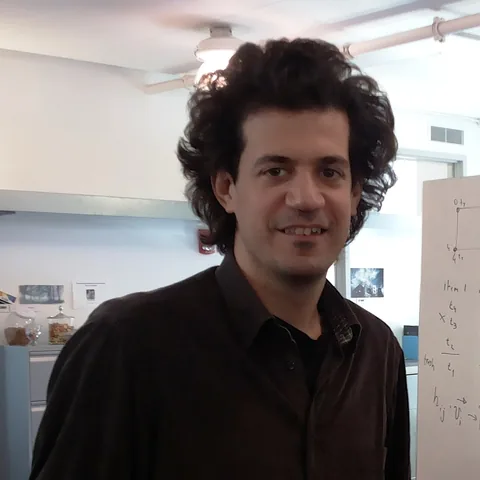 Constantinos DaskalakisMassachusetts Institute of Technology, 2012–2015
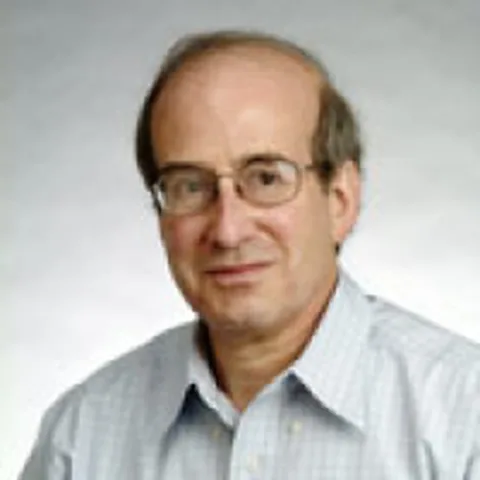 Alan S. WillskyMassachusetts Institute of Technology, 2012–2015
Sources and credits
Photo: We have no published photo of George H. Chen yet. Send us a free-licensed photo.
- George Chen | Carnegie Mellon University's Heinz College
- Going off grid: Tata researchers tackle rural electrification | MIT News | Massachusetts Institute of Technology
- [2502.15900] Explaining the Success of Nearest Neighbor Methods in Prediction
- Deep Kernel Survival Analysis and Subject-Specific Survival Time Prediction Intervals
- News Briefs - The Piper - Carnegie Mellon University
- Survival Kernets: Scalable and Interpretable Deep Kernel Survival Analysis with an Accuracy Guarantee
- [2410.01086] An Introduction to Deep Survival Analysis Models for Predicting Time-to-Event Outcomes
- George H. Chen
- George H. Chen