Demba Ba
Demba Ba is a Harvard electrical engineer whose research connects deep learning with computational neuroscience. He studied electrical engineering at the University of Maryland and electrical engineering and computer science at MIT, joined Harvard SEAS in 2015, and became Director of Undergraduate Studies in Bioengineering in 2020. His work includes a 2012 NeurIPS spotlight, algorithms for deeply-sparse signal representations, and DUNL, a machine-learning framework for analyzing neural signals. As of October 2026, he is a Kempner Institute associate faculty member and Gordon McKay Professor of Electrical Engineering at Harvard, where his research focuses on computational neuroscience, model-based deep learning, and signal processing.
- Now at
- Harvard University
- Works
- 120
- Citations
- 1,601
- h-index
- 18
Publication numbers from OpenAlex, as of 27 October 2026.
Timeline
-
1999–2004
Dakar, Maryland and MIT
Born in Dakar, Senegal, he moves to Maryland for undergraduate study in 1999 and to Boston in 2004 to pursue a PhD at MIT. He earns a bachelor's degree in electrical engineering at Maryland and pursues master's and PhD degrees in EECS at MIT.
-
2007–2014
Research at MIT's neuroscience lab
From 2007 to 2014, he works as a research assistant and postdoctoral fellow at MIT's Neuroscience Statistics Research Lab.
-
2012
A NeurIPS spotlight presentation
In 2012, he gives a spotlight presentation at Advances in Neural Information Processing Systems 25.
-
2015–2020
Joining Harvard SEAS
He joins Harvard SEAS as an assistant professor in 2015 and is named Director of Undergraduate Studies in Bioengineering in 2020.
-
2016–2021
A Sloan fellowship and teaching award
The Alfred P. Sloan Foundation names him a 2016 Fellow in Neuroscience. Harvard's Faculty of Arts and Sciences gives him the Roslyn Abramson Award for Outstanding Undergraduate Teaching in 2021.
-
2018–2020
Deeply-sparse signal representations
In 2018, he posts “Deeply-Sparse Signal rePresentations” on arXiv and revises it in 2020. The paper studies recovery of layer matrices in cascaded sparse-coding models and proposes two algorithms with theoretical guarantees and sample-complexity bounds.
-
2023
Tenure and a full professorship
In 2023, Harvard approves him for a full professorship with tenure in Electrical Engineering and Bioengineering.
-
2025
DUNL for neural data
In April 2025, he leads the study that introduces Deconvolutional Unrolled Neural Learning (DUNL), a machine-learning framework that decomposes time series of neural signals into simple elements to help researchers understand how neurons respond to external events.
-
As of October 2026
Gordon McKay Professor at Harvard
He is Kempner Institute Associate Faculty, Gordon McKay Professor of Electrical Engineering, and Director of Undergraduate Studies in Electrical Engineering at Harvard SEAS. His current research focuses on computational neuroscience, model-based deep learning, and signal processing.
Career
- NowHarvard UniversityGordon McKay Professor of Electrical Engineering, Associate Faculty Member
- 2007–2014Massachusetts Institute of TechnologyResearch Assistant and Postdoctoral Fellow
Education
- From 2004Massachusetts Institute of TechnologyMaster's and PhD in EECS
- From 1999University of MarylandBachelor's degree in Electrical Engineering
Colleagues
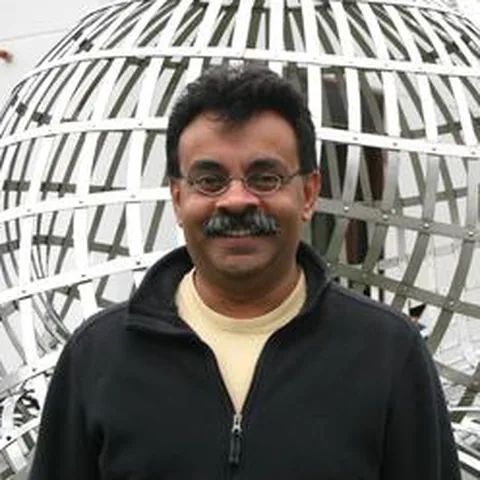 Madhu SudanMassachusetts Institute of Technology, 2007–2014
- Kamal Youcef-ToumiMassachusetts Institute of Technology, 2007–2014
 Peter SzolovitsMassachusetts Institute of Technology, 2007–2014
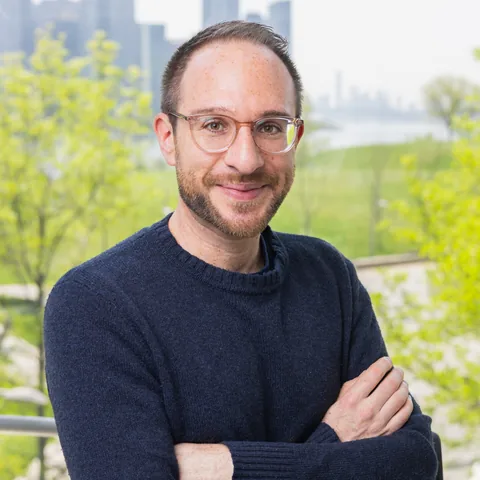 Alexander RushHarvard University, 2015–2020
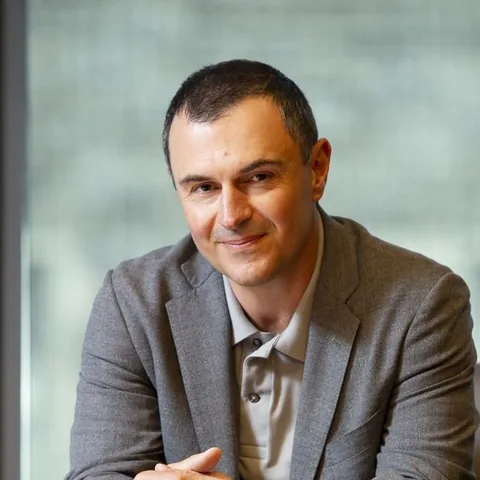 Edoardo M. AiroldiHarvard University, 2015–2020
- Soroush SaghafianHarvard University, 2015–2020
Sources and credits
Photo: We have no published photo of Demba Ba yet. Send us a free-licensed photo.