Daniel Zügner
Daniel Zügner is a Senior Researcher at Microsoft Research AI for Science whose work spans graph learning and materials discovery. He coauthored early studies of adversarial attacks on graph neural networks and completed a 2022 PhD at the Technical University of Munich. At Microsoft, he helped build MatterGen's machine-learning architecture for property-guided materials design; its Nature paper reported an experimentally synthesized structure with a measured property value within 20% of its target. In May 2026, he coauthored MatterSim-MT, a model for materials simulation and property characterization trained on more than 35 million structures.
Timeline
-
2018
Attacking graph classifiers
In 2018, he and Amir Akbarnejad and Stephan Günnemann study adversarial attacks on attributed graphs and introduce Nettack, an algorithm for perturbing node features and graph structure.
-
2019
Optimizing graph attacks
In 2019, he and Stephan Günnemann use meta-gradients to optimize training-time attacks that perturb graph structure in graph neural networks.
-
2022
A doctorate in graph learning
In 2022, he completes a PhD at the Technical University of Munich, specializing in machine learning and graph neural networks, and begins his work in AI for Science.
-
December 2023
Designing materials with MatterGen
In December 2023, he coauthors a Microsoft Research paper introducing MatterGen, a diffusion model that generates stable inorganic materials and can be fine-tuned for target-property constraints.
-
January 2025
MatterGen's Nature paper
In January 2025, he contributes to MatterGen's Nature paper by helping build its machine-learning architecture for property-guided design. The team reports an experimentally synthesized generated structure with a measured property value within 20% of its target.
-
May 2026
Extending materials simulation
In May 2026, he coauthors MatterSim-MT, a multi-task model for in silico materials simulation and property characterization trained on more than 35 million first-principles-labeled structures.
-
As of October 2026
Senior Researcher at Microsoft
As of October 2026, he is a Senior Researcher at Microsoft Research AI for Science.
Career
- Since 2023MicrosoftSenior Researcher
Education
Most-cited works
- Adversarial Attacks on Neural Networks for Graph DataWith Stephan Günnemann
- A generative model for inorganic materials designWith Andrew Fowler and Claudio Zeni
- Adversarial Attacks on Graph Neural Networks via Meta LearningWith Stephan Günnemann
- NetGAN: Generating Graphs via Random WalksWith Stephan Günnemann
- Adversarial Attacks on Graph Neural NetworksWith Stephan Günnemann
Colleagues




Sources and credits
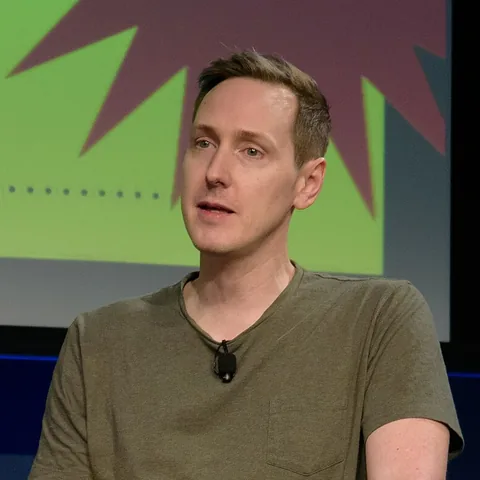
Photo: We have no published photo of Daniel Zügner yet. Send us a free-licensed photo.
- Adversarial Attacks on Neural Networks for Graph Data
- Adversarial Attacks on Graph Neural Networks via Meta Learning
- AI meets materials discovery: The vision behind MatterGen and MatterSim
- MatterGen: a generative model for inorganic materials design
- A generative model for inorganic materials design
- Advancing AI for materials with MatterSim: experimental synthesis, faster simulation, and multi-task models
- MatterSim-MT: A multi-task foundation model for in silico materials characterization
- Daniel Zügner at Microsoft Research