Cyril Zhang
Cyril Zhang is a computer scientist whose work connects learning theory, transformers, and language models. He grew up in Toronto, earned a computer-science bachelor's degree at Yale, and completed a Princeton Ph.D. under Elad Hazan. His research ranges from transformers that emulate automata to Microsoft's Phi-3 and Phi-4 models and language-model self-improvement. He also coauthored OpenAI's GPT-5 system card. As of October 2026, he is a researcher at OpenAI after earlier work at Microsoft Research NYC.
Timeline
-
2013
A fourth-place Yale team
He competes for Yale Team 1 at the ACM International Programming Contest in 2013, and the team finishes fourth overall.
-
2015–2020
Computer science at Yale and Princeton
He grows up in Toronto and earns a computer-science B.S. at Yale in 2015. At Princeton, he completes a computer-science Ph.D. in 2020 with Elad Hazan as his adviser.
-
2023
Transformers learn shortcuts to automata
In 2023, he coauthors “Transformers Learn Shortcuts to Automata,” an ICLR paper on how low-depth transformers represent finite-state automata computations.
-
2024
Phi-3 for phones
In 2024, he coauthors Microsoft Research's Phi-3 technical report, which introduces Phi-3-mini, a 3.8-billion-parameter language model small enough to run on a phone.
-
December 2024
A 14-billion-parameter Phi-4
In December 2024, he coauthors the Phi-4 technical report, which presents a 14-billion-parameter language model trained with a focus on data quality.
-
2025
Self-improvement through sharpening
In 2025, he coauthors the ICLR paper “Self-Improvement in Language Models: The Sharpening Mechanism.” The work studies using a model as its own verifier during post-training.
-
August 2025
The GPT-5 system card
In August 2025, he coauthors the OpenAI GPT-5 system card, released alongside the model launch. It describes a unified system with a fast model, a deeper reasoning model, and a real-time router.
-
As of October 2026
Researcher at OpenAI
As of October 2026, he is a researcher at OpenAI after earlier work at Microsoft Research NYC. His research focuses on deep-learning theory at frontier scales.
Career
Education
- 2020Princeton UniversityPhD
- 2015Yale UniversityB.S.
Most-cited works
- Phi-3 Technical Report: A Highly Capable Language Model Locally on Your PhoneWith Adil Salim, Ahmed Awadallah, Caio César Teodoro Mendes, Ce Liu, Corby Rosset and Ronen Eldan
- Spectral Filtering for General Linear Dynamical SystemsWith Elad Hazan
- Learning Linear Dynamical Systems via Spectral FilteringWith Elad Hazan
- Efficient Regret Minimization in Non-Convex GamesWith Elad Hazan
- Phi-4 Technical ReportWith Adil Salim, Caio César Teodoro Mendes, Dingli Yu, Ronen Eldan, Shital Shah and Sébastien Bubeck
Colleagues
Sources and credits
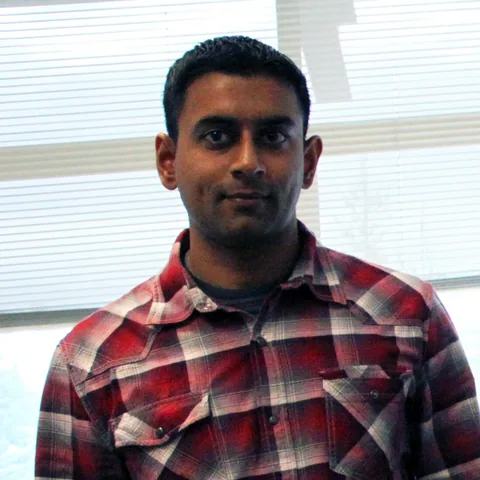
Photo: We have no published photo of Cyril Zhang yet. Send us a free-licensed photo.