Anshul Kundaje
Anshul Kundaje is an associate professor of genetics and computer science at Stanford who develops deep learning models to explain how DNA controls gene activity. He completed his computer science PhD at Columbia in 2008, worked at Stanford, MIT and the Broad Institute, and joined Stanford's faculty in 2013. His work included the Roadmap Epigenomics Project, the 2017 DeepLIFT method for explaining neural network predictions, and the 2021 BPNet model for learning DNA-binding patterns. In 2025, he coauthored the ChromBPNet preprint, which separated experimental bias from regulatory DNA signals and helped interpret genetic variants linked to disease.
- Now at
- Stanford University
- Works
- 723
- Citations
- 72,416
- h-index
- 88
Publication numbers from OpenAlex, as of 27 October 2026.
Timeline
-
2003–2008
A doctorate at Columbia
In 2008, he completes a PhD in computer science at Columbia University under Christina Leslie. His doctoral work uses boosting algorithms to model gene regulation in yeast.
-
2008–2013
Postdoctoral work and Stanford faculty
From 2008 to 2012, he conducts postdoctoral research in Stanford's Computer Science Department with Serafim Batzoglou and Arend Sidow, serving as lead data coordinator and primary integrative analyst for the human ENCODE consortium. In 2013, he works as a research scientist in MIT's Computer Science Department and at the Broad Institute of MIT and Harvard with Manolis Kellis's group. He joins Stanford's faculty in September 2013.
-
2014
A Sloan Research Fellowship
In 2014, he receives a Sloan Research Fellowship, which provides $50,000 for research costs.
-
2015
The Roadmap Epigenomics Project
In 2015, he leads computational analysis for the Roadmap Epigenomics Project and is a lead author of its main integrative analysis paper in Nature. The project maps regulatory features across adult and fetal human cells and tissues to help interpret the genetic basis of disease.
-
2016
An NIH New Innovator Award
In 2016, he wins the NIH Director's New Innovator Award. The award supports his work on deep neural networks to decode noncoding DNA and identify genetic variation associated with disease.
-
2017
Explaining predictions with DeepLIFT
In 2017, with Avanti Shrikumar and Peyton Greenside, he publishes DeepLIFT at the International Conference on Machine Learning. The method assigns contribution scores to input features to explain a neural network's prediction.
-
2019
The Chen Award of Excellence
In 2019, he receives the Chen Award of Excellence from the Human Genome Organization.
-
2021
Reading DNA with BPNet
In 2021, he coauthors BPNet, a deep learning model that predicts transcription-factor binding from DNA sequence at the level of individual bases. The team develops interpretation tools to identify DNA patterns and rules for cooperative binding.
-
January 2025
Introducing ChromBPNet
In January 2025, he coauthors the ChromBPNet preprint with Anusri Pampari and colleagues. The deep learning model separates experimental enzyme bias from regulatory DNA signals and helps interpret genetic variants associated with traits and rare diseases.
-
As of October 2026
Associate professor at Stanford
In October 2026, he is an associate professor of genetics and computer science at Stanford, where his lab develops machine learning models and interpretation frameworks for gene regulation and disease. He also co-chairs the Impact of Genomic Variation on Function consortium's steering committee and co-leads the Multi-omics in Health and Disease consortium's Data Analysis and Coordination Center.
Career
- NowStanford UniversityAssociate professor of genetics and computer science
- 2013–2015MIT CSAIL
- 2012–2015Massachusetts Institute of TechnologyResearch scientist
- Broad InstituteResearch scientist
Education
- 2008Columbia UniversityPhD in computer science
Colleagues
- Manolis KellisMassachusetts Institute of Technology, 2012–2015
- Daniel L. RubinStanford University, 2012–2026
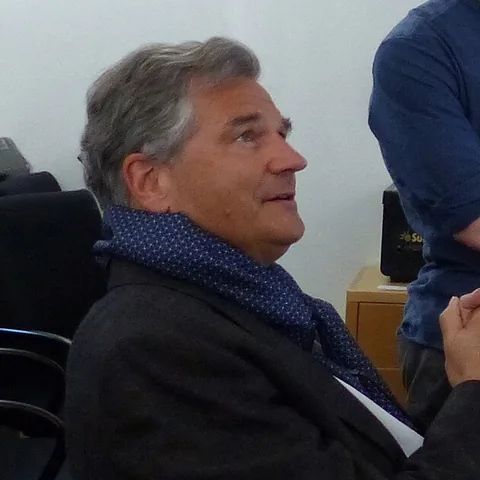 Bernd GirodStanford University, 2012–2026
- Mark MusenStanford University, 2012–2026
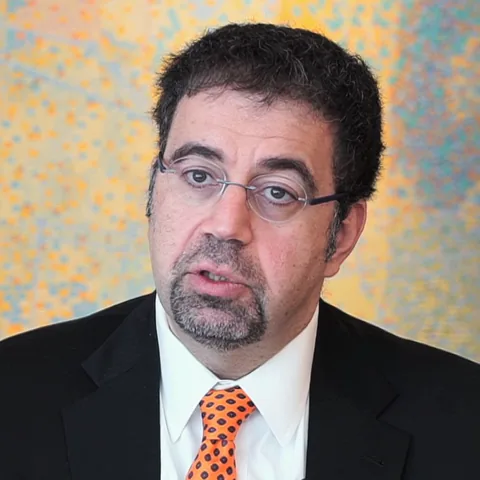 Daron AcemogluMassachusetts Institute of Technology, 2012–2015
- Russ TedrakeMassachusetts Institute of Technology, 2012–2015
Sources and credits
Photo: We have no published photo of Anshul Kundaje yet. Send us a free-licensed photo.
- Spring 2013 | Department of Computer Science, Columbia University
- Project maps human epigenome, discovers immune system role in Alzheimer's
- Four faculty members awarded Sloan Research Fellowships
- Seven researchers receive NIH grants for 'high-risk' work
- Learning Important Features Through Propagating Activation Differences
- Chen Awards - HUGO International
- Anshul Kundaje's Profile | Stanford Profiles
- ChromBPNet: bias factorized, base-resolution deep learning models of chromatin accessibility reveal cis-regulatory sequence syntax, transcription factor footprints and regulatory variants - PMC
- Anshul Kundaje | Computer Science