Andrea Zanette
Andrea Zanette is an AI researcher who studies reinforcement learning and efficient reasoning in language models. After working in high-performance computing, he completed his PhD at Stanford in 2021 and received the Gene Golub Doctoral Dissertation Award. He then worked as a postdoctoral researcher at UC Berkeley and coauthored ArCHer, a 2024 method for training language model agents across multiple turns. In 2025, he and Daman Arora developed a training method that reduced the computation reasoning models used while preserving most of their accuracy. Since 2024, he is an assistant professor in Carnegie Mellon University's Department of Electrical and Computer Engineering, with a courtesy appointment in the Machine Learning Department.
- Works
- 47
- Citations
- 260
- h-index
- 9
Publication numbers from OpenAlex, as of 27 October 2026.
Timeline
-
By 2017
Software and fluid dynamics
Before beginning his Stanford PhD in 2017, he works as a software developer in high-performance computing and at the von Karman Institute for Fluid Dynamics.
-
2017–2021
A Stanford doctorate
He studies at Stanford University's Institute for Computational and Mathematical Engineering from 2017 to 2021, completing his PhD under Emma Brunskill and Mykel J. Kochenderfer. His earlier education includes a bachelor's degree in mechanical engineering. His doctoral research examines exploration, function approximation, adaptivity and learning from offline data.
-
2021
A dissertation award
In 2021, he receives Stanford's Gene Golub Doctoral Dissertation Award for his research on efficient exploration in reinforcement learning.
-
2021
Limits of batch reinforcement learning
His 2021 ICML paper, “Exponential Lower Bounds for Batch Reinforcement Learning,” studies learning from previously collected data. It establishes settings with linear representations of action values in which batch reinforcement learning requires exponentially more data than online learning.
-
2022
A Berkeley research fellowship
In 2022, he participates as a research fellow in the Learning and Games program at UC Berkeley's Simons Institute for the Theory of Computing. As a postdoctoral researcher at the institute, he works primarily with Martin Wainwright on the foundations of reinforcement learning.
-
2024
ArCHer trains language model agents
In 2024, he coauthors ArCHer with Yifei Zhou, Jiayi Pan, Sergey Levine and Aviral Kumar at ICML. The framework trains language model agents across multiple turns, combining a high-level value function with a policy that produces individual tokens.
-
2025
Training models to reason efficiently
With Daman Arora, he coauthors “Training Language Models to Reason Efficiently” in 2025. The method uses reinforcement learning to allocate computation according to task complexity; experiments on two open-weight reasoning models reduce inference costs while preserving most of their accuracy.
-
2026
Maximum likelihood reinforcement learning
In 2026, he coauthors “Maximum Likelihood Reinforcement Learning,” introducing MaxRL. The method uses sampled outputs to connect reinforcement learning with maximum likelihood training, and its objective approaches maximum likelihood as more computation is used for sampling.
-
Since 2024
Assistant professor at Carnegie Mellon
He joins Carnegie Mellon University's Department of Electrical and Computer Engineering as an assistant professor in 2024, with a courtesy appointment in the Machine Learning Department. In 2026, he continues in this role and studies foundation models, including reasoning, alignment, efficiency and optimization.
Career
- Since 2024Carnegie Mellon UniversityAssistant Professor; Courtesy Appointment in Machine Learning
- 2022–2024University of California, BerkeleyPostdoctoral Researcher and Research Fellow
- Von Karman Institute for Fluid DynamicsSoftware Developer
Education
- 2021Stanford UniversityPhD
Colleagues
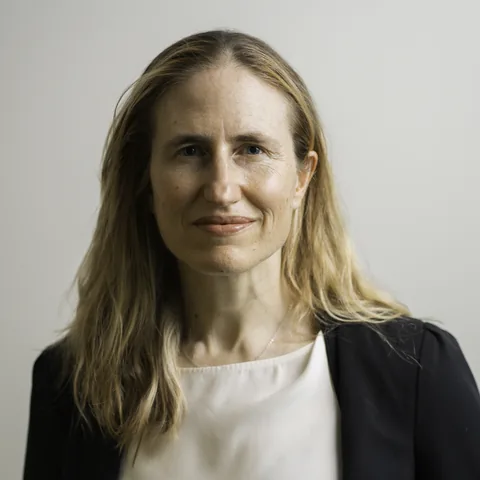 Emma BrunskillStanford University, 2018–2021
 Sergey LevineNamed in this biography
- Peter SpirtesCarnegie Mellon University, 2024–2026
- Andrea BajcsyUniversity of California, Berkeley, 2022–2024
 Michael I. JordanUniversity of California, Berkeley, 2022–2024
- Roni RosenfeldCarnegie Mellon University, 2024–2026
Sources and credits
Photo: We have no published photo of Andrea Zanette yet. Send us a free-licensed photo.
- 2022 – 2023 Acad. Year | UCLA Statistics & Data Science
- Andrea Zanette - Electrical and Computer Engineering - College of Engineering - Carnegie Mellon University
- ICME Awards | Institute for Computational & Mathematical Engineering
- Exponential Lower Bounds for Batch Reinforcement Learning: Batch RL can be Exponentially Harder than Online RL
- Andrea Zanette
- ArCHer: Training Language Model Agents via Hierarchical Multi-Turn RL
- [2502.04463] Training Language Models to Reason Efficiently
- [2602.02710] Maximum Likelihood Reinforcement Learning
- Andrea Zanette – Carnegie Mellon University