Yanqi Zhou
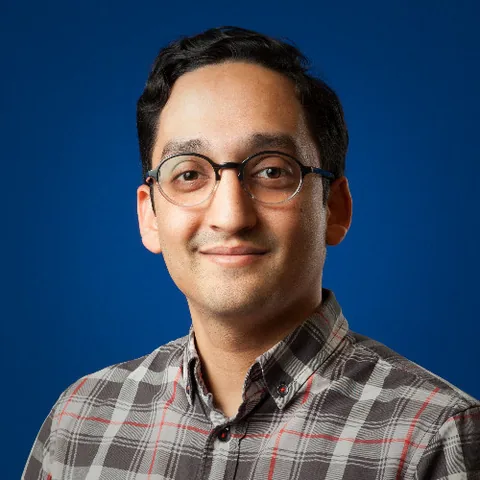
Yanqi Zhou is a Google researcher in computer systems and machine learning who co-authored the T5 and GLaM language models and introduced Expert Choice routing for mixture-of-experts models. After studying at Shanghai Jiao Tong and the University of Michigan, she pursued a Princeton PhD under David Wentzlaff from 2011 to 2017. She was a research scientist at Baidu SVAIL from 2017 to 2019, where she co-authored Deep Voice 2, and joined Google Brain in 2019. At Google she was also an author of LaMDA in 2022 and of the Gemini 2.5 report in 2025. She is a staff research scientist at Google DeepMind, where she works on scaling large language models with sparsity and adaptive computation.
- Now at
- Google DeepMind
- Badges
Timeline
-
2007–2017
Princeton PhD under Wentzlaff
She completes bachelor studies at Shanghai Jiao Tong (2007–2009) and the University of Michigan (2009–2011). From 2011 to 2017, she pursues a PhD at Princeton University, advised by David Wentzlaff, and collaborates with Doug Burger and Karin Strauss at Microsoft Research.
-
2014–2016
Fellowships and Rising Stars
She holds a Microsoft Ph.D. Fellowship in 2014–2015. In 2016, she receives Princeton University's Wu Fellowship and a Rising Stars honor from Carnegie Mellon University.
-
2017–2019
Deep Voice 2 at Baidu
From 2017 to 2019, she is a research scientist at Baidu SVAIL. In 2017, she is among the authors of Deep Voice 2, a neural text-to-speech system with trainable speaker embeddings that learns hundreds of voices from less than half an hour of data per speaker.
-
2019
Google Brain and T5
She joins Google Brain as a research scientist in 2019. In October 2019, the T5 paper, Exploring the Limits of Transfer Learning with a Unified Text-to-Text Transformer, lists her as an author; it converts all text-based language problems into a text-to-text format.
-
2021–2022
GLaM and LaMDA
In December 2021, she is among the authors of GLaM, a family of language models built on a sparsely activated mixture-of-experts architecture, whose largest version has 1.2 trillion parameters. In 2022, she is a listed author of LaMDA, a family of Transformer-based language models for dialog with up to 137 billion parameters.
-
2022–2023
Expert Choice routing and Brainformers
In 2022, she introduces Expert Choice routing, a mixture-of-experts routing algorithm presented at NeurIPS 2022 that balances load across experts and allows heterogeneous token-to-expert mapping, and describes it in a November 2022 Google Research blog post as a Research Scientist on the Brain Team. In 2023, she is first author of Brainformers at ICML.
-
July 2025
Co-author of Gemini 2.5
She is listed among the authors of the Gemini 2.5 technical report posted in July 2025, which introduces the Gemini 2.5 Pro and Gemini 2.5 Flash models.
-
As of October 2026
Staff research scientist, Google DeepMind
She is a staff research scientist at Google DeepMind, previously known as Google Brain, in Mountain View, working with James Laudon. Her research interest lies in computer systems and machine learning, including scaling large language models with sparsity and adaptive computation.
Career
- NowGoogle DeepMindStaff Research Scientist
- From 2019Google BrainResearch Scientist
- 2017–2019BaiduResearch Scientist
Education
- 2017Princeton UniversityPhD
- 2011University of MichiganBachelor's degree
- 2009Shanghai Jiao Tong UniversityBachelor's degree
Colleagues
Sources and credits
Photo: We have no published photo of Yanqi Zhou yet. Send us a free-licensed photo.
- Yanqi's Homepage
- Deep Voice 2: Multi-Speaker Neural Text-to-Speech
- Exploring the Limits of Transfer Learning with a Unified Text-to-Text Transformer
- GLaM: Efficient Scaling of Language Models with Mixture-of-Experts
- LaMDA: Language Models for Dialog Applications
- Mixture-of-Experts with Expert Choice Routing
- Gemini 2.5: Pushing the Frontier with Advanced Reasoning, Multimodality, Long Context, and Next Generation Agentic Capabilities
- Yanqi Zhou - Google Scholar