Paul Grigas
Paul Grigas is an associate professor of Industrial Engineering and Operations Research at UC Berkeley who develops machine learning models for decision-making. He earned his doctorate at MIT in 2016 and joined Berkeley’s faculty in 2016. With Adam N. Elmachtoub, he coauthored the 2017 preprint “Smart Predict, then Optimize,” which trained prediction models around the cost of the decisions they produce. His later work included online learning under cost constraints and methods that learn how optimal solutions change as a problem’s parameters vary.
- Works
- 44
- Citations
- 1,244
- h-index
- 10
Publication numbers from OpenAlex, as of 28 October 2026.
Timeline
-
2011
Operations research at Cornell
He earns a BS in Operations Research and Information Engineering at Cornell University in 2011.
-
2015
A prize for boosting
In 2015, he wins the INFORMS Optimization Society Student Paper Prize for “A new perspective on boosting in linear regression via subgradient optimization and relatives,” coauthored with Robert M. Freund and Rahul Mazumder. The paper analyzes boosting algorithms for linear regression through first-order methods in convex optimization.
-
2016
MIT doctorate and Berkeley faculty
He completes a PhD in operations research at MIT’s Operations Research Center in the Sloan School of Management in 2016, with Robert M. Freund as his advisor. His thesis, “Methods for convex optimization and statistical learning,” studies algorithms for convex optimization and statistical machine learning. In 2016, he joins UC Berkeley’s Department of Industrial Engineering and Operations Research as an assistant professor.
-
2017
Smart predict, then optimize
With Adam N. Elmachtoub, he releases the preprint “Smart Predict, then Optimize” in 2017. Their framework trains prediction models using the structure of the optimization problem that uses the predictions; its SPO loss measures the decision error caused by a prediction, and its SPO+ loss offers a tractable training objective.
-
2018
An NSF grant for optimization
In 2018, he receives a $175,000 NSF Computer and Information Science and Engineering Research Initiation Initiative grant to develop optimization algorithms for large datasets. The project studies the Frank-Wolfe method and in-face directions to improve memory use and preserve useful model structure.
-
2020
First place for SPO
He wins first place in the 2020 INFORMS Junior Faculty Interest Group Paper Competition for “Smart Predict, then Optimize,” coauthored with Columbia University’s Adam Elmachtoub.
-
2021
Online learning and decisions
In 2021, he coauthors “Joint Online Learning and Decision-making via Dual Mirror Descent” with Alfonso Lobos and Zheng Wen at the International Conference on Machine Learning. The work combines a method for learning unknown parameters with online decisions to maximize revenue under cost constraints.
-
2021
Integrated conditional estimation and optimization
With Meng Qi and Zuo-Jun Max Shen, he releases “Integrated Conditional Estimation-Optimization” in 2021. Their framework estimates conditional distributions of uncertain parameters using an objective aligned with the optimization problem that will use those estimates.
-
2025
Learning the optimal solution path
He coauthors “Beyond Discretization: Learning the Optimal Solution Path” with Qiran Dong and Vishal Gupta at the International Conference on Artificial Intelligence and Statistics in 2025. The method represents a solution path with basis functions and learns the path through a single stochastic optimization problem.
-
As of October 2026
Associate professor at Berkeley
As of October 2026, he is an associate professor in UC Berkeley’s Department of Industrial Engineering and Operations Research and an affiliate of the NSF AI Research Institute for Advances in Optimization (AI4OPT). He develops machine learning models for decision-making and designs and analyzes optimization algorithms for machine learning and operations research.
Career
- NowUniversity of California, BerkeleyAssociate Professor
- From 2016University of California, BerkeleyAssistant Professor
Education
- 2016Massachusetts Institute of TechnologyPhD in Operations Research
- 2011Cornell UniversityBS in Operations Research and Information Engineering
Colleagues
- Robert M. FreundMassachusetts Institute of Technology, 2013–2017
 Michael I. JordanUniversity of California, Berkeley, 2016–2026
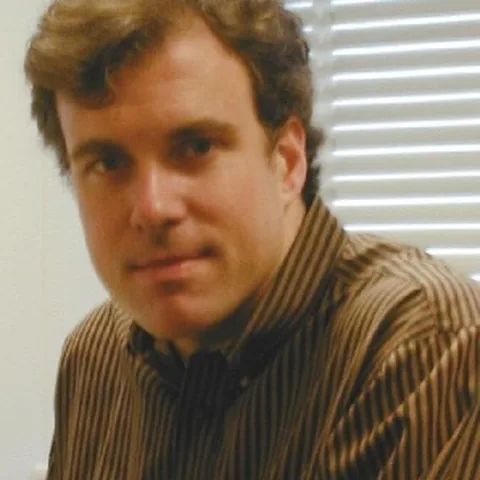 Trevor DarrellUniversity of California, Berkeley, 2016–2026
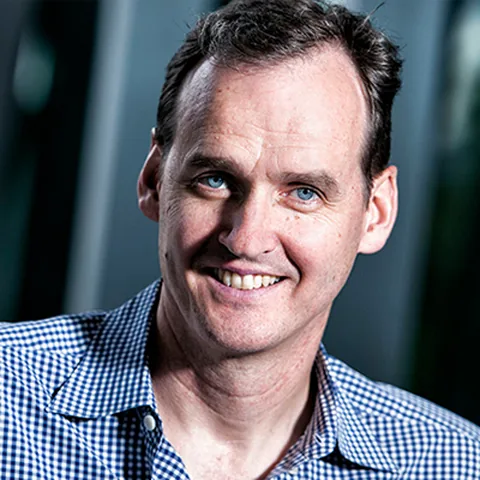 Peter L BartlettUniversity of California, Berkeley, 2016–2026
- James DiCarloMassachusetts Institute of Technology, 2013–2017
- Kamal Youcef-ToumiMassachusetts Institute of Technology, 2013–2017
Sources and credits
Photo: We have no published photo of Paul Grigas yet. Send us a free-licensed photo.
- Paul Grigas - UC Berkeley IEOR Department - Industrial Engineering & Operations Research
- 2015 - Optimization Society
- Methods for convex optimization and statistical learning
- IEOR Welcomes Paul Grigas as new Assistant Professor
- Smart "Predict, then Optimize"
- Prof. Grigas Receives NSF CRII Award To Improve Machine Learning Methods
- Prof. Paul Grigas Wins INFORMS Junior Faculty Interest Group Paper Competition
- Joint Online Learning and Decision-making via Dual Mirror Descent
- Integrated Conditional Estimation-Optimization
- Beyond Discretization: Learning the Optimal Solution Path
- Paul Grigas