Pamela Mishkin
Also known as Pamela Fine Mishkin, manlikemishap
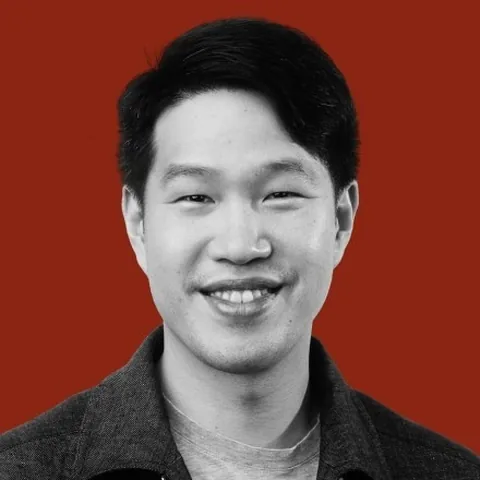
Pamela Mishkin is an AI researcher whose work spans computer vision, language models, 3D generation, multimodal safety and the effects of AI on workers. At OpenAI, she coauthored CLIP, GLIDE, InstructGPT and Point-E, led multimodal-safety work on Codex and DALL-E 2, and later led its economic research team. She coauthored research on language models' effects on U.S. workers and OpenAI's approach to external red teaming, and spoke about labor-market data at India's AI Impact Summit in February 2026. She left OpenAI in May 2026 and said in July 2026 that company usage data were less useful for predicting job loss. Since February 2026, she helps convene the Coalition of Concerned AI Staff, a group chat among friends across frontier labs.
Timeline
-
2020–2021
A GPT-3 essay for The Pudding
In late July 2020, while working at OpenAI, she gets access to GPT-3 and sets out to make it a conversation partner. The Pudding publishes her essay “Nothing Breaks Like A.I. Heart” in March 2021 with help from GPT-3.
-
2021
CLIP and GLIDE
In February 2021, she coauthors CLIP, which learns image representations by matching captions with images across 400 million image-text pairs. In December 2021, she coauthors GLIDE, a text-conditional diffusion model whose 3.5 billion parameter samples human evaluators favor over DALL-E's.
-
2022
InstructGPT and Point-E
In March 2022, she is one of 20 authors of InstructGPT, which fine-tunes GPT-3 with human feedback to follow user intent; evaluators prefer its 1.3B-parameter model's outputs over those from 175B GPT-3. In December 2022, she coauthors Point-E with Alex Nichol, Heewoo Jun, Prafulla Dhariwal and Mark Chen; it creates 3D point clouds from text prompts in one to two minutes on a single GPU, one to two orders of magnitude faster to sample than state-of-the-art methods.
-
March 2023–October 2024
GPTs are GPTs and economic research
With Tyna Eloundou, Sam Manning and Daniel Rock, she coauthors the study “GPTs are GPTs” in March 2023. It estimates that around 80% of U.S. workers could have at least 10% of their tasks affected by LLMs, while approximately 19% could have at least 50% affected. By October 2024, she leads OpenAI's economic research team after leading multimodal-safety work on Codex and DALL-E 2, with a BA from Williams College and an MPhil from the University of Cambridge.
-
2025
OpenAI external red teaming
In 2025, she coauthors OpenAI's paper on external red teaming, which describes campaign design and how its results can inform risk assessments and automated evaluations.
-
February 2026
Labour markets at India's AI summit
In February 2026, as a researcher at OpenAI, she speaks in the India AI Impact Summit session on AI usage data and labour-market resilience. She warns that waiting for perfect usage data before acting risks being too late, and tells policymakers that a worker's ChatGPT conversation shows only part of the story.
-
May–July 2026
Leaving OpenAI's economic research team
Before leaving OpenAI in May 2026, she serves as a Member of Technical Staff focused on LLM deployment policy, socioeconomic impacts and multimodal models, and leads the economic research team for a time. In July 2026, she tells The Washington Post that internal data AI companies share are less useful for predicting job loss.
-
Since February 2026
Coalition of Concerned AI Staff
Since February 2026, she helps start and convene the Coalition of Concerned AI Staff, a group chat among friends across frontier labs that meets to discuss AI and learn from experts.
Career
- Since 2026Coalition of Concerned AI StaffConvener
- Until 2026OpenAIMember of Technical Staff
Education
Colleagues
Sources and credits
Photo: We have no published photo of Pamela Mishkin yet. Send us a free-licensed photo.
- Pamela Mishkin · Longform
- Nothing Breaks Like A.I. Heart
- What Would You Do If Your Employer Could Destroy the World?
- Learning Transferable Visual Models From Natural Language Supervision
- GLIDE: Towards Photorealistic Image Generation and Editing with Text-Guided Diffusion Models
- Training language models to follow instructions with human feedback
- Point-E: A System for Generating 3D Point Clouds from Complex Prompts
- GPTs are GPTs: An Early Look at the Labor Market Impact Potential of Large Language Models
- New Economy Forum: Fiscal Policy to Broaden the Gains from Gen AI
- OpenAI's Approach to External Red Teaming for AI Models and Systems
- Labour Market Resilience in Focus as India AI Impact Summit 2026 Discusses Future of Work in AI Era
- Why tech companies are poaching top economists - Nitasha Tiku
- Pamela Mishkin | Speakers | DOKU.TECH 2026