Mark Chen
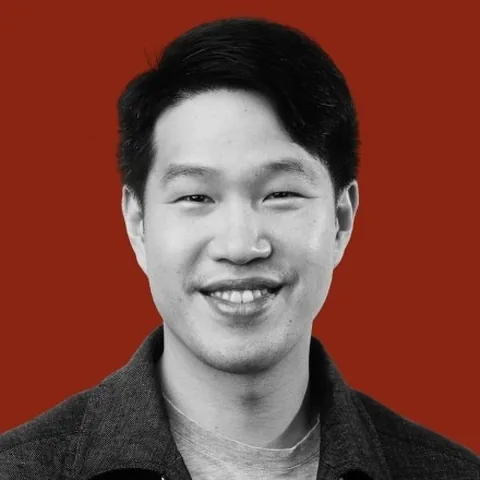
Mark Chen is OpenAI’s chief research officer as of March 2026. He joined the lab in 2018. His papers include image pixel prediction, DALL·E’s text-to-image generation, and Codex’s code generation. He received GPT-4 vision and deployment leadership credits. He also co-authored a 2025 paper on competitive programming with reasoning models. OpenAI expanded his research leadership role in March 2025, with responsibilities covering capabilities and safety and coordination with products. His 2026 discussion with Terence Tao addressed AI in mathematical discovery and the need for human checks.
- Now at
- OpenAI
Timeline
-
2018
Joining OpenAI
Chen joined OpenAI in 2018.
-
2020
Generative pretraining for images
Chen was first author of Generative Pretraining from Pixels in 2020.
-
2021
DALL·E research
Chen co-authored the original DALL·E paper in 2021.
-
2021
Codex
Chen was first author of Codex in 2021.
-
March 2025
Chief research officer
OpenAI expanded Chen’s chief research officer role in March 2025.
-
March 2026
Discussing mathematical discovery
Chen discussed AI and mathematics with Tao at UCLA in March 2026.
Sources and credits
Photo: MIT Technology Review Japan Innovators Under 35 profile. License: Not stated by source. Source: technologyreview.jp. Cropped to a square and resized. Ask us to remove or replace this photo.