Natalia Gimelshein
Natalia Gimelshein is a PyTorch maintainer and engineer whose work connects GPU memory management, framework performance, and compilation. She coauthored vDNN in 2016 and the PyTorch library paper in 2019, then coauthored the 2021 announcement of native CUDA Graph execution. At a January 2023 Q&A, she spoke about TorchInductor and PT2 backend integration; in 2024, she coauthored the PyTorch 2 paper and received a PyTorch Problem Solver award. She worked as a software engineer at Meta in 2025 and, as of October 2026, is a PyTorch Module Maintainer and a software engineer at Meta.
Timeline
-
2016
vDNN and GPU memory
In 2016, she coauthors vDNN, a runtime memory manager that uses CPU and GPU memory together to train larger neural networks.
-
2019
The PyTorch library paper
In 2019, she coauthors the NeurIPS paper that explains PyTorch's architecture, imperative Python style, and efficient support for GPUs.
-
2021
CUDA Graphs enter PyTorch
In 2021, she works on GPU performance optimization for deep-learning workloads at NVIDIA and Facebook as an Applied Research Scientist at Facebook. She is a PyTorch core-team member and coauthors the announcement that brings native CUDA Graph execution to PyTorch.
-
January 2023
TorchInductor backend Q&A
At the January 2023 PyTorch 2.0 Q&A, she speaks in a session on TorchInductor and PT2 backend integration.
-
2024
The PyTorch 2 paper
In 2024, she coauthors the PyTorch 2 paper on dynamic Python bytecode transformation and graph compilation, with OpenAI as her affiliation.
-
2024
PyTorch Problem Solver award
In 2024, the PyTorch Foundation names her a Problem Solver in its contributor awards.
-
2025
Software engineer at Meta
In 2025, she works as a software engineer at Meta.
-
As of October 2026
Software engineer at Meta
As of October 2026, she is a software engineer at Meta and a PyTorch Module Maintainer.
Career
- 2024OpenAI
- 2021NVIDIA
- 2021MetaApplied research scientist
- 2007–2013ERC Inc.
- 2007–2014United States Department of the Air Force
- 2001–2004Pennsylvania State University
Most-cited works
- PyTorch: An Imperative Style, High-Performance Deep Learning Library
- PyTorch 2: Faster Machine Learning Through Dynamic Python Bytecode Transformation and Graph CompilationWith Horace He
- vDNN: Virtualized deep neural networks for scalable, memory-efficient neural network design
- Vibrational relaxation rates in the direct simulation Monte Carlo method
- Radiometric phenomena: From the 19th to the 21st century
Colleagues
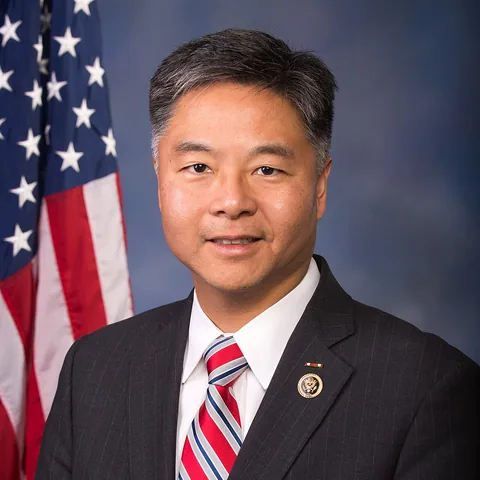 Ted LieuUnited States Department of the Air Force, 2007–2014
 Lee GilesPennsylvania State University, 2001–2004
- Nirmal BosePennsylvania State University, 2001–2004
- Rangachar KasturiPennsylvania State University, 2001–2004
 Mark MayburyUnited States Department of the Air Force, 2010–2013
- Tero KarrasNVIDIA, 2016–2018
Sources and credits
Photo: We have no published photo of Natalia Gimelshein yet. Send us a free-licensed photo.
- vDNN: Virtualized Deep Neural Networks for Scalable, Memory-Efficient Neural Network Design
- PyTorch: An Imperative Style, High-Performance Deep Learning Library
- Accelerating PyTorch with CUDA Graphs
- PyTorch 2.0 Ask the Engineers Live Q&A Series: A deep dive on TorchInductor and PT2 Backend Integration
- Main Program – ASPLOS 2024
- Announcing the 2024 PyTorch Contributor Awards
- Meet the Committees | PyTorch Conference 2025
- PyTorch Conference Europe 2026: A Landmark Moment for Open Source AI in Paris
- NVIDIA at PyTorch Conference 2026