Matthew Hoffman
Also known as Matt Hoffman, Matthew D. Hoffman, Matthew Douglas Hoffman
Matthew Hoffman is a research scientist at Google DeepMind whose work on approximate inference includes online LDA, stochastic variational inference and the No-U-Turn Sampler. He completed a computer science PhD in Princeton's Sound Lab with Perry Cook and David Blei in 2010, then held a postdoc with Andrew Gelman at Columbia. His 2010 paper with Blei and Francis Bach, Online Learning for Latent Dirichlet Allocation, received the NeurIPS Test of Time Award in 2021. With Gelman, he published the No-U-Turn Sampler in 2014, an extension of Hamiltonian Monte Carlo that needs no hand-tuning and that Stan, the statistical modeling package he co-created, uses for Bayesian inference. After working at Adobe Research from 2012 to 2016, he joined Google, where he contributed to TensorFlow Probability, Music Transformer and a 2023 method for training chain-of-thought reasoning in language models.
- Now at
- Google DeepMind
- Works
- 97
- Citations
- 18,692
- h-index
- 36
- Badges
Publication numbers from OpenAlex, as of 22 October 2026.
Timeline
-
2004–2010
A PhD in Princeton's Sound Lab
From 2004 to 2010, he is a computer science PhD student at Princeton, working in the Sound Lab with Perry Cook and David Blei. His research focuses on Bayesian modeling of audio, audio feature extraction and music information retrieval.
-
2010
Online learning for LDA
In 2010, he publishes Online Learning for Latent Dirichlet Allocation with David Blei and Francis Bach. The paper introduces a stochastic variational inference procedure that makes it practical to train LDA topic models on text corpora of several hundred thousand documents.
-
2010–2012
Postdoc with Andrew Gelman
From 2010 to 2012, he is a postdoctoral researcher with Andrew Gelman in the statistics department at Columbia University.
-
2012–2016
Adobe's Creative Technologies Laboratory
From 2012 to 2016, he is a research scientist in the Creative Technologies Laboratory at Adobe Research. In 2013, he publishes Stochastic Variational Inference in JMLR with David Blei, Chong Wang and John Paisley, a scalable algorithm demonstrated on collections as large as 3.8 million Wikipedia articles.
-
2014–2017
NUTS and the Stan language
In 2014, he and Andrew Gelman publish the No-U-Turn Sampler (NUTS), an extension of Hamiltonian Monte Carlo that stops automatically when a trajectory starts to double back and needs no hand-tuning. He co-creates the statistical modeling package Stan and coauthors its 2017 paper in the Journal of Statistical Software; Stan runs full Bayesian inference with MCMC methods such as NUTS.
-
2016–2018
TensorFlow Probability and Music Transformer
He joins Google as a research scientist in 2016 and contributes to the TensorFlow Probability library, coauthoring the TensorFlow Distributions paper in 2017. In 2018, he coauthors Music Transformer, a self-attention model that generates minute-long musical compositions with coherent structure.
-
2021
A NeurIPS Test of Time Award
Online Learning for Latent Dirichlet Allocation receives the NeurIPS 2021 Test of Time Award. The award recognizes the paper as the first stepping stone toward general stochastic gradient variational inference for a much broader class of models.
-
As of October 2026
Research scientist at Google DeepMind
In 2023, he coauthors a NeurIPS paper with Du Phan and others that fine-tunes language models for chain-of-thought reasoning with a Markov chain Monte Carlo expectation-maximization algorithm. In 2024, he gives an invited talk at AISTATS and, with Pavel Sountsov and Colin Carroll, writes a chapter on speeding up MCMC with GPUs, TPUs, PyTorch and JAX. He is a research scientist at Google DeepMind.
Career
- Since 2019Google DeepMindResearch scientist
- 2016–2024GoogleResearch scientist
- 2012–2016AdobeResearch scientist
- 2010–2012Columbia UniversityPostdoctoral researcher
Education
- 2010Princeton UniversityPhD
Most-cited works
- Stan: A Probabilistic Programming Language
- The No-U-Turn Sampler: Adaptively Setting Path Lengths in Hamiltonian Monte Carlo
- Stochastic variational inferenceWith David M. Blei
- Variational Autoencoders for Collaborative Filtering
- Online Learning for Latent Dirichlet AllocationWith David M. Blei and Francis Bach
Colleagues



Sources and credits
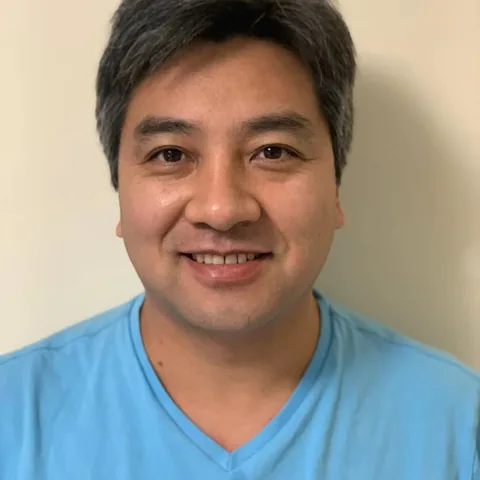
Photo: We have no published photo of Matthew Hoffman yet. Send us a free-licensed photo.
- Matt Hoffman
- Matthew D. Hoffman | DeepAI
- NeurIPS Test Of Time Online Learning for Latent Dirichlet Allocation
- Congratulations to the NeurIPS 2021 award winners! - AIhub
- Matthew D. Hoffman | alphaXiv
- Stochastic Variational Inference
- The No-U-Turn Sampler: Adaptively Setting Path Lengths in Hamiltonian Monte Carlo
- Invited Speakers| Artificial Intelligence and Statistics Conference
- Stan: A Probabilistic Programming Language | Journal of Statistical Software
- [1711.10604] TensorFlow Distributions
- [1809.04281] Music Transformer
- Training Chain-of-Thought via Latent-Variable Inference
- Running Markov Chain Monte Carlo on Modern Hardware and Software