Marwin Segler
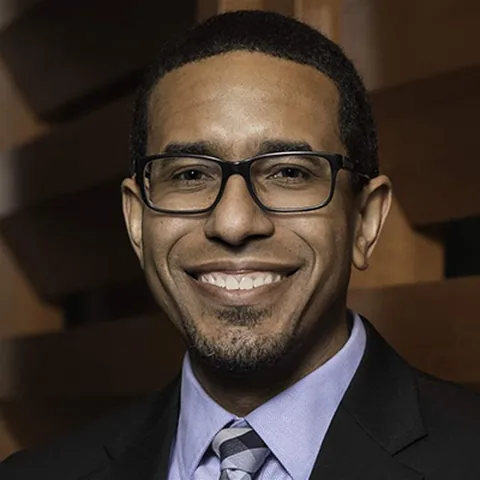
Marwin Segler is a chemist and machine learning researcher who builds systems that plan and design molecules for drug discovery. After studying chemistry at the University of Münster, he was lead author of a 2018 Nature study that combined Monte Carlo tree search with deep neural networks to plan chemical syntheses, running about 30 times faster than conventional programs and finding routes for twice as many molecules. In 2017, he showed that recurrent neural networks can generate molecular structures, and in 2018 he coauthored the GuacaMol benchmarks for molecule-design models. A researcher at BenevolentAI in London and later at Microsoft Research, he coauthored the syntheseus library in 2023 and presented the Chimera synthesis-prediction framework in 2025. He is a Senior Principal Research Manager at Microsoft Research AI for Science.
- Now at
- Microsoft Research
Timeline
-
2017
Recurrent networks for molecules
In January 2017, he posts "Generating Focussed Molecule Libraries for Drug Discovery with Recurrent Neural Networks" with Thierry Kogej, Christian Tyrchan and Mark P. Waller. The paper shows that recurrent neural networks can be trained as generative models for molecular structures, similar to statistical language models.
-
2018
Retrosynthesis with Monte Carlo search
As a doctoral student at the Institute of Organic Chemistry of the University of Münster, where he also studied chemistry, he is lead author of a 2018 Nature study with Mike Preuss and Mark P. Waller. The study combines Monte Carlo tree search with deep neural networks to plan chemical syntheses; the method is about 30 times faster than conventional programs and finds routes for twice as many molecules. In a double-blind AB test, chemists consider the computer-generated routes just as good as existing tried-and-tested ones.
-
November 2018
The GuacaMol benchmarks
In November 2018, he coauthors GuacaMol with Nathan Brown, Marco Fiscato and Alain C. Vaucher, an evaluation framework built on a suite of standardized benchmarks for de novo molecular design. Its tasks measure how well models reproduce the property distribution of training sets, generate novel molecules, explore and exploit chemical space, and solve single and multi-objective optimization problems.
-
By 2021
Senior researcher at Microsoft
By October 2021, he is a Senior Researcher at Microsoft Research, after working as a researcher at BenevolentAI in London.
-
2022–2023
Team lead at AI4Science
In 2022, he is a team lead at Microsoft Research AI4Science, working at the intersection of chemistry, drug discovery and machine learning. In March 2023, he gives the talk "AI/ML in Chemical Development" at the Department of Chemistry in Cambridge.
-
October 2023
The syntheseus library
In October 2023, he coauthors "Re-evaluating Retrosynthesis Algorithms with Syntheseus" with Krzysztof Maziarz, Austin Tripp, Guoqing Liu and others. The paper presents syntheseus, a synthesis planning library with an extensive benchmarking framework, and finds that the ranking of state-of-the-art models changes in controlled evaluation experiments.
-
February 2025
Chimera synthesis prediction
In February 2025, he presents Chimera at Microsoft Research Forum, a learning-to-rank framework that integrates AI-based models, boosts prediction accuracy and is preferred by chemists. The related paper, "Chimera: Accurate retrosynthesis prediction by ensembling models with diverse inductive biases", is dated December 2024.
-
As of October 2026
Research manager at AI for Science
He is a Senior Principal Research Manager in Microsoft Research AI for Science, with interests in machine learning, reinforcement learning, chemistry and drug discovery. In October 2026, he gives an AI for Science seminar at Chalmers, and the ELLIS network lists him as a Scholar.
Career
- Since 2022Microsoft ResearchSenior Researcher, Team lead
- BenevolentAIResearcher
Education
- University of MünsterChemistry studies
Colleagues
Sources and credits
Photo: We have no published photo of Marwin Segler yet. Send us a free-licensed photo.
- [1701.01329] Generating Focussed Molecule Libraries for Drug Discovery with Recurrent Neural Networks
- Chemical synthesis with artificial intelligence: Researchers develop new computer method
- AI around the Design-Make-Test cycle | Chalmers
- [1811.09621] GuacaMol: Benchmarking Models for De Novo Molecular Design
- "Machine learning in chemistry and beyond" (ChE-650) seminar by Marwin Segler (Microsoft Research) - EPFL
- Conference speaker | Marwin Segler
- Marwin Segler | Falling Walls
- talks.cam : AI/ML in Chemical Development
- [2310.19796] Re-evaluating Retrosynthesis Algorithms with Syntheseus
- Chimera: Accurate synthesis prediction by ensembling models with diverse induction biases - Microsoft Research
- Marwin Segler at Microsoft Research
- Marwin Segler | European Laboratory for Learning and Intelligent Systems