Maria Ryskina
Maria Ryskina is a researcher whose work links language technology, cognitive science, and AI alignment. Her early papers examined compositor attribution in Shakespeare’s First Folio and how new words emerge in English. She studied applied mathematics and physics at Moscow Institute of Physics and Technology, earned an MSc from Skoltech, and completed a Carnegie Mellon PhD on non-standard language in 2022. At MIT, she studied how the brain and language models represent concepts; she coauthored a Queer in AI study of community-led participatory design, whose organizers received a best paper award at ACM FAccT in 2023. Since June 2025, she is a CIFAR AI Safety Postdoctoral Fellow at the Vector Institute, where she works on normative reasoning and multi-agent AI alignment.
- Now at
- Vector Institute
Timeline
-
2017
The First Folio model
She coauthors a 2017 paper that uses an unsupervised model of textual and visual features to identify compositors in Shakespeare’s First Folio.
-
2020
Tracking new words
Her 2020 paper studies how new English words emerge in large historical corpora. It tests semantic sparsity and frequency growth among semantic neighbors as possible predictors.
-
2022
A PhD on non-standard language
Her degrees include a BSc and MSc in applied mathematics and physics from Moscow Institute of Physics and Technology and an MSc from Skoltech. In 2022, she completes a PhD in Language and Information Technologies at Carnegie Mellon, with a dissertation on computational models of non-standard language.
-
2022–2024
Postdoc at MIT’s EvLab
From 2022 to 2024, she works as a postdoctoral researcher in Evelina Fedorenko’s MIT lab, studying how concepts are represented in the brain and in large language models.
-
2023
A Queer in AI FAccT paper
She coauthors a 2023 paper that presents Queer in AI as a case study for community-led participatory design in AI. The Queer in AI organizers receive a best paper award at ACM FAccT in 2023.
-
2025
Language models and brain concepts
In a 2025 study, she and her coauthors find that language-only and language-vision models predict brain signals better in areas that respond consistently to concepts across modalities.
-
Since June 2025
CIFAR AI Safety fellow
Since June 2025, she is a CIFAR AI Safety Postdoctoral Fellow at the Vector Institute, where she works with Gillian Hadfield on AI alignment, including how multi-agent interaction can help normative reasoning emerge in language models. In 2025, her team pursues a CIFAR-funded AI Safety Catalyst project to develop an AI Debate Framework. In 2026, she and coauthors extend their neology research to published writing and social media, comparing how new words emerge in both settings.
Career
- Since 2025Vector InstituteCIFAR AI Safety Postdoctoral Fellow
- 2022–2024Massachusetts Institute of TechnologyPostdoctoral researcher
Education
Colleagues
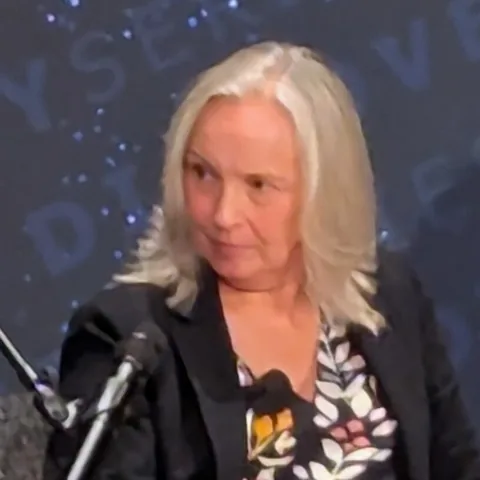 Gillian HadfieldVector Institute, 2025–2026
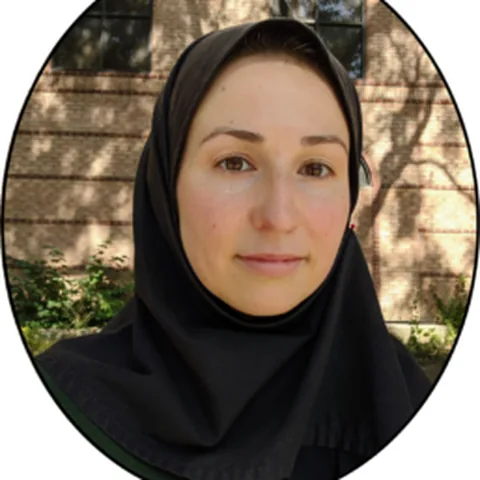 Marzyeh GhassemiMassachusetts Institute of Technology, 2022–2024
- Hugh HerrMassachusetts Institute of Technology, 2022–2024
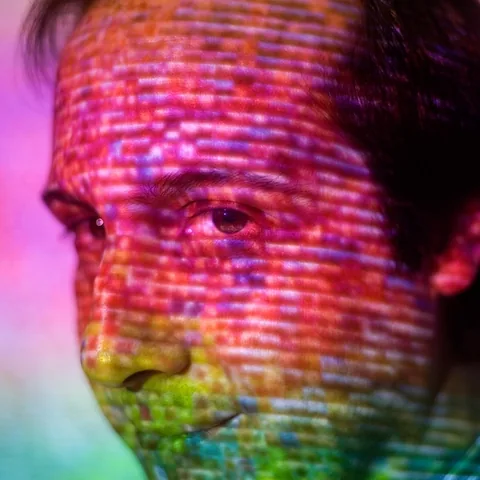 Antonio TorralbaMassachusetts Institute of Technology, 2022–2024
- Anatole von LilienfeldVector Institute, 2025–2026
- Agustinus KristiadiVector Institute, 2025–2026
Sources and credits
Photo: We have no published photo of Maria Ryskina yet. Send us a free-licensed photo.
- Automatic Compositor Attribution in the First Folio of Shakespeare - ACL Anthology
- Where New Words Are Born: Distributional Semantic Analysis of Neologisms and Their Semantic Neighborhoods
- The Normativity Lab | Gillian K. Hadfield
- publications | Maria Ryskina
- Maria Ryskina
- Our Family — EvLab
- Queer In AI: A Case Study in Community-Led Participatory AI
- Maria Ryskina - Vector Institute for Artificial Intelligence
- Language models align with brain regions that represent concepts across modalities
- Building Trust & Fairness - CAISI Year in Review
- From sunblock to softblock: Analyzing the correlates of neology in published writing and on social media