Matthew Neeley
Also known as M. Neeley
Matthew Neeley is a physicist on Google's Quantum AI team, which works toward the first useful quantum computer. They earned a physics BS at Stanford in 2004 and a PhD at the University of California, Santa Barbara in 2010 in John Martinis's group, and in 2010 were first author of a Nature paper on three-qubit entangled states. After a stint as a staff researcher at MIT Lincoln Laboratory, they joined Nest Labs as a software engineer in 2012 and then moved to Google's Quantum AI team. There they coauthored the 2019 Nature paper on the Sycamore processor and the 2024 Nature paper on below-threshold surface code memories on the Willow processor. In 2025, they coauthored a paper on radiation-induced error bursts in superconducting qubit arrays and developed its software infrastructure with Wojciech Mruczkiewicz.
Timeline
-
2004–2010
Physics degrees at Stanford and UCSB
They earn a BS in physics from Stanford University in 2004 and a PhD in physics from the University of California, Santa Barbara in 2010. At Santa Barbara they work on superconducting qubits in John Martinis's group.
-
2009–2010
Photon states and three-qubit entanglement
In 2009, they are among the authors, with John Martinis, of a Nature paper that prepares arbitrary quantum states in an electromagnetic resonator using a superconducting phase qubit. In 2010, they are first author of a Nature paper in which three superconducting phase qubits create and measure GHZ and W entangled states.
-
By 2012
Lincoln Laboratory and Nest Labs
After graduate school, they work as a staff researcher at MIT Lincoln Laboratory on superconducting qubits and resonators. In 2012, they join Nest Labs as a software engineer.
-
2017
A blueprint for quantum supremacy
In February 2017, they give a talk at the SQuInT workshop in Baton Rouge titled "Scaling superconducting qubits: Toward a demonstration of quantum supremacy." In September 2017, they are among the authors of the arXiv paper "A blueprint for demonstrating quantum supremacy with superconducting qubits," which uses 9 superconducting qubits to demonstrate a path toward quantum supremacy.
-
2019
Sycamore and quantum supremacy
In October 2019, they are among the Google AI Quantum authors of the Nature paper on the Sycamore processor. Sycamore takes about 200 seconds to sample a quantum circuit a million times, a task the authors estimate would take a state-of-the-art classical supercomputer approximately 10,000 years.
-
December 2024
Error correction on Willow
In December 2024, Nature publishes the Google Quantum AI paper "Quantum error correction below the surface code threshold," on whose author list they appear. It presents two below-threshold surface code memories on the Willow processor, including a 101-qubit distance-7 code.
-
June 2025
Radiation and correlated phase errors
In June 2025, they are among the authors of an arXiv paper on correlated error bursts in a gap-engineered superconducting qubit array. The paper finds that radiation impacts shift qubit frequencies and cause correlated phase errors, and they develop its software infrastructure with Wojciech Mruczkiewicz.
-
As of October 2026
On Google's Quantum AI team
They work on Google's Quantum AI team, which aims to build the first useful quantum computer. A 2025 paper they co-authored gives their affiliation as Google Quantum AI in Santa Barbara, California.
Career
- NowGoogle
- Until 2012Massachusetts Institute of TechnologyStaff Researcher
- From 2012NestSoftware Engineer
Education
- 2010University of California, Santa BarbaraPhD in physics
- 2004Stanford UniversityBS in physics
Colleagues



Sources and credits
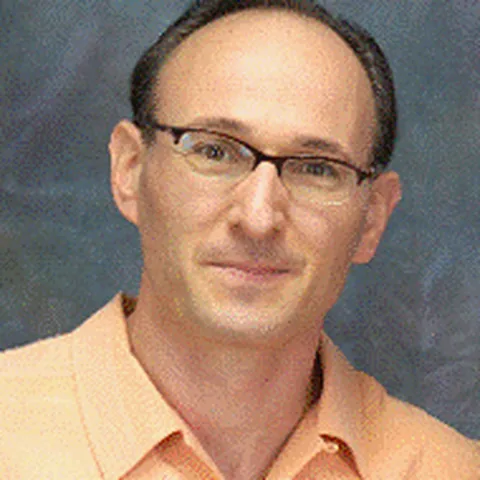
Photo: We have no published photo of Matthew Neeley yet. Send us a free-licensed photo.
- Matthew Neeley
- Synthesizing arbitrary quantum states in a superconducting resonator | Nature
- Generation of three-qubit entangled states using superconducting phase qubits | Nature
- Nineteenth Annual SQuInT Workshop
- [1709.06678] A blueprint for demonstrating quantum supremacy with superconducting qubits
- Quantum supremacy using a programmable superconducting processor | Nature
- Quantum error correction below the surface code threshold | Nature
- Correlated Error Bursts in a Gap-Engineered Superconducting Qubit Array