Keir Mierle
Keir Mierle is a software engineer whose work spans computer vision, speech recognition and embedded systems. He coauthored a 2007 operating-systems paper and Astrometry.net, then helped build Ceres Solver and libmv. With Thad Hughes, he coauthored a 2013 recurrent neural network for voice activity detection, and Ceres Solver received the 2023 Mark Everingham Prize. At Google, he led the Pigweed team and co-announced its SDK, whose components have shipped in millions of devices. As of October 2026, he contributes code to Pigweed.
- Now at
Timeline
-
2007
JIT instrumentation paper
In 2007, he coauthors a EuroSys paper with Marek Olszewski, Adam Czajkowski and Angela Demke Brown on dynamically instrumenting operating systems.
-
2009
Astrometry.net for sky images
In 2009, he coauthors Astrometry.net, a system that takes an astronomical image and returns its pointing, scale and orientation without a first guess.
-
2010–May 2012
Ceres Solver at Google
In early 2010, Ceres Solver grows from Google's need for general least-squares solving; Sameer Agarwal and Frederik Schaffalitzky start the library, and Mierle takes Schaffalitzky's place after he leaves Google. In May 2012, Mierle and Agarwal, both Geo software engineers at Google, release Ceres as a portable, open-source C++ library for large nonlinear least-squares problems, from fitting statistical curves to building 3D models from photographs. Google uses it to estimate the pose of Street View cars, aircraft and satellites and to build 3D models for PhotoTours.
-
2011
Libmv in Blender tracking
In 2011, he is libmv's primary developer; its structure-from-motion algorithm drives Blender's motion tracking. The method relies on rigid motion, so non-deforming cars, trucks, buildings and airplanes track well.
-
2013
A recurrent model for voice detection
With Thad Hughes, he presents a recurrent neural network for voice activity detection at ICASSP in 2013. It uses one tenth the parameters of a Gaussian mixture baseline, cuts false alarms by 26%, reduces speech-recognition computation time by 17% and lowers word error rate by 1%.
-
2023
The Mark Everingham Prize
At ICCV 2023, Keir Mierle and Sameer Agarwal receive the Mark Everingham Prize for Ceres Solver.
-
As of October 2026
Contributing to Pigweed
In March 2020, he and Mohammed Habibulla announce Pigweed, Google's open-source libraries for 32-bit microcontrollers; he leads the team and teaches its Hackaday Remoticon workshop in 2020. In August 2024, as a Google software engineer, he co-announces the first Pigweed SDK preview with native Bazel and Raspberry Pi Pico 2 support; its components have shipped in millions of devices, including Pixel devices, Nest thermostats and DeepMind robots. As of October 2026, he contributes code to Pigweed; in September 2026, he adds pw_ghish, a CLI that wraps Gerrit and LUCI Buildbucket workflows and includes AI integration, and in October 2026 he updates cancellation handling in pw_async2.
Videos
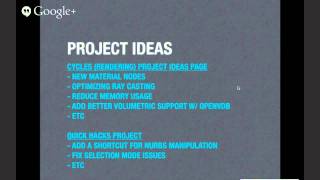 Blendermitos · 23 April 2015 · 37 min
 MITOS: Keir Mierle on BlenderStephanie Wang · 23 April 2015 · 40 min
 Sergey Sharybin and Keir Mierle - One year of Blender developmentBlender · 26 October 2013 · 33 min
Video data from YouTube API Services. By watching you agree to the YouTube Terms of Service. How we use YouTube data.
Colleagues


Sources and credits
Photo: We have no published photo of Keir Mierle yet. Send us a free-licensed photo.
- Marek Olszewski
- Astrometry.net: Blind astrometric calibration of arbitrary astronomical images
- Version History — Ceres Solver
- Introducing Ceres Solver - A Nonlinear Least Squares Solver | Google Open Source Blog
- Object video tracking in Blender - BlenderNation
- Recurrent Neural Networks for Voice Activity Detection
- Everingham Prize
- Pigweed: A collection of embedded libraries | Google Open Source Blog
- Remoticon: Give Pigweed a Whirl | Hackaday.io
- Remoticon Video: Pigweed Brings Embedded Unit Testing, Library Integration To Commandline | Hackaday
- Introducing the Pigweed SDK: A modern embedded development suite | Google Open Source Blog
- pw_ghish: Add Gerrit CLI with GitHub ergonomics
- pw_async2: Destroy ValueFuture values outside the provider lock