Kartik Goyal
Kartik Goyal is a natural language processing researcher whose probabilistic models look for latent structure in language and in cultural artifacts such as early modern printed books. He studied computer science and physics at BITS Pilani, earned a master's degree in 2014 and a PhD in 2021 at Carnegie Mellon's Language Technologies Institute, and worked on machine translation at Safaba Translation Solutions before the doctorate. His papers include a 2018 AAAI method that trains sequence models through a continuous relaxation of beam search, a 2020 generative model for the typography of early modern printing, and the 2024 ACL paper MAP's not dead yet, which received an Outstanding Paper Award. From 2021 to 2023 he was a research assistant professor at the Toyota Technological Institute at Chicago, and in 2023 he joined Georgia Tech. At Georgia Tech he is an assistant professor in the School of Interactive Computing.
Timeline
-
2012–2014
BITS Pilani and a CMU master's
He earns a B.E. (Hons.) in computer science and an M.Sc. (Hons.) in physics at the Goa campus of BITS Pilani in 2012. In 2014, he completes a master's degree at Carnegie Mellon's Language Technologies Institute, working on distributional semantics with Eduard Hovy. Before starting his PhD, he works as a machine translation researcher at Safaba Translation Solutions.
-
2017–2018
Continuous relaxation of beam search
In 2017, he coauthors A Continuous Relaxation of Beam Search for End-to-end Training of Neural Sequence Models with Graham Neubig, Chris Dyer and Taylor Berg-Kirkpatrick; it appears at AAAI in 2018. The paper replaces beam search with a continuous approximation so that a model trains on the loss of the final decoded output, and it improves results on named entity recognition and CCG supertagging.
-
2020
Typographical analysis of early printing
His ACL 2020 paper with Chris Dyer, Christopher Warren, Maxwell G’Sell and Taylor Berg-Kirkpatrick proposes a probabilistic generative model that clusters glyph images from early modern printed documents into typeface templates. The neural editor model beats the Ocular clustering baseline and a VAE at unsupervised discovery of typefaces in mixed-font documents. It analyzes glyph shapes in early modern books such as Leviathan by Thomas Hobbes, published in 1651.
-
2021–2023
PhD and TTIC faculty post
He earns his PhD in 2021 from Carnegie Mellon's Language Technologies Institute, jointly advised by Chris Dyer and Taylor Berg-Kirkpatrick. He serves as a research assistant professor at the Toyota Technological Institute at Chicago until 2023.
-
2022
Energy language models
In 2022, he coauthors Mix and Match: Learning-free Controllable Text Generation using Energy Language Models with Fatemehsadat Mireshghallah and Taylor Berg-Kirkpatrick for ACL. At TTIC, he is course instructor for Advanced Natural Language Processing (TTIC-31210).
-
2023
Joining Georgia Tech
He joins the School of Interactive Computing at Georgia Tech as an assistant professor in 2023, starting his first semester there. He aims to build a new lab with collaborators and students to develop statistical tools for the analysis and processing of natural language.
-
2024
An ACL Outstanding Paper Award
His paper MAP’s not dead yet: Uncovering true language model modes by conditioning away degeneracy, written with Davis Yoshida and Kevin Gimpel, receives an Outstanding Paper Award and the SAC Award for Generation at ACL 2024. It shows that the length-conditional modes of machine translation models and language models are more fluent and topical than their unconditional modes.
-
As of October 2026
Assistant professor at Georgia Tech
He is an assistant professor in the School of Interactive Computing at Georgia Tech, working on natural language processing and machine learning problems that involve probabilistic models of latent structure in naturally occurring data. In 2025, he coauthors Train It and Forget It: Merge Lists are Unnecessary for BPE Inference in Language Models with Tomohiro Sawada for EMNLP.
Career
- Since 2023Georgia Institute of TechnologyAssistant Professor
- 2021–2023Toyota Technological Institute at ChicagoResearch Assistant Professor
- Safaba Translation SolutionsMachine Translation Researcher
Education
- 2021Carnegie Mellon UniversityPhD
- 2014Carnegie Mellon UniversityMaster's degree
- 2012Birla Institute of Technology and Science, PilaniB.E. (Hons.) in Computer Science; M.Sc. (Hons.) in Physics
Colleagues
- Chris DyerNamed in this biography
- Graham NeubigNamed in this biography
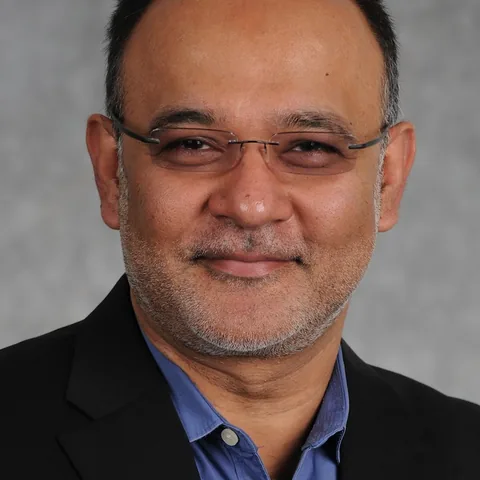 Irfan EssaGeorgia Institute of Technology, 2023–2026
- Christopher J. MacLellanGeorgia Institute of Technology, 2023–2026
- Gil WeinbergGeorgia Institute of Technology, 2023–2026
 Avrim BlumToyota Technological Institute at Chicago, 2021–2023
Sources and credits
Photo: We have no published photo of Kartik Goyal yet. Send us a free-licensed photo.
- kgoyal8 | College of Computing
- Kartik Goyal (TTIC) – Appropriate Inductive Bias for Neural Probabilistic Modelling of Data – Department of Computer Science
- Kartikgo
- [1708.00111] A Continuous Relaxation of Beam Search for End-to-end Training of Neural Sequence Models
- A Probabilistic Generative Model for Typographical Analysis of Early Modern Printing - ACL Anthology
- Assistant Professor Explores Analytical and Practical Benefits of Statistical NLP | College of Computing
- Kartikgo
- MAP’s not dead yet: Uncovering true language model modes by conditioning away degeneracy - ACL Anthology
- Kartik Goyal | School of Interactive Computing