Josh McDermott
Also known as Josh H. McDermott
Josh McDermott is an MIT neuroscientist who builds computational models of how people hear. He studied at Harvard, University College London and MIT, then trained in auditory research at the University of Minnesota and New York University. In 2018, he helped develop a neural network that recognized speech and musical genres at human levels and received the National Academy of Sciences' Troland Research Award. His 2023 work used synthetic images and sounds to test how neural networks represent sensory information. Since July 2026, he holds MIT's Uncas (1923) and Helen Whitaker Professorship in Brain and Cognitive Sciences and heads the Laboratory for Computational Audition.
- Works
- 196
- Citations
- 18,450
- h-index
- 55
Publication numbers from OpenAlex, as of 27 October 2026.
Timeline
-
1998–2006
Degrees in brain science
He earns a BA in brain and cognitive science at Harvard University in 1998, advised by Nancy Kanwisher. At University College London, he completes an MPhil in computational neuroscience in 2000 with Geoff Hinton. He earns a PhD in brain and cognitive sciences at MIT in 2006 with Edward Adelson.
-
2007–2012
Training in auditory research
From 2007 to 2008, he is a postdoctoral fellow in the University of Minnesota's Department of Psychology with Andrew Oxenham; from 2009 to 2012, he is a research associate at New York University's Center for Neural Science and the Howard Hughes Medical Institute with Eero Simoncelli. In 2012, he is a visiting researcher in Oxford University's Auditory Neuroscience Lab, in the Department of Physiology, Anatomy and Genetics.
-
2013–2018
Joining the MIT faculty
In 2013, McDermott joins MIT's Department of Brain and Cognitive Sciences as an assistant professor. He joins the McGovern Institute for Brain Research as an associate investigator in 2018.
-
July 2016
Musical preferences across cultures
In July 2016, he and Brandeis University's Ricardo Godoy lead a Nature study of musical preferences among Tsimane' listeners in the Bolivian Amazon. Participants with little exposure to Western music rate dissonant and consonant chords as equally pleasant, linking musical preferences to cultural experience.
-
January 2018
The Troland Research Award
In January 2018, the National Academy of Sciences names him a recipient of the Troland Research Award for his research on human hearing.
-
April 2018
A network for speech and music
In April 2018, he is senior author of a Neuron study with Alexander Kell and Daniel Yamins that trains a deep neural network to identify spoken words and musical genres. Its performance and errors resemble those of human listeners, and its processing stages provide evidence for a hierarchy in the auditory cortex.
-
October 2023
Testing networks with model metamers
In October 2023, he coauthors Model metamers reveal divergent invariances between biological and artificial neural networks with Jenelle Feather, Guillaume Leclerc and Aleksander Mądry. The team generates synthetic images and sounds that match natural stimuli inside a neural network; many of these test stimuli are unrecognizable to human observers.
-
March 2026
Modeling selective listening
In March 2026, he is senior author of a study with Ian Griffith and R. Preston Hess on how listeners follow one voice among competing voices. Their neural network boosts responses to features of a target voice and reproduces patterns of human attention and listening errors.
-
Since July 2026
The Whitaker professorship at MIT
In July 2026, he takes up the Uncas (1923) and Helen Whitaker Professorship in Brain and Cognitive Sciences at MIT for a renewable five-year term. He heads the Laboratory for Computational Audition and serves as associate department head, studying human and machine hearing.
Career
- Since 2026Massachusetts Institute of TechnologyUncas (1923) and Helen Whitaker Professor in Brain and Cognitive Sciences
- Since 2021Massachusetts Institute of TechnologyAssociate department head
- Since 2018Massachusetts Institute of TechnologyAssociate investigator, McGovern Institute for Brain Research
- NowMassachusetts Institute of TechnologyHead, Laboratory for Computational Audition
- 2015–2026Harvard University
- 2013–2018Massachusetts Institute of TechnologyAssistant professor, Department of Brain and Cognitive Sciences
- 2012University of OxfordVisiting researcher, Auditory Neuroscience Lab, Department of Physiology, Anatomy and Genetics
- 2009–2012New York UniversityResearch associate, Center for Neural Science
- 2009–2012Howard Hughes Medical InstituteResearch associate
- 2007–2008University of MinnesotaPostdoctoral fellow, Department of Psychology
Education
- 2006Massachusetts Institute of TechnologyPhD in brain and cognitive sciences
- 2000University College LondonMPhil in computational neuroscience
- 1998Harvard UniversityBA in brain and cognitive science
Colleagues
- Jenelle FeatherMassachusetts Institute of Technology, 2014–2023
- James DiCarloMassachusetts Institute of Technology, 2010–2026
- Kamal Youcef-ToumiMassachusetts Institute of Technology, 2010–2026
 Eero SimoncelliHoward Hughes Medical Institute, 2009–2012
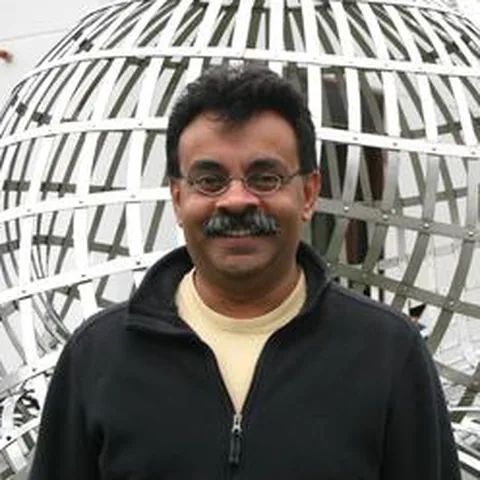 Madhu SudanHarvard University, 2015–2026
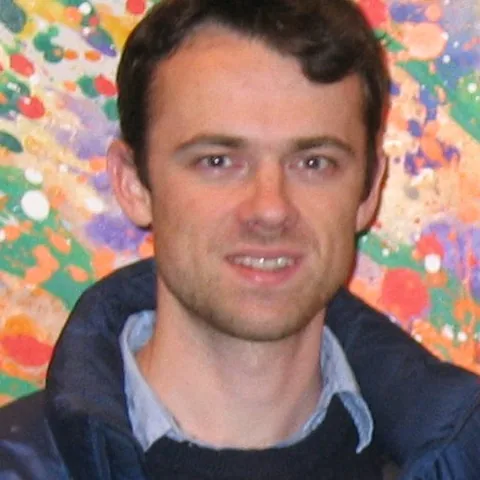 Rob FergusNew York University, 2009–2012
Sources and credits
Photo: We have no published photo of Josh McDermott yet. Send us a free-licensed photo.
- Josh McDermott's CV
- Josh McDermott - MIT McGovern Institute
- Why we like the music we do
- Shiffrin, Dosher Receive NAS Atkinson Prize
- Machine-learning system processes sounds like humans do
- Model metamers reveal divergent invariances between biological and artificial neural networks
- How the brain handles the “cocktail party problem”
- Two McGovern faculty appointed to named professorships at MIT
- Josh McDermott | Brain and Cognitive Sciences