Jonathan Ho
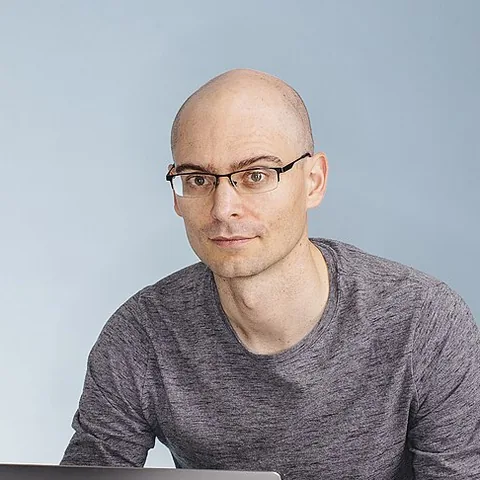
Jonathan Ho is a machine learning researcher whose 2020 paper Denoising Diffusion Probabilistic Models outlined an image generation method that helped provide the foundation for many models today. They began in robot learning at Berkeley, coauthored Generative Adversarial Imitation Learning with Stefano Ermon in 2016, and finished a Berkeley PhD under Pieter Abbeel in 2020. A research scientist position at Google Brain in Amsterdam followed; in 2022, they were among the authors of Imagen, which NeurIPS 2022 named an Outstanding Paper, and they published Classifier-Free Diffusion Guidance with Tim Salimans. Also in 2022, Ho co-founded the text-to-image company Ideogram with Mohammad Norouzi, William Chan and Chitwan Saharia, and the company raised $80 million in February 2024.
Timeline
-
2013–2014
Robot learning at Berkeley
As a member of Berkeley's Robot Learning Lab, they coauthor robotics papers with John Schulman and Pieter Abbeel in 2013, among them a method for finding collision-free trajectories by sequential convex optimization. In 2014, they leave Berkeley EECS for a computer science PhD at Stanford.
-
2016
Generative adversarial imitation learning
In 2016, they present Generative Adversarial Imitation Learning with Stefano Ermon at NeurIPS, and a model-free imitation learning method with Ermon and Jayesh K. Gupta at ICML.
-
May 2020
Berkeley PhD and Google Brain
They complete a computer science PhD at Berkeley in May 2020, advised by Pieter Abbeel, with a thesis titled Deep Generative Models: Imitation Learning, Image Synthesis, and Compression. A research scientist position at Google Brain in Amsterdam follows.
-
2020
Denoising diffusion probabilistic models
In 2020, they are lead author, with Ajay Jain and Pieter Abbeel, of Denoising Diffusion Probabilistic Models at NeurIPS. The paper reports a state-of-the-art FID score of 3.17 on unconditional CIFAR10, and the image generation method it outlines helps provide the foundation for many models today.
-
2022
An Outstanding Paper for Imagen
In May 2022, they appear among the authors of Imagen, a text-to-image diffusion model that reaches a state-of-the-art FID score of 7.27 on the COCO dataset. NeurIPS 2022 lists the paper, Photorealistic Text-to-Image Diffusion Models with Deep Language Understanding, as an Outstanding Paper.
-
2022
Classifier-free diffusion guidance
In July 2022, they and Tim Salimans post Classifier-Free Diffusion Guidance on arXiv, following a short version at a NeurIPS 2021 workshop. The method jointly trains a conditional and an unconditional diffusion model and combines their score estimates to trade off sample quality and diversity.
-
2022–2023
Co-founding Ideogram
In 2022, they co-found Ideogram with Mohammad Norouzi, William Chan and Chitwan Saharia; all four founders spent time at Google Brain and worked as researchers on Imagen. Ideogram releases its first model, 0.1, in August 2023.
-
February 2024
Ideogram's $80 million raise
In February 2024, Ideogram raises $80 million after releasing its 1.0 model, and Redpoint invests in its Series A in 2024.
Career
- From 2022IdeogramCo-founder
- From 2020Google BrainResearch Scientist
- 2013–2014University of California, BerkeleyMember
Education
- 2020University of California, BerkeleyPhD
- From 2014Stanford UniversityPhD
Colleagues

Sources and credits
Photo: We have no published photo of Jonathan Ho yet. Send us a free-licensed photo.
- Jonathan Ho
- UC Berkeley Robot Learning Lab: People
- Denoising Diffusion Probabilistic Models
- Toronto startup Ideogram launches image generator as interest in AI tools shows signs of slowdown - The Globe and Mail
- Photorealistic Text-to-Image Diffusion Models with Deep Language Understanding
- NeurIPS 2022 Awards
- Classifier-Free Diffusion Guidance
- Ideogram (text-to-image model) - Wikipedia
- Ideogram | Redpoint Ventures