Islam Mesabah
Also known as إسلام مصبح
Islam Mesabah is a computer scientist who builds language-model systems that generate code from API documentation and extract structured data from scanned documents. After earning a bachelor's degree at the German University in Cairo in 2021 and working there as a research and teaching assistant until 2022, they completed a master's degree at TU Kaiserslautern in 2024, releasing the CoderAPI model and dataset on Hugging Face. At the German Research Center for Artificial Intelligence (DFKI), which they joined in May 2023, they coauthored 2025 studies on narrative priming in multi-agent LLM games and on tree-based reasoning in vision-language models. In 2026, they released the AraReceipt dataset of 100 Arabic receipts and the GAIDA human-in-the-loop annotation system. Since December 2025, they are a PhD student in computer science at RPTU Kaiserslautern-Landau, studying language models for code generation and optimisation while continuing as a researcher at DFKI.
- Now at
- DFKI
Timeline
-
2016–2022
Computer science in Cairo
They study Computer Science and Engineering at the German University in Cairo from 2016 to 2021, graduating with high honours with a thesis on subword-level language identification for Arabic–English intra-word code-switching. In 2021, they coauthor the paper "Language Identification of Intra-Word Code-Switching for Arabic–English" in the Elsevier journal Array with Caroline Sabty, Özlem Çetinoğlu and Slim Abdennadher. From September 2021 to June 2022, they work at the university as a research and teaching assistant for Database Systems and Concepts of Programming Languages, supervising four bachelor theses.
-
2022–2024
Master's degree in Kaiserslautern
In 2022, they begin an M.Sc. in Computer Science at TU Kaiserslautern (now RPTU). From August 2022 to May 2023, they work as a research assistant in the Machine Learning Group, evaluating the language models GPT-3, OPT and BLOOM on English text style transfer. Their master's thesis, supervised by Sebastian Vollmer and Sergey Redyuk, studies efficient code generation with large language models using API documentation and finishes in March 2024.
-
May 2023
Researcher at DFKI
They join the German Research Center for Artificial Intelligence (DFKI) in Kaiserslautern in May 2023, within the Department of Data Science and its Applications led by Professor Sebastian Vollmer. Their research centers on large language models and on extracting and structuring key information from image documents. At RPTU, they also coordinate and teach the annual Engineering with Generative AI course.
-
March 2024
The CoderAPI model
In March 2024, they release the CoderAPI model and dataset on Hugging Face, the artifacts of their master's thesis. CoderAPI fine-tunes Instruct CodeT5+ 16B and retrieves API documentation at generation time, so the model writes multi-line Python for seen and unseen libraries.
-
May–October 2025
The Power of Stories
In May 2025, they coauthor the preprint "The Power of Stories: Narrative Priming Shapes How LLM Agents Collaborate and Compete" with Gerrit Großmann, Sebastian J. Vollmer and others. The study primes LLM agents with stories in networked public-goods games and finds that shared narratives raise cooperation and contributions. In October 2025, the work is presented at NETGCOOP 2025 in Bilbao and published in Springer's Lecture Notes in Computer Science.
-
September 2025
Tree-based reasoning in VLMs
In September 2025, they coauthor the preprint "Decomposing Visual Classification: Assessing Tree-Based Reasoning in VLMs" with Sary Elmansoury, Sebastian J. Vollmer and others. The paper decomposes visual classification into interpretable decision-tree steps and evaluates it on GTSRB and CIFAR-10, where tree-based reasoning underperforms standard zero-shot prompting.
-
August–October 2026
GAIDA and the AraReceipt dataset
In August 2026, they release the AraReceipt dataset of 100 manually annotated Arabic receipt images labeled with 25 key-information classes and the GAIDA annotation toolkit. In October 2026, they post the preprint "GAIDA: Generative AI for Human-in-the-Loop Document Annotation", which combines OCR, LLM pre-annotation and a human reviewer to cut annotation time by up to 80%.
-
Since December 2025
A PhD on automated research
In December 2025, they start a PhD in Computer Science at RPTU Kaiserslautern-Landau on language models for code generation and optimisation towards automated scientific research, supervised by Sebastian Vollmer and Brian Moser. In September 2026, they supervise three student projects that build multi-agent systems able to work with legacy tools and APIs as an AI IT assistant for organisations, while continuing as a researcher at DFKI.
Career
- Since 2023DFKIResearcher
- 2022–2023RPTU University Kaiserslautern-LandauResearch Assistant
- 2021–2022German University in CairoResearch and Teaching Assistant
Education
- From 2025RPTU University Kaiserslautern-LandauPhD
- 2024RPTU University Kaiserslautern-LandauM.Sc. in Computer Science
- 2021German University in CairoBachelor's degree in Computer Science and Engineering
Colleagues

Sources and credits
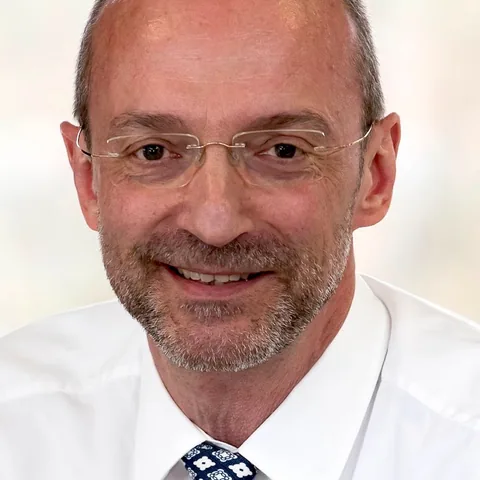
Photo: We have no published photo of Islam Mesabah yet. Send us a free-licensed photo.
- Islam Mesabah — Data Science and its Applications
- Islam Mesabah · PhD student, RPTU & DFKI
- islammesabah (Islam Mesabah) · GitHub
- [2505.03961] The Power of Stories: Narrative Priming Shapes How LLM Agents Collaborate and Compete
- [2509.09732] Decomposing Visual Classification: Assessing Tree-Based Reasoning in VLMs
- [2610.26362] GAIDA: Generative AI for Human-in-the-Loop Document Annotation