Dorsa Sadigh
Dorsa Sadigh is a Stanford computer scientist who develops methods for robots to learn from people and adapt to them. She earned her bachelor’s degree and doctorate in electrical engineering and computer sciences at UC Berkeley in 2012 and 2017, and joined Stanford’s faculty in 2017. Her work included learning rewards from human preferences, modeling other agents’ strategies, and the OpenVLA model for robot control in 2024. She received a Sloan Research Fellowship in 2022 and a Presidential Early Career Award for Scientists and Engineers in 2025. As of October 2026, she is an associate professor of Computer Science and Electrical Engineering at Stanford and a senior fellow at its Institute for Human-Centered AI.
- Now at
- Stanford University
- Works
- 266
- Citations
- 10,158
- h-index
- 50
- Badges
Publication numbers from OpenAlex, as of 27 October 2026.
Timeline
-
2012
A Berkeley engineering degree
She earns a bachelor’s degree in electrical engineering and computer sciences at the University of California, Berkeley, in 2012.
-
July 2017
Learning rewards from preferences
In July 2017, she coauthors “Active Preference-Based Learning of Reward Functions” with Anca Dragan, Shankar Sastry and Sanjit Seshia at Robotics: Science and Systems. The method learns how a person wants a system to act by asking them to compare pairs of trajectories, and selects which comparisons to request.
-
2017
A doctorate in safe autonomy
In 2017, she completes her doctorate in Berkeley’s Electrical Engineering and Computer Sciences Department, advised by S. Shankar Sastry and Sanjit A. Seshia. Her dissertation, “Safe and Interactive Autonomy: Control, Learning, and Verification,” develops methods for controlling and verifying systems that interact with people, with a focus on semiautonomous driving.
-
2017–2019
Joining the Stanford faculty
She joins Stanford’s faculty in 2017. By 2019, she is an assistant professor in Computer Science and Electrical Engineering, designing algorithms for safe systems that interact with people.
-
2020
Learning other agents’ strategies
In 2020, she coauthors “Learning Latent Representations to Influence Multi-Agent Interaction” with Annie Xie, Dylan Losey, Ryan Tolsma and Chelsea Finn. The work uses reinforcement learning to represent another agent’s strategy and learn how a robot’s behavior can influence it, with tests in simulation and a real air hockey game.
-
2022
A Sloan Research Fellowship
She receives a Sloan Research Fellowship in 2022. The fellowship supports fundamental research by scientists and scholars early in their careers.
-
June 2024
The OpenVLA robot model
In June 2024, she coauthors “OpenVLA: An Open-Source Vision-Language-Action Model.” OpenVLA combines a language model with visual encoders for robot control. It has seven billion parameters, is trained on 970,000 demonstrations from real robots, and can be fine-tuned for new tasks.
-
2025
A presidential early career award
In 2025, she receives the Presidential Early Career Award for Scientists and Engineers (PECASE). The award recognizes scientific and technological work, leadership, public education and community outreach.
-
May 2026
AI assistance for skill development
In May 2026, she coauthors “Proximal State Nudging: Reducing Skill Atrophy from AI Assistance.” The shared autonomy algorithm guides users toward states estimated to help them learn, with tests using simulated students and people performing driving tasks in the CARLA simulator.
-
As of October 2026
Associate professor at Stanford
As of October 2026, she is an associate professor of Computer Science and Electrical Engineering at Stanford and a senior fellow at the Stanford Institute for Human-Centered AI. Her group develops robot learning algorithms that learn from people and adapt to them.
Career
- Since 2017Stanford UniversityFaculty member
- NowStanford UniversityAssociate professor of Computer Science and Electrical Engineering
- NowStanford UniversitySenior fellow
- 2023–2025Google
- 2023–2025Google DeepMind
- Stanford UniversityAssistant professor of Computer Science and Electrical Engineering
Education
- 2017University of California, BerkeleyPhD in electrical engineering and computer sciences
- 2012University of California, BerkeleyBachelor's degree in electrical engineering and computer sciences
Colleagues
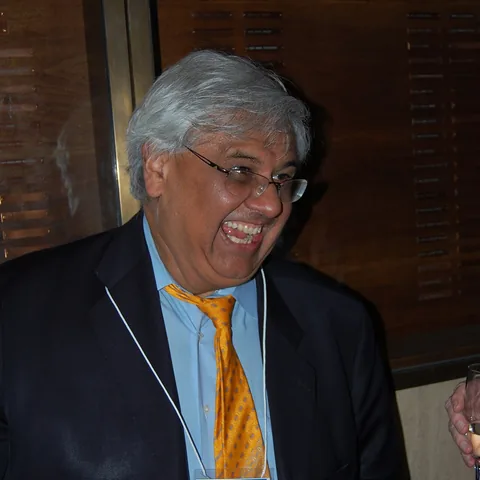 Shankar SastryUniversity of California, Berkeley, 2011–2017
- Anca DraganUniversity of California, Berkeley, 2016–2017
- Lei XingStanford University, 2016–2026
- Daniel L. RubinStanford University, 2016–2026
- Emmanuel J. CandèsStanford University, 2016–2026
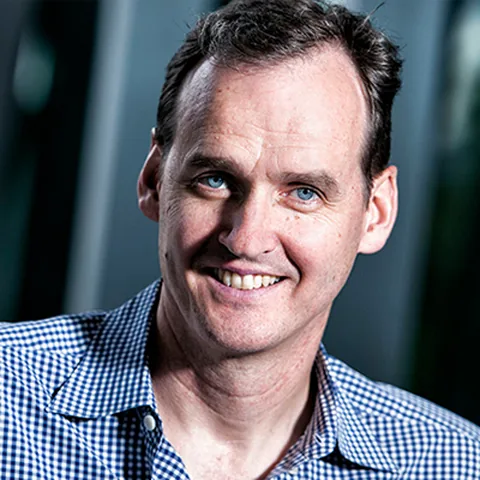 Peter L BartlettUniversity of California, Berkeley, 2011–2017
Sources and credits
Photo: We have no published photo of Dorsa Sadigh yet. Send us a free-licensed photo.
- Dorsa Sadigh | Stanford HAI
- Robotics: Science and Systems XIII - Online Proceedings
- Safe and Interactive Autonomy: Control, Learning, and Verification | EECS at UC Berkeley
- Spotlight: Dorsa Sadigh | Stanford University School of Engineering
- Learning Latent Representations to Influence Multi-Agent Interaction - CoRL 2020 Papers
- Dan Congreve and Dorsa Sadigh named 2022 Sloan Research Fellows | Stanford Electrical Engineering
- [2406.09246] OpenVLA: An Open-Source Vision-Language-Action Model
- Chelsea Finn, Dorsa Sadigh, and Mary Wootters named 2025 PECASE Recipients | Stanford Electrical Engineering
- [2605.20355] Proximal State Nudging: Reducing Skill Atrophy from AI Assistance
- Dorsa Sadigh | Computer Science
- Dorsa Sadigh