Barry C. Sanders
Also known as Barry Cyril Sanders
Barry Sanders is a physicist whose work connects machine learning with quantum measurement and control. He studied physics at the University of Calgary and Imperial College London, joined Macquarie University in 1991, and returned to Calgary in 2003. His work includes autonomous machine learning for quantum measurement, reinforcement learning for quantum control, and quantum machine learning for data science. He received the City of Calgary International Achievement Award in 2022 and was appointed Chevalier dans l’Ordre des Palmes académiques of France in 2025. As of October 2026, he is Professor of Physics and Astronomy at the University of Calgary and Scientific Director of Quantum City.
Timeline
-
1984–1985
A BSc and diploma
He earns a BSc at the University of Calgary in 1984 and a Diploma of Imperial College in 1985.
-
1987
A physics PhD
He completes a PhD in physics at Imperial College London in 1987, supervised by Professor Sir Peter Knight.
-
1991–2003
From Macquarie to Calgary
After postdoctoral research at the Australian National University, the University of Queensland and the University of Waikato, he joins Macquarie University's faculty in 1991 and moves to Calgary in 2003.
-
2010–2018
Machine learning for quantum control
With Alexander Hentschel, he publishes the 2010 paper Machine Learning for Precise Quantum Measurement; the method generates adaptive feedback schemes for quantum measurement and outperforms the best known adaptive scheme for interferometric phase estimation. At the APS March Meeting in 2018, he presents reinforcement learning for quantum control, which searches for control settings through trial and experience.
-
2022
A Calgary achievement award
He receives the City of Calgary International Achievement Award in 2022.
-
2023
Quantum computing for data science
He posts a perspective on quantum computing for data science in 2023, covering hardware, algorithms and the potential for quantum machine learning.
-
2025
A French academic honour
France appoints him Chevalier dans l’Ordre des Palmes académiques in 2025.
-
As of October 2026
Professor and Quantum City director
As of October 2026, he is Professor of Physics and Astronomy and Scientific Director of Quantum City at the University of Calgary. He is also a Senior Fellow at the Centre for International Governance Innovation (CIGI).
Career
- Since 2003University of CalgaryProfessor of Physics and Astronomy
- NowQuantum CityScientific Director
- NowCentre for International Governance InnovationSenior Fellow
- 2019–2023Raman Research Institute
- 2016–2020California Institute of Technology
- 2014–2023CIFAR
- 2013–2023University of Science and Technology of China
- 2001–2004Stanford University
- 1991–2003Macquarie UniversityFaculty member
- 1990–1991University of WaikatoPostdoctoral researcher
- 1989–1990University of QueenslandPostdoctoral researcher
- Australian National UniversityPostdoctoral researcher
Education
- 1987Imperial College LondonPhD
- 1985Imperial College LondonDiploma
- 1984University of CalgaryBSc
Colleagues
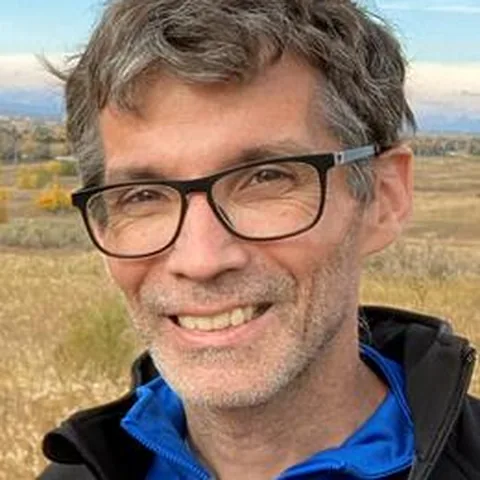 Christoph SimonUniversity of Calgary, 2009–2026
 Deborah RichardsMacquarie University, 1999–2008
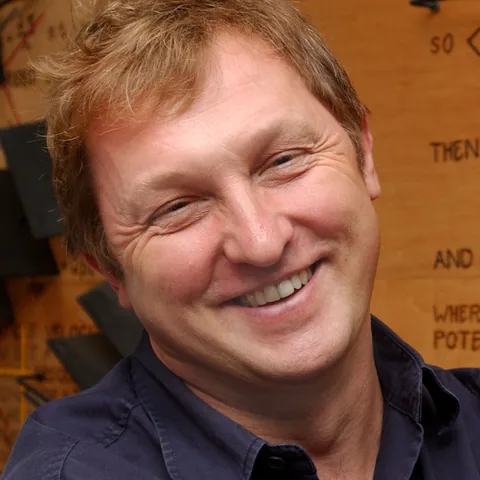 Robert DaleMacquarie University, 1995–2008
- Naren ChittyMacquarie University, 1991–1994
- Cheng-Zhi PengUniversity of Science and Technology of China, 2013–2023
- Yongdong ZhangUniversity of Science and Technology of China, 2017–2023
Sources and credits
Photo: We have no published photo of Barry C. Sanders yet. Send us a free-licensed photo.
- ISPIA People Barry Sanders | Institute for Security, Privacy and Information Assurance | University of Calgary
- Barry Cyril Sanders | UCalgary Profiles | University of Calgary
- Machine Learning for Precise Quantum Measurement | Physical Review Letters
- Reinforcement Learning for Quantum Control - APS March Meeting 2018
- Quantum computing for data science