Amy X. Zhang
Also known as Amy Zhang
Amy X. Zhang is a computer scientist and associate professor at the University of Washington, where she heads the Social Futures Lab and studies human-AI interaction and social computing. She studied computer science at Rutgers and Cambridge, completed her PhD at MIT in 2019, and worked as a Stanford postdoctoral researcher before joining Washington in 2020. Her 2018 Squadbox tool let people recruit friends to screen harassing email. In 2025, she received a Sloan Research Fellowship and coauthored SPICA, a framework for aligning language models with different groups' preferences.
- Now at
- University of Washington, Allen Institute for AI (Ai2) and Metagov
- Works
- 169
- Citations
- 3,270
- h-index
- 31
- Badges
Publication numbers from OpenAlex, as of 27 October 2026.
Timeline
-
2011–2012
Rutgers and Cambridge degrees
In 2011, she earns a BS in computer science at Rutgers University and receives a Gates Cambridge scholarship for graduate study. She earns an MPhil in advanced computer science at the University of Cambridge in 2012.
-
2013
Software engineer at NewsCred
She works as a software engineer at NewsCred in New York City in 2013. The startup works in news aggregation, syndication and management.
-
2018
Squadbox against email harassment
In 2018, she leads the development of Squadbox at MIT's Computer Science and Artificial Intelligence Laboratory. The tool lets people recruit friends as moderators to screen incoming email and decide which messages reach their inbox.
-
2018–2020
MIT doctorate and Stanford postdoc
She is a fellow at Harvard University's Berkman Klein Center from 2018 to 2019. In 2019, she completes her PhD at MIT's Computer Science and Artificial Intelligence Laboratory. She works as a postdoctoral researcher in Stanford University's Computer Science Department from 2019 to 2020.
-
September 2020
Joining the Allen School
She starts her faculty position at the University of Washington's Allen School of Computer Science & Engineering in September 2020.
-
February 2025
A Sloan Research Fellowship
In February 2025, she receives a Sloan Research Fellowship for her research on social computing systems that give users and communities control over their online experiences.
-
July 2025
SPICA for model alignment
With Quan Ze Chen, Kevin Feng and Chan Young Park, she publishes SPICA: Retrieving Scenarios for Pluralistic In-Context Alignment in July 2025. The framework selects examples for language-model prompts using differences between groups' preferences, with scenario banks and retrieval methods that account for those differences.
-
As of October 2026
Associate professor at Washington
In August 2025, she becomes an associate professor with tenure at the University of Washington's Allen School of Computer Science & Engineering. As of October 2026, she heads the Social Futures Lab and studies human-AI interaction and social computing. She is also a visiting researcher at Ai2 and research director at MetaGov, a collective studying digital governance.
Career
- NowAllen Institute for AI (Ai2)Visiting Researcher
- Since 2025University of WashingtonAssociate Professor, Head
- NowMetagovResearch Director
- 2019–2020Stanford UniversityPostdoctoral Researcher
- From 2013NewsCredSoftware Engineer
Education
- 2019Massachusetts Institute of TechnologyPhD
- 2012University of CambridgeMPhil in Advanced Computer Science
- 2011Rutgers UniversityBS in Computer Science
Colleagues
- Jenq–Neng HwangUniversity of Washington, 2020–2026
 Christopher BrethertonUniversity of Washington, 2020–2026
- Ali ShojaieUniversity of Washington, 2020–2026
- Kamal Youcef-ToumiMassachusetts Institute of Technology, 2012–2023
 Regina BarzilayMassachusetts Institute of Technology, 2012–2023
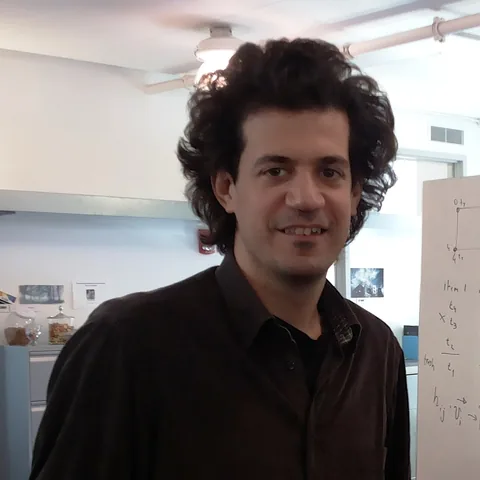 Constantinos DaskalakisMassachusetts Institute of Technology, 2012–2023
Sources and credits
Photo: We have no published photo of Amy X. Zhang yet. Send us a free-licensed photo.
- Amy Zhang | UW College of Engineering
- Rutgers Senior Awarded Gates Scholarship for Graduate Study at Cambridge University | Rutgers University
- Amy X. Zhang - UW CSE
- Using friends to fight online harassment | MIT News | Massachusetts Institute of Technology
- Amy Zhang, Associate Professor - Paul G. Allen School of Computer Science & Engineering
- Amy X. Zhang - UW CSE
- Allen School News Archive » Allen School professor Amy X. Zhang receives Sloan Research Fellowship for empowering users to make ‘our online spaces as rich and varied as our offline ones’
- SPICA: Retrieving Scenarios for Pluralistic In-Context Alignment - ACL Anthology