Ali Borji
Also known as A Borji, A. Borji
Ali Borji is a computer-vision researcher whose work links visual attention, image saliency and machine learning. He earned degrees in computer engineering at the Petroleum University of Technology and Shiraz University, completed a PhD in computational neuroscience at IPM in Tehran, and worked at Bonn and USC before joining faculty at UWM and UCF. His work includes CAT2000, a visual-saliency dataset built from 4,000 images, a review of deep saliency models, research on human and machine tracking, and an analysis of ChatGPT failures. From 2019 to 2021, he held roles at Markable and HCL; as of October 2026, he is an ML engineer at PrimerAI and founder and CEO of Quintic AI.
Timeline
-
2001–2009
Engineering degrees and a PhD
He earns a B.S. in computer engineering from the Petroleum University of Technology in 2001 and an M.S. from Shiraz University in 2004. He completes a PhD in computational neurosciences at the Institute for Studies in Fundamental Sciences (IPM) in Tehran in 2009.
-
2009–2014
Postdoctoral work in Bonn and USC
He works with Dr. Simone Frintrop at the University of Bonn from May 2009 to March 2010, then serves as a postdoctoral scholar at USC's iLab from March 2010 to August 2014.
-
2014–2016
Assistant professor at UWM and UCF
He joins the University of Wisconsin–Milwaukee as an assistant professor in fall 2014 and moves to UCF's Center for Research in Computer Vision in January 2016.
-
2015
The CAT2000 fixation dataset
With Laurent Itti, he introduces CAT2000 in 2015, a saliency dataset built from eye movements of 120 observers viewing 4,000 naturalistic and artificial images.
-
2018–2019
Reviewing deep-learning saliency models
He submits his review in October 2018 and revises it in May 2019. It compares image and video saliency models across two image benchmarks and two large video datasets, examining factors behind the gap between models and human performance.
-
2019–2021
Roles at Markable and HCL
In 2019, he becomes a senior research scientist at Markable, then a solution director at HCL Technologies from 2020 to 2021. In 2020, he coauthors a review of multiple-target tracking that connects neuroscience research with biologically inspired computer-vision methods while employed by HCL America.
-
2023–2026
ChatGPT failures and 2026 vision work
In 2023, he analyzes ChatGPT's failures across eleven categories, including reasoning, factual errors, math, coding and bias. In 2026, he serves on AAAI's program committee as a PrimerAI affiliate and coauthors a Quintic AI paper on skin-lesion segmentation with SAMv2.
-
Since 2021
Founder and CEO of Quintic AI
He is an ML engineer at PrimerAI and the founder and CEO of Quintic AI.
Career
- Since 2021Quintic AIFounder and CEO
- NowPrimerAIML Engineer
- 2020–2021HCL TechnologiesSolution Director
- 2020HCL America
- 2019MarkableSenior Research Scientist
- 2016University of Central FloridaAssistant Professor
- 2014–2016University of Wisconsin–MilwaukeeAssistant Professor
- 2010–2014University of Southern CaliforniaPostdoctoral Scholar
- 2009–2010University of BonnPostdoctoral researcher
- 2007–2009Institute for Research in Fundamental Sciences
Education
- 2009Institute for Studies in Fundamental SciencesPhD in computational neurosciences
- 2004Shiraz UniversityM.S.
- 2001Petroleum University of TechnologyB.S. in computer engineering
Colleagues
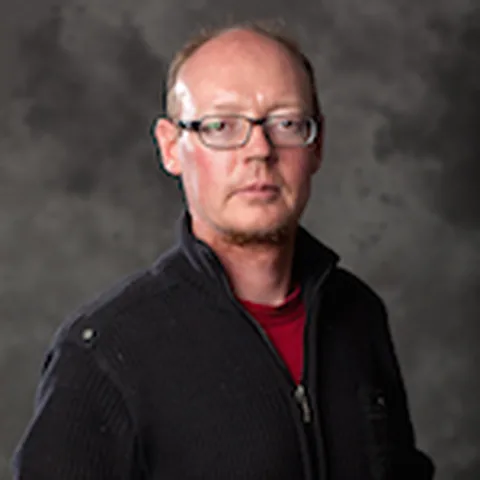 Laurent IttiUniversity of Southern California, 2021–2026
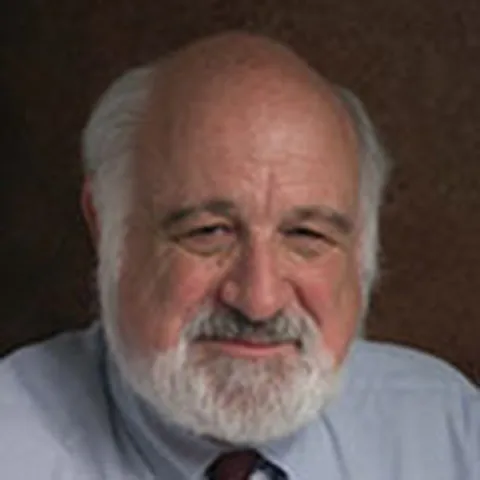 Michael A. ArbibUniversity of Southern California, 2021–2026
- Bahaa E. A. SalehUniversity of Central Florida, 2015–2020
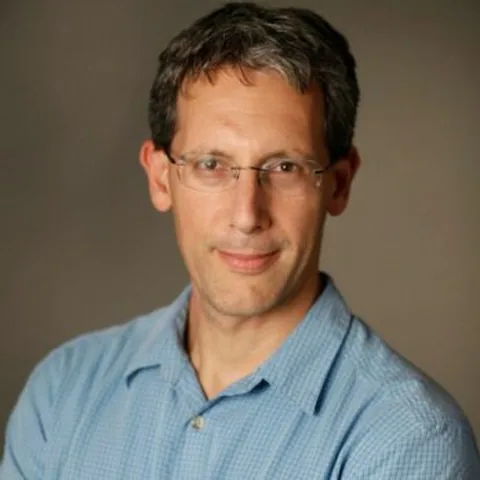 Daniel A. LidarUniversity of Southern California, 2021–2026
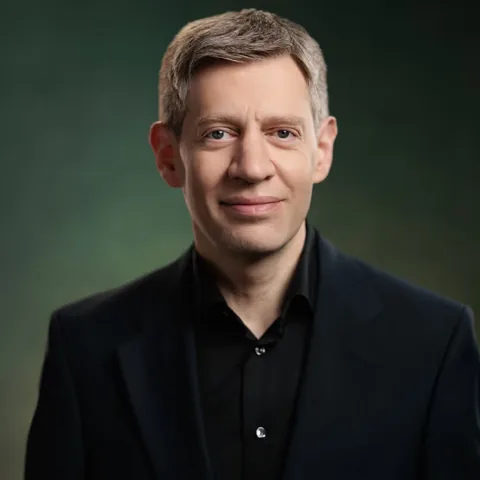 Kenneth StanleyUniversity of Central Florida, 2015–2020
 Mubarak ShahUniversity of Central Florida, 2015–2020
Sources and credits
Photo: We have no published photo of Ali Borji yet. Send us a free-licensed photo.
- Tutorials & Workshops, 2015 IEEE International Conference on Image Processing
- Ali Borji
- [1505.03581] CAT2000: A Large Scale Fixation Dataset for Boosting Saliency Research
- [1810.03716] Saliency Prediction in the Deep Learning Era: Successes, Limitations, and Future Challenges
- Multiple-target tracking in human and machine vision | PLOS Computational Biology
- ali borji (PrimerAI): visual saliency — Lacuna
- [2302.03494] A Categorical Archive of ChatGPT Failures
- 2026 Program Committee - AAAI
- IEEE ICASSP 2026 || Barcelona, Spain || 4-8 May 2026