Tomaso Poggio
Tomaso Poggio researches computational neuroscience, vision and learning. He received a theoretical physics doctorate in Genoa in 1971, worked at the Max Planck Institute for Biological Cybernetics and joined MIT in 1981. With Maximilian Riesenhuber, he developed a hierarchical model of object recognition using a MAX-like operation, linking computational design with physiological observations. His research also addresses unifying theories and models of visual understanding.
- Works
- 745
- Citations
- 86,755
- h-index
- 130
Publication numbers from OpenAlex, as of 14 October 2026.
Timeline
-
1971
A physics foundation
Poggio earned a theoretical physics doctorate at the University of Genoa in 1971. This training preceded his work on biological computation and models of visual processing.
-
1972–1981
Biological cybernetics and MIT
He worked at the Max Planck Institute for Biological Cybernetics during 1972–1981, then became an associate professor at MIT in 1981. These roles took him from early neuroscience work to a computing research environment at MIT.
-
1999
A hierarchy for object recognition
Poggio and Maximilian Riesenhuber published a model of object recognition in cortex. It uses a MAX-like operation within a hierarchy, accounts for aspects of a difficult visual task and produces testable predictions.
-
As of October 2026
Models and theories of intelligence
His MIT research uses computational models of visual understanding and learning to develop mathematical theories across disciplines. He also works within brain, cognitive science and AI research organizations, placing visual recognition in a broader study of intelligence.
Sources and credits
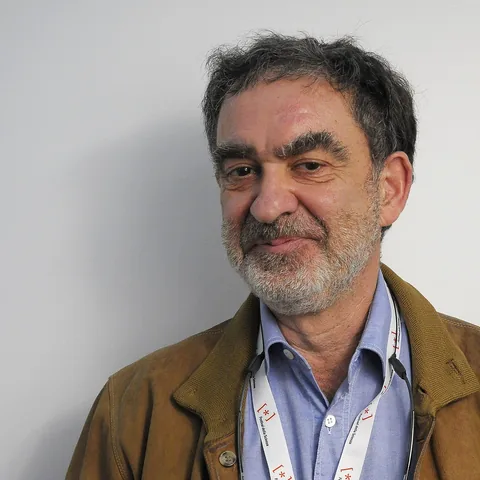
Photo: Cirone-Musi, Festival della Scienza, via Wikimedia Commons. License: CC BY-SA 2.0. Source: commons.wikimedia.org. Cropped to a square and resized. Ask us to remove or replace this photo.
