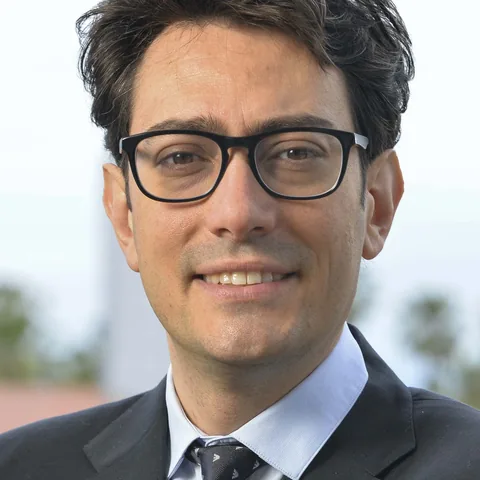
Somil Bansal
Somil Bansal is an assistant professor of aeronautics and astronautics at Stanford who develops methods to make AI-enabled robots and autonomous systems safer. He studied electrical engineering at IIT Kanpur and UC Berkeley, where he completed his PhD in 2020 under Claire Tomlin. After working as a research scientist at Waymo in 2020–2021, he founded the Safe and Intelligent Autonomy Lab at USC in 2021 and later moved it to Stanford. He coauthored DeepReach in 2020, using neural networks for safety analysis, and SAFE-GIL in 2024, using disturbances during demonstrations to improve imitation learning. In 2026, he received the IEEE Robotics and Automation Society's Early Academic Career Award in Robotics and Automation.
- Now at
- Stanford University
- Works
- 81
- Citations
- 1,895
- h-index
- 18
Publication numbers from OpenAlex, as of 27 October 2026.
Timeline
-
2012–2014
Engineering at Kanpur and Berkeley
He grows up in Hanumangarh, India. In 2012, he earns a BTech in electrical engineering at the Indian Institute of Technology Kanpur. He completes an MS in electrical engineering and computer sciences at UC Berkeley in 2014, advised by Claire Tomlin.
-
2020
A doctorate with Claire Tomlin
In 2020, he completes his PhD in electrical engineering and computer sciences at UC Berkeley's Hybrid Systems Laboratory, supervised by Claire Tomlin.
-
August 2020–August 2021
Research scientist at Waymo
From August 2020 to August 2021, he works as a research scientist at Waymo, the autonomous driving company formerly known as the Google Self-Driving Car Project.
-
November 2020
DeepReach for robot safety
In November 2020, he and Claire Tomlin introduce DeepReach, a neural network method for high-dimensional safety analysis. They demonstrate it on a nine-dimensional multi-vehicle collision problem and a ten-dimensional narrow-passage problem motivated by autonomous driving.
-
2021
Founding the SIA Lab
In 2021, he founds the Safe and Intelligent Autonomy Lab at the University of Southern California. The lab studies how autonomous systems can use modern machine learning while maintaining mathematical safety guarantees.
-
2023
Robot safety at USC
In 2023, he is an assistant professor of electrical and computer engineering and computer science at USC, where he leads the Safe and Intelligent Autonomy Lab in the Ming Hsieh Department of Electrical and Computer Engineering. His NSF CAREER proposal, “Safety Assurances for Perception-Enabled Robotic Systems,” addresses safety for robots that use learned controllers and perception.
-
2024
SAFE-GIL for imitation learning
In 2024, he coauthors “SAFE-GIL: SAFEty Guided Imitation Learning for Robotic Systems.” It injects disturbances during data collection to guide an expert toward safety-critical states, then uses these demonstrations to train safer robot policies.
-
2026
An IEEE robotics award
In 2026, he receives the IEEE Robotics and Automation Society's Early Academic Career Award in Robotics and Automation for scalable algorithms that support the safe control of autonomous and AI-enabled robotic systems.
-
As of October 2026
Assistant professor at Stanford
In 2026, he is an assistant professor in Stanford's Department of Aeronautics and Astronautics and directs the Safe and Intelligent Autonomy Lab after its move from USC. His research combines machine learning, robotics and control theory to analyze, evaluate and verify the safety of AI-enabled autonomous systems.
Career
- NowStanford UniversityAssistant Professor of Aeronautics and Astronautics
- NowStanford UniversityDirector, Safe and Intelligent Autonomy Lab
- 2024–2026Vaughn College of Aeronautics and Technology
- 2024–2026American Institute of Aeronautics and Astronautics
- From 2021University of Southern CaliforniaFounder, Safe and Intelligent Autonomy Lab
- 2020–2021WaymoResearch Scientist
- University of Southern CaliforniaAssistant Professor of Electrical and Computer Engineering and Computer Science
- University of Southern CaliforniaHead, Safe and Intelligent Autonomy Lab
Education
- 2020University of California, BerkeleyPhD in electrical engineering and computer sciences, Hybrid Systems Laboratory
- 2014University of California, BerkeleyMS in electrical engineering and computer sciences
- 2012Indian Institute of Technology KanpurBTech in electrical engineering
Colleagues
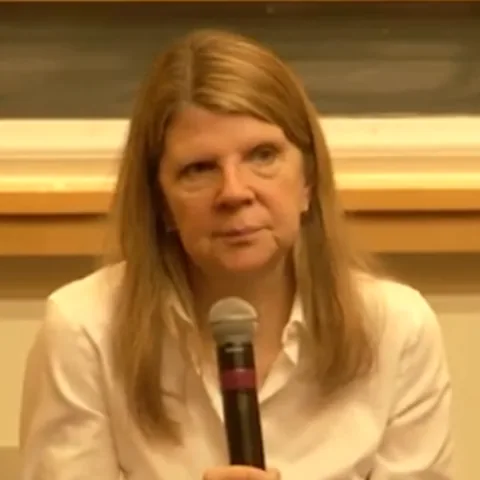 Claire TomlinUniversity of California, Berkeley, 2014–2021
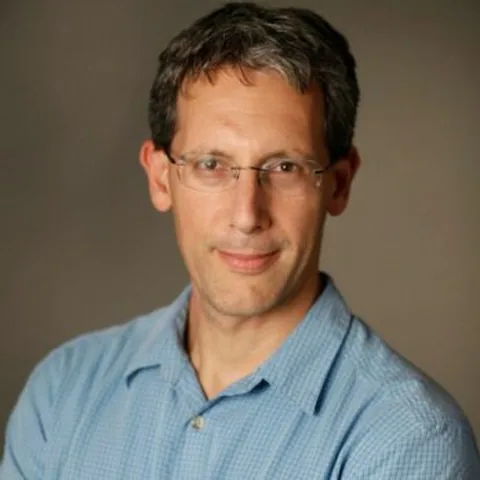 Daniel A. LidarUniversity of Southern California, 2020–2026
- Mykel KochenderferVaughn College of Aeronautics and Technology, 2024–2026
 C.-C. Jay KuoUniversity of Southern California, 2020–2026
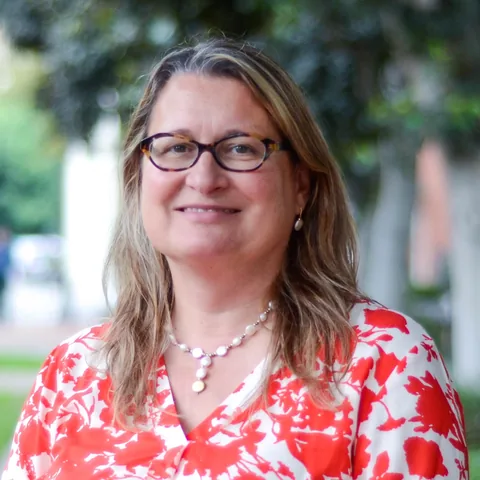 Yolanda GilUniversity of Southern California, 2020–2026
 Marco PavoneVaughn College of Aeronautics and Technology, 2024–2026
Sources and credits
Photo: We have no published photo of Somil Bansal yet. Send us a free-licensed photo.
- Somil Bansal's Profile | Stanford Profiles
- Somil Bansal
- Qian, Bansal study the way robots move, interact with the world around them - USC Viterbi | School of Engineering
- [2011.02082] DeepReach: A Deep Learning Approach to High-Dimensional Reachability
- Spotlight: Somil Bansal | Stanford University School of Engineering
- Six USC Viterbi Faculty Honored with NSF CAREER Awards - USC Viterbi | School of Engineering
- [2404.05249] SAFE-GIL: SAFEty Guided Imitation Learning for Robotic Systems
- 2026 IEEE RAS Award Recipients Announced - IEEE Robotics and Automation Society Website