Reza Samavi
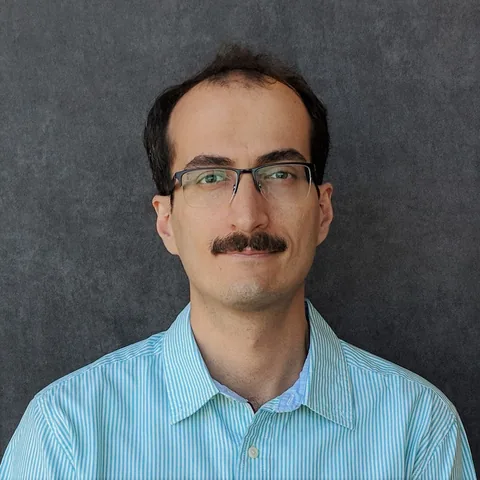
Reza Samavi is an engineering professor at Toronto Metropolitan University whose research on trustworthy AI covers the security, privacy and robustness of machine learning. A software start-up founder during the dot-com boom, he moved into academia and earned an MEng in 2007 and a PhD in 2013 at the University of Toronto. At McMaster University from 2014 to 2020, he co-authored a 2018 paper on blockchain-backed privacy audit logs and a 2019 game-theory model of data poisoning attacks. He joined Toronto Metropolitan University in 2020 to lead its Trustworthy AI Research Lab, and in 2022 became a research fellow in the inaugural Catalyst Fellowship Program at Rogers Cybersecure Catalyst. He is an Associate Professor there and a Faculty Affiliate of the Vector Institute, with NSERC funding through 2030 for work on the practical robustness of deep neural networks.
Timeline
-
1987–2007
A software start-up and MEng
He earns a BSc at Amirkabir University of Technology in 1987 and an MEng at the University of Toronto in 2007. During the dot-com boom he founds a successful software start-up, then switches to academia after rethinking what kind of impact he wants to make.
-
2009–2013
Privacy awards and a PhD
He receives the Privacy Technologies Research Award from the IBM Centre for Advanced Studies in 2009 and the Privacy by Design Research Award from the Information and Privacy Commissioner of Ontario in 2010. That commissioner designates him a Privacy by Design Ambassador in 2012. In April 2013, he defends his University of Toronto PhD thesis in the Information Engineering Center under the supervision of Mariano Consens.
-
2014–2020
Professor at McMaster
After a postdoctoral fellowship at the University of Toronto, collaborating with the Parametric Human Project at Autodesk Research, he joins McMaster University's Department of Computing and Software as an assistant professor in 2014. He serves as eHealth graduate program coordinator there until 2020.
-
2018–2019
Audit logs and poisoning games
In 2018, he and Andrew Sutton publish "Tamper-Proof Privacy Auditing for Artificial Intelligence Systems" in the Twenty-Seventh International Joint Conference on Artificial Intelligence, a Linked Data method that uses blockchain to create tamper-proof audit logs. In 2019, he and Yifan Ou post a game-theory model of data poisoning attacks on arXiv, proving that no pure strategy Nash equilibrium exists and proposing an algorithm for the defender's mixed strategy.
-
2020
Leading TAILab at TMU
In July 2020, he joins the Department of Electrical, Computer, and Biomedical Engineering at Toronto Metropolitan University and leads the Trustworthy AI Research Lab (TAILab). In December 2020, the Vector Institute re-appoints him as a Faculty Affiliate for another two years.
-
2022–2023
A Rogers Cybersecure fellowship
In August 2022, he is announced as a research fellow in the inaugural 2022–2023 Catalyst Fellowship Program at Rogers Cybersecure Catalyst. His fellowship research examines the trustworthiness of the algorithms used in cybersecurity.
-
2025–2026
Robustness grants and a teaching award
In April 2025, he is granted a Bridging Divides Emerging Research Grant for 2025–2027 on trustworthy LLM-based conversation agents for migrant youth mental health, and in June 2025 his NSERC Discovery Grant is renewed for 2025–2030 on the practical robustness of deep neural networks. In April 2026, he is awarded the Dean's Teaching Award, and a paper from his lab on certified ensemble adversarial robustness is accepted at the IEEE Conference on Secure and Trustworthy Machine Learning (SaTML 2026) in Munich.
-
As of October 2026
Associate Professor at TMU
He is an Associate Professor in the Department of Electrical, Computer, and Biomedical Engineering at Toronto Metropolitan University, where he directs the Trustworthy AI Research Lab. He is a Faculty Affiliate of the Vector Institute and an Adjunct Associate Professor in the Faculty of Engineering at McMaster University. He mainly supervises theoretical research on trust in machine learning, with emphasis on robustness.
Career
- Since 2020Toronto Metropolitan UniversityAssociate Professor
- Since 2020Vector InstituteFaculty Affiliate
- Since 2014McMaster UniversityAssistant Professor and eHealth Graduate Program Coordinator
- 2022–2023Rogers Cybersecure CatalystResearch Fellow
- software start-upFounder
- University of TorontoPostdoctoral Fellow
Education
- 2013University of TorontoPhD
- 2007University of TorontoMEng
- 1987Amirkabir University of TechnologyBSc
Colleagues


Sources and credits
Photo: We have no published photo of Reza Samavi yet. Send us a free-licensed photo.
- Reza Samavi - Electrical, Computer and Biomedical Engineering - Toronto Metropolitan University (TMU)
- Reza Samavi: Grants & Awards
- Reza Samavi - Research Interests
- Reza Samavi- Electrical, Computer and Biomedical Engineering Dept. - Toronto Metropolitan University
- Tamper-Proof Privacy Auditing for Artificial Intelligence Systems
- [1906.02872] Mixed Strategy Game Model Against Data Poisoning Attacks
- Reza Samavi: homepage and news
- A collaborative approach to improving cybersecurity - Research and Innovation - Toronto Metropolitan University (TMU)
- Reza Samavi - Vector Institute for Artificial Intelligence
- Reza Samavi - Bridging Divides - Toronto Metropolitan University (TMU)