Peter J. Ramadge
Peter J. Ramadge is a researcher in machine learning and control whose work spans adaptive systems and studies of brain responses to language models. He coauthors an adaptive-control paper in 1980 and joins Princeton's faculty in 1984, where his scholarship focuses on signal processing and machine learning. He serves as chair of electrical engineering in 2007 and directs Princeton's Center for Statistics and Machine Learning in 2018; his later work includes a neural-network accelerator chip, generative models and methods that align brain responses with large language models. As of October 2026, he is Professor Emeritus in Princeton's Program in Applied and Computational Mathematics, with Electrical and Computer Engineering as his home department.
- Now at
- Princeton University
- Works
- 193
- Citations
- 15,273
- h-index
- 44
Publication numbers from OpenAlex, as of 27 October 2026.
Timeline
-
1980–1981
An adaptive control paper
With Graham Goodwin and Peter Caines, he publishes ‘Discrete-time Multivariable Adaptive Control’ in June 1980; the three authors receive the IEEE CSS George S. Axelby Outstanding Paper Award in 1981.
-
1984
Joining Princeton's faculty
He joins Princeton's faculty in 1984, where his scholarship focuses on signal processing and machine learning.
-
1996
An IEEE Fellowship
The IEEE elevates him to Fellow in 1996 for contributions to adaptive control theory and control of discrete-event systems.
-
February 2007
Chair of electrical engineering
In February 2007, he serves as chair of Princeton's electrical engineering department.
-
2018
A neural-network accelerator chip
With Naveen Verma and Hossein Valavi, he coauthors a chip that boosts neural-network performance and efficiency. In 2018, he is the Gordon Y.S. Wu Professor of Engineering and directs Princeton's Center for Statistics and Machine Learning.
-
2024
Generative Marginalization Models
In 2024, he coauthors Generative Marginalization Models, a family of generative models for high-dimensional discrete data.
-
2025
A faculty service award
He receives Princeton Engineering's SEAS Faculty Distinguished Service Award in 2025.
-
November 2025
Aligning brains and language models
In November 2025, he coauthors the Nature Computational Science paper Aligning brains into a shared space improves their alignment with large language models. Using ECoG responses from eight participants, the study reports a 37% average improvement in language-model encoding accuracy.
-
As of October 2026
Professor Emeritus at Princeton
As of October 2026, he is Professor Emeritus in Princeton's Program in Applied and Computational Mathematics, with a home department in Electrical and Computer Engineering.
Career
- NowPrinceton UniversityProfessor Emeritus, Program in Applied and Computational Mathematics
- NowPrinceton University
- From 1984Princeton UniversityFaculty member
- Princeton UniversityChair
- Princeton UniversityGordon Y.S. Wu Professor of Engineering
- Princeton UniversityDirector, Center for Statistics and Machine Learning
Colleagues


Sources and credits
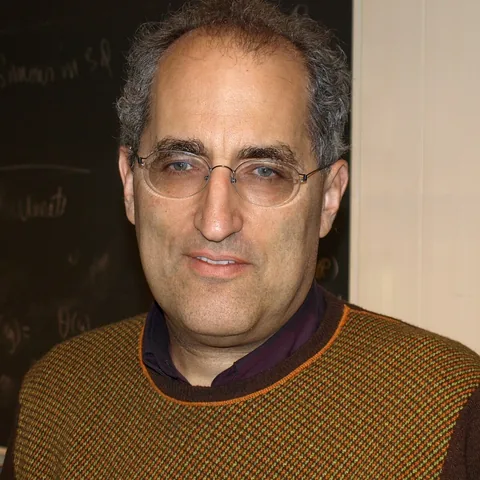
Photo: We have no published photo of Peter J. Ramadge yet. Send us a free-licensed photo.
- Graham Goodwin, Peter J. Ramadge, Peter Caines - 1981 recipient of IEEE CSS George S. Axelby Outstanding Paper Award
- Engineering faculty recognized for excellence in teaching
- CSS IEEE Fellows Archive
- Two faculty members elected to the National Academy of Engineering
- Chip ramps up artificial intelligence systems' performance
- Generative Marginalization Models
- Engineering faculty honored for outstanding teaching, service and mentorship
- Aligning brains into a shared space improves their alignment with large language models
- Peter J. Ramadge, Professor Emeritus