Latanya Sweeney
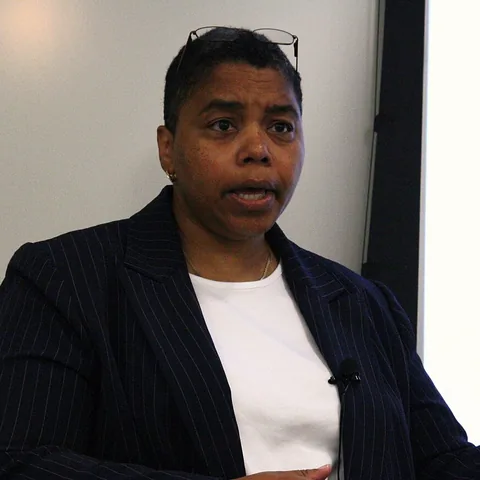
Latanya Sweeney is a computer scientist whose research connects data privacy and algorithmic fairness. A scholarship brought her to computer science; she built a software consulting company, then returned to study at Harvard and MIT. Her privacy research showed how anonymous health records could be linked to people, and her 2013 study found racial gaps in online arrest-record ads. At Carnegie Mellon and Harvard, she built privacy research groups and led work on tools that let people manage data. TIME named her to its 2025 AI list, and she coauthored a framework for small companies to develop AI tools with privacy safeguards.
- Now at
- Harvard University
- Works
- 92
- Citations
- 16,431
- h-index
- 31
Publication numbers from OpenAlex, as of 14 October 2026.
Timeline
-
1973
Finding a path into computing
At 14, a full scholarship takes her to Dana Hall, where a programming course leads her to computer science.
-
1981–1991
A decade in software
She leaves MIT to start a software consulting company in Kendall Square and runs it for ten years.
-
1991–1995
Returning to formal study
She enrolls at Harvard Extension while working and earns her bachelor’s degree in 1995.
-
1997–2000
Linking records to names
During graduate school, she matches the supposedly anonymous health record of Massachusetts governor William Weld to a Cambridge voter list. Her later analysis finds that ZIP code, birth date, and gender could identify 87 percent of the U.S. population.
-
2001–2011
Building privacy research
She earns a computer-science PhD at MIT in 2001 and coauthors research introducing k-anonymity for data de-identification. At Carnegie Mellon, she starts the Data Privacy Lab and brings it to Harvard in 2011 when she joins the Department of Government.
-
2013–2014
Auditing ads and algorithms
Her 2013 study found that Google displayed arrest-record ads more often for searches of Black-sounding names than for white-sounding names. In 2014, she spent a year as the FTC’s technology chief and examined advertising on student-group websites.
-
2021
Launching a public tech lab
She leads the launch of Harvard’s Public Interest Technology Lab, which gives students and scholars tools to create technology for public benefit. Her Harvard projects include MyDataCan, where users can view, delete, share, or privatize personal data from affiliated apps and services.
-
2025
Sharing data for AI
TIME named her to its 2025 list of the 100 most influential people in AI. She coauthored an AI Data Communities framework that lets small and medium-sized enterprises share data to build AI tools with privacy safeguards.
Sources and credits
Photo: 'arcticpenguin', via Wikimedia Commons. License: CC BY 2.0. Source: commons.wikimedia.org. Cropped to a square and resized. Ask us to remove or replace this photo.

- How Technology Shapes Elections, Privacy, and Democracy
- You’re not so anonymous
- Latanya Sweeney is exploring the clashes between technology and society
- Latanya Sweeney on Time magazine’s list of 100 Most Influential People in AI
- At new Harvard lab, technology to serve the public
- Trustworthy AI Data Communities (AI-DCs): Unlocking the benefits of AI for all, using U.S. manufacturing as a case study