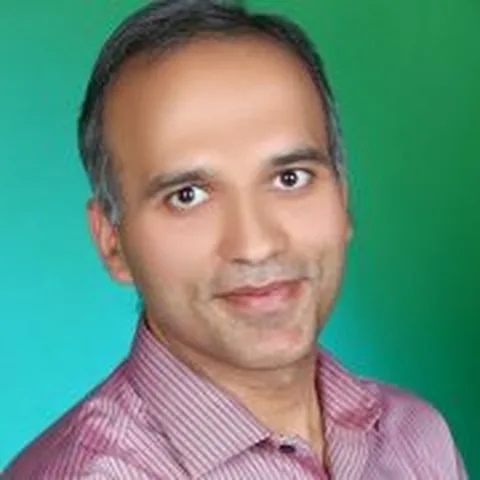
Karan Saxena
Karan Saxena is a research scientist at Netflix whose work includes large AI models from Meta and Mistral AI. In 2017, he worked on his undergraduate thesis on knowledge graphs under Partha Talukdar at the Indian Institute of Science, and in 2019 he earned a master's degree at Carnegie Mellon's Language Technologies Institute. After working as an applied scientist at Microsoft from 2020 to 2024, he became a research engineer at Meta in 2024 and co-authored The Llama 3 Herd of Models. He co-authored Magistral, Mistral AI's first reasoning model, in June 2025, and was also a co-author of the Voxtral audio chat models and the Devstral model for code agents in 2025.
Timeline
-
2016
A fellowship at IIT Madras
In 2016, he is an Indian Academy of Sciences Summer Research Fellow, working with V. Kamakoti at the Reconfigurable and Intelligent Systems Engineering (RISE) lab at IIT Madras. He is also a Google Summer of Code student in 2016, working on the European MaRs Analog Station project for the Italian Mars Society under the Python Software Foundation.
-
2017
Knowledge graphs at IISc
As a senior computer science undergraduate in 2017, he works on his thesis on knowledge graphs under Partha Talukdar at the Machine and Language Learning (MALL) lab of the Indian Institute of Science in Bangalore. He gives a EuroPython 2017 talk in Rimini on ranking news summary bots by semantic document relatedness.
-
2019
EWISE for word senses
In 2019, he co-authors EWISE (Extended WSD Incorporating Sense Embeddings) with Sawan Kumar, Sharmistha Jat and Partha Talukdar for the annual meeting of the Association for Computational Linguistics. The model handles zero-shot word sense disambiguation by predicting over a continuous sense embedding space.
-
2019
A master's at Carnegie Mellon
He earns a Master of Science in Intelligent Information Systems at Carnegie Mellon's Language Technologies Institute in 2019. With Eric Nyberg, Teruko Mitamura and other co-authors, he writes Pentagon at MEDIQA 2019, a multi-task system for filtering and re-ranking medical answers that achieves the highest Spearman's Rho and Mean Reciprocal Rank in the MEDIQA question-answering shared task.
-
2020–2024
Applied scientist at Microsoft
He joins Microsoft as an applied scientist in February 2020 and becomes Applied Scientist 2 in August 2021, staying until April 2024.
-
2024
Llama 3 at Meta
In April 2024, he becomes a research engineer at Meta in Sunnyvale, California. He is among the co-authors of The Llama 3 Herd of Models, published in July 2024, which presents a family of language models for multilinguality, coding, reasoning and tool use whose largest version is a dense Transformer with 405B parameters.
-
2025
Magistral, Voxtral and Devstral
In June 2025, he co-authors Magistral, Mistral AI's first reasoning model, which the company trains with its own scalable reinforcement learning pipeline. He is also a co-author of Voxtral, two multimodal audio chat models presented in July 2025, and of the 2025 Devstral report on Devstral-Small, a lightweight open-source model for code agents.
-
As of October 2026
Research scientist at Netflix
As of October 2026, he is a research scientist at Netflix, with research interests in machine learning, artificial intelligence, natural language processing and data science.
Career
- NowNetflixResearch Scientist
- From 2024MetaResearch Engineer
- 2020–2024MicrosoftApplied Scientist, Applied Scientist 2
- 2016IIT MadrasSummer Research Fellow
Education
- 2019Carnegie Mellon UniversityMaster of Science in Intelligent Information Systems
Colleagues
Sources and credits
Photo: We have no published photo of Karan Saxena yet. Send us a free-licensed photo.
- Karan Saxena · EuroPython 2017 · Rimini, 9-16 July 2017
- Karan Saxena - ACL Anthology
- Karan Saxena - Language Technologies Institute - School of Computer Science - Carnegie Mellon University
- Karan Saxena | alphaXiv
- [2407.21783] The Llama 3 Herd of Models
- [2506.10910] Magistral
- [2507.13264] Voxtral
- [2509.25193] Devstral: Fine-tuning Language Models for Coding Agent Applications
- Karan Saxena - Google Scholar