Faisal Ladhak
Faisal Ladhak is an AI researcher whose work connects natural-language generation and evaluation with spatial reasoning. In 2013, he coauthored a deep-learning paper on cancer diagnosis; by July 2020, he was completing a computer science PhD at Columbia after nearly six years as an Amazon senior applied scientist. He coauthored WikiLingua in 2020, GEM in 2021, and HELM in 2022; his paper on test-set contamination earned an ICLR 2024 Honorable Mention, and he coauthored SWAN in 2025. Since 2024, he is a researcher at NVIDIA, where he builds natural-language generation systems and evaluates hallucinations and bias. In June 2026, he coauthored SpaceTools for spatial reasoning; in October 2026, he coauthored One Model to Loop Them All, which lets language models trade inference compute for accuracy.
- Now at
- NVIDIA
Timeline
-
2013
Deep learning for cancer diagnosis
In 2013, he coauthors Using Deep Learning to Enhance Cancer Diagnosis and Classification with Rasool Fakoor, Azade Nazi, and Manfred Huber.
-
By July 2020
From Amazon to Columbia
By July 2020, he is completing a computer science PhD at Columbia after nearly six years as a senior applied scientist at Amazon. At Columbia, he works in the Computer Science Department's Natural Language Processing group under advisor Kathleen McKeown.
-
2020
WikiLingua across 18 languages
In 2020, he coauthors WikiLingua, a multilingual dataset for evaluating cross-lingual abstractive summarization. It contains article and summary pairs in 18 languages from WikiHow.
-
2021
The GEM benchmark
In 2021, he coauthors the GEM Benchmark, a living benchmark for natural language generation, evaluation, and metrics. It lets models be applied across tasks and lets researchers test evaluation strategies.
-
2022
Holistic evaluation of language models
In 2022, he coauthors Holistic Evaluation of Language Models (HELM), a benchmark designed to improve transparency about language-model capabilities, limitations, and risks.
-
2024
An ICLR honorable mention
In 2024, he coauthors Proving Test Set Contamination in Black-Box Language Models, which receives an ICLR Honorable Mention. The paper proposes a procedure that detects test-set contamination without pretraining data or model weights and gives exact false-positive guarantees.
-
2025
Long-context modeling with SWAN
In 2025, he coauthors SWAN, a causal Transformer in the decoder-only style that generalizes to sequences substantially longer than those seen during training. Its design lowers training cost and increases inference throughput.
-
Since 2024
Research at NVIDIA
Since 2024, he is a researcher at NVIDIA who builds natural-language generation systems and evaluates hallucinations and bias. In June 2026, he coauthors SpaceTools, a CVPR paper with NVIDIA's Learning and Perception Research group; the project equips vision-language models with vision and robotic tools for spatial reasoning. In October 2026, he coauthors One Model to Loop Them All, a training recipe that lets language models trade inference compute for accuracy by changing the loop count of a shared layer block.
Career
Education
Colleagues
Sources and credits
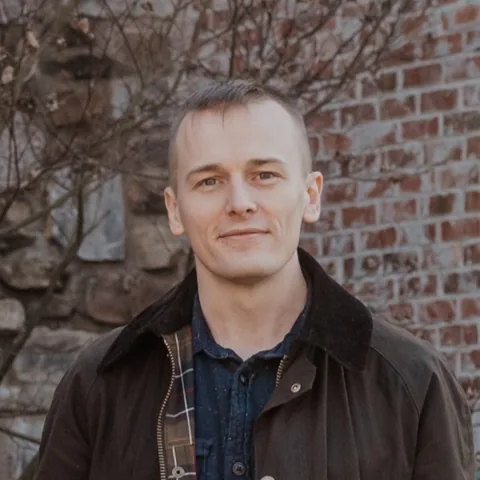
Photo: We have no published photo of Faisal Ladhak yet. Send us a free-licensed photo.
- Faisal Ladhak
- Amazon at ACL: Old standards and new forays
- WikiLingua: A New Benchmark Dataset for Cross-Lingual Abstractive Summarization
- The GEM Benchmark: Natural Language Generation, its Evaluation and Metrics
- Holistic Evaluation of Language Models
- ICLR Oral Proving Test Set Contamination in Black-Box Language Models
- SWAN: An Efficient and Scalable Approach for Long-Context Language Modeling
- Faisal Ladhak — Lacuna
- SpaceTools: Tool-Augmented Spatial Reasoning via Double Interactive RL | NVIDIA Learning and Perception Research
- SpaceTools: Tool-Augmented Spatial Reasoning via Double Interactive RL
- One Model to Loop Them All: Elastic Latent Recurrence for Language Models