Dominik Janzing
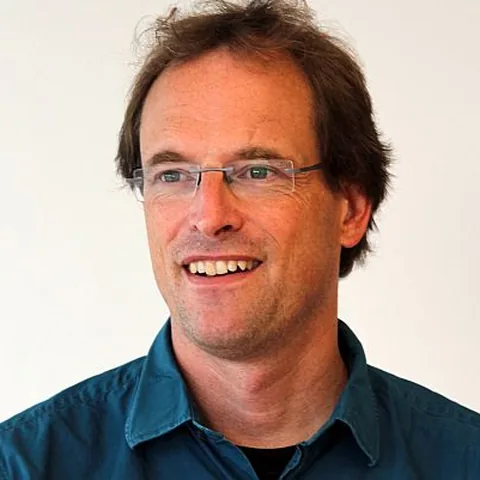
Dominik Janzing is a researcher in causal inference and machine learning whose work connects causal questions to physics and information. He studied physics and mathematics in Tübingen and Cork, then completed a 1998 PhD on quantum and classical dynamics in infinite quantum spin chains. His 2012 paper On Causal and Anticausal Learning examines function estimation when an underlying causal model can be inferred, and he coauthored the 2017 book Elements of Causal Inference on causal inference. In 2018, the book received the Causality in Statistics Education Award, and the 2012 paper received ICML’s Test of Time Honorable Mention in 2022. Recent papers test causal graphs, cross-validate discovery methods, and evaluate causal statements; as of October 2026, he is a principal research scientist with Amazon Web Services.
- Now at
- Amazon
Timeline
-
1998
A Tübingen PhD
He studies physics and mathematics in Tübingen and Cork, then completes a PhD in 1998 under Manfred Wolff on the relation between quantum and classical dynamics in infinite quantum spin chains.
-
Since 2003
Causal inference from data
Since 2003, he works on causal inference from statistical data and the basis of new causal-inference rules. He connects causal inference to assumptions about physics and information.
-
2012
Causal and anticausal learning
At the Max Planck Institute for Intelligent Systems, he coauthors the 2012 ICML paper On Causal and Anticausal Learning with five other researchers. The paper studies function estimation when an underlying causal model can be inferred, with implications for transfer and semi-supervised learning.
-
2017
Elements of Causal Inference
He coauthors Elements of Causal Inference: Foundations and Learning Algorithms with Jonas Peters and Bernhard Schölkopf, and MIT Press publishes it in 2017. The book focuses on causal inference.
-
2018
A causal inference award
In 2018, Jonas Peters, Dominik Janzing, and Bernhard Schölkopf receive the ASA’s Causality in Statistics Education prize for their open-access book Elements of Causal Inference.
-
2022
ICML Test of Time mention
He receives ICML’s 2022 Test of Time Honorable Mention for the paper. In 2022, he is a principal research scientist at Amazon.
-
2025–2026
Testing causal graphs
In 2025, he coauthors Toward falsifying causal graphs using a permutation-based test, which uses node permutations to compare a proposed graph with a baseline. In 2025, he also coauthors Cross-validating causal discovery via Leave-One-Variable-Out, which tests learned causal models on a variable pair excluded during learning. In 2026, he and Erik Jahn coauthor the ICML paper Evaluating bivariate causal statements based on mutual compatibility, which develops scores for collections of bivariate causal statements in linear and graphical causal models.
-
As of October 2026
Amazon research scientist
He is a principal research scientist with Amazon Web Services.
Career
- NowAmazonPrincipal Research Scientist
- 2012Max Planck Institute for Intelligent SystemsResearcher
Colleagues
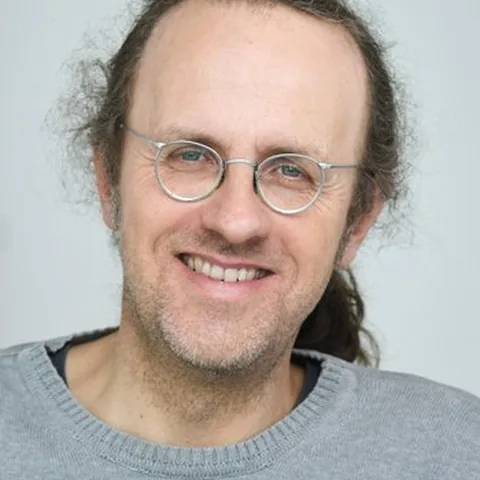 Bernhard SchölkopfMax Planck Institute for Intelligent Systems, 2012
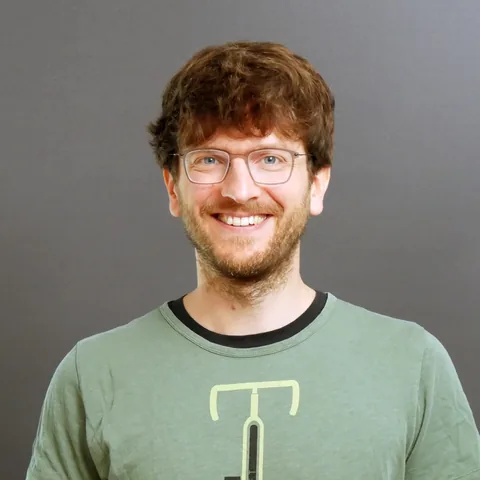 Jonas PetersMax Planck Institute for Intelligent Systems, 2012
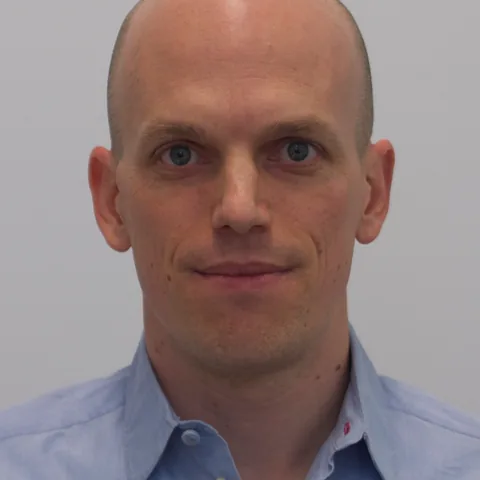 Arthur GrettonMax Planck Institute for Intelligent Systems, 2012
- Antti OulasvirtaMax Planck Society, 2012
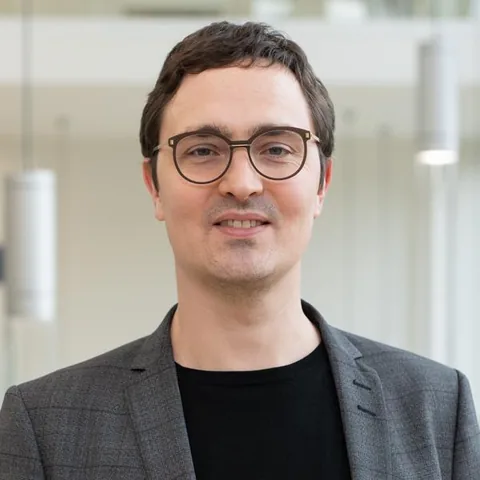 Mario FritzMax Planck Society, 2012
 Markus ReichsteinMax Planck Society, 2012
Sources and credits
Photo: We have no published photo of Dominik Janzing yet. Send us a free-licensed photo.
- About the Author(s): Theory of Computing: An Open Access Electronic Journal in Theoretical Computer Science
- Dominik Janzing
- [1206.6471] On Causal and Anticausal Learning
- Publications of Dominik Janzing
- Jonas Peters
- Honorable mention to Amazon researchers for ICML test-of-time award - Amazon Science
- Toward Falsifying Causal Graphs Using a Permutation-Based Test | Proceedings of the AAAI Conference on Artificial Intelligence
- Cross-validating causal discovery via Leave-One-Variable-Out
- Evaluating Bivariate Causal Statements Based on Mutual Compatibility
- Dominik Janzing - Amazon Science