Akbir Khan
Akbir Khan is an AI researcher whose work spans language pragmatics, multi-agent learning, transfer learning, and scalable oversight. He studied mathematics and physics at UCL and computer science at Cambridge, co-founded Spherical Defence Labs, and completed a PhD at UCL DARK in 2025. His research includes a 2019 study of transfer learning, MAESTRO, a NeurIPS study of pragmatic understanding, and a 2024 ICML Best Paper on debate. In 2025, he co-authored a report on multi-agent risks; as of October 2026, he is a Member of Technical Staff at Anthropic.
- Now at
- Anthropic
- Links
- Google Scholar and GitHub
Timeline
-
2019
Race and transfer learning
In 2019, he co-authors Considering Race a Problem of Transfer Learning, which is accepted for an oral presentation at DVPBA. The paper examines race as a boundary for transfer learning in facial classification and image synthesis.
-
2021–2025
Education and a UCL PhD
He studies mathematics and physics at UCL and computer science at Cambridge, and co-founds Spherical Defence Labs. He pursues a PhD at UCL DARK from 2021 to 2025.
-
2023
MAESTRO for multi-agent RL
In 2023, he co-authors MAESTRO, a multi-agent environment-design method for open-ended reinforcement learning. The method builds joint curricula over environments and co-players for two-player zero-sum games.
-
2023
Pragmatic understanding in LLMs
At NeurIPS 2023, he co-authors The Goldilocks of Pragmatic Understanding. The study finds that example-level instruction-tuned LLMs perform significantly better on implicature tasks.
-
2024
Opponent shaping at AAMAS
At AAMAS 2024, he co-authors Scaling Opponent Shaping to High Dimensional Games. The paper scales an opponent-shaping method to general-sum games with temporally extended actions and long horizons.
-
2024
An ICML debate paper
In 2024, he co-authors Debating with More Persuasive LLMs Leads to More Truthful Answers. The paper reports 76% accuracy for non-expert models and 88% for humans, and ICML names it a Best Paper.
-
2025
Multi-agent risks report
In 2025, he co-authors Multi-Agent Risks from Advanced AI. The report identifies miscoordination, conflict, and collusion as three failure modes in multi-agent systems.
-
As of October 2026
Anthropic technical staff
In March 2025, his research centers on scalable oversight through multi-agent learning. As of October 2026, he is a Member of Technical Staff at Anthropic.
Career
- NowAnthropicMember of Technical Staff
- Spherical Defence LabsCo-founder
Education
Videos
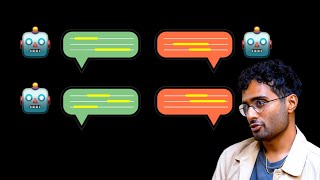
Video data from YouTube API Services. By watching you agree to the YouTube Terms of Service. How we use YouTube data.
Sources and credits
Photo: We have no published photo of Akbir Khan yet. Send us a free-licensed photo.
- Considering Race a Problem of Transfer Learning
- akbir khan
- UCL DARK Lab
- MAESTRO: Open-Ended Environment Design for Multi-Agent Reinforcement Learning
- The Goldilocks of Pragmatic Understanding: Fine-Tuning Strategy Matters for Implicature Resolution by LLMs
- Accepted Papers | The 23rd International Conference on Autonomous Agents and Multi-Agent Systems
- Scaling Opponent Shaping to High Dimensional Games
- Debating with More Persuasive LLMs Leads to More Truthful Answers
- ICML 2024 Awards | ICML 2024
- Multi-Agent Risks from Advanced AI
- The Stanford Natural Language Processing Group
- Cooperative AI – Foundation