William J. Clancey
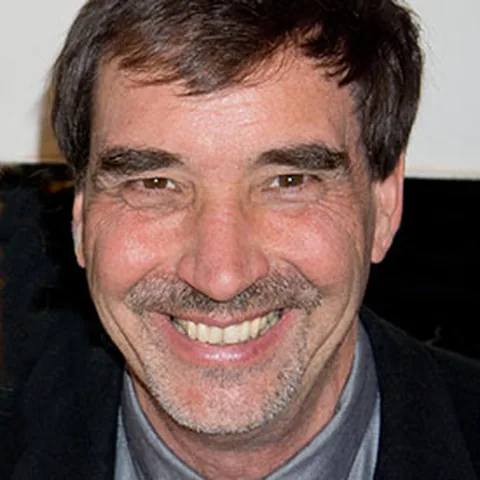
William J. Clancey is a computer scientist whose research links cognitive and social science with agent systems. He joined Stanford’s MYCIN project in 1975 and earned a doctorate there in 1979, developing work on explanation, tutoring and student models. At the Institute for Research on Learning, he helped develop Brahms, a multi-agent simulation of work practices. He joined IHMC in 1997 and worked at NASA Ames during 1998–2013. His collaborative research applied work-system models to mission operations and complex human-automation settings.
- Works
- 235
- Citations
- 12,266
- h-index
- 43
Publication numbers from OpenAlex, as of 14 October 2026.
Timeline
-
1974–1979
Expert systems and explanations
Clancey completed a Rice mathematical sciences degree in 1974 and joined MYCIN in 1975. He worked on explanation, meta-level reasoning, tutoring and student modeling before earning a Stanford computer science doctorate in 1979.
-
1988–1997
Model how work actually happens
He worked at the Institute for Research on Learning from its founding in 1988, where he co-developed Brahms. The system models and simulates work practices with multiple agents. He joined IHMC in 1997.
-
1998–2013
Human-centered computing at NASA
He worked at NASA Ames from 1998 to 2013. The team converted Brahms into a runtime system and developed Mobile Agents software for file processing between Mission Control and the International Space Station.
-
2003
Simulate mission operations
Clancey coauthored a preprint on work-system design with Maarten Sierhuis and three collaborators. The team used Brahms to model interactions in human-machine systems, with a proposed Moon mission case study and Mars Exploration Rover mission-operations work.
Sources and credits
Photo: www.ihmc.us; creator not stated. License: Not stated by source. Source: ihmc.us. Cropped to a square and resized. Ask us to remove or replace this photo.