Bernard Widrow
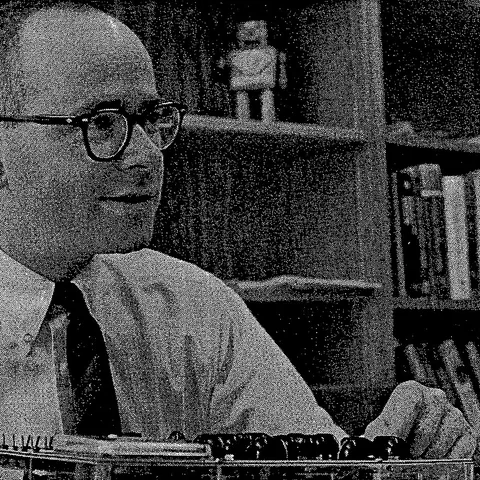
Bernard Widrow connected early neural networks with adaptive signal processing. He earned three electrical engineering degrees at MIT, taught there and joined Stanford in 1959. With Marcian Ted Hoff, he developed ADALINE and the least mean squares method, which adjusts weights in response to errors. His later collaborations applied adaptive methods to antennas and noise cancellation. With Samuel Stearns, he wrote Adaptive Signal Processing, helping organize the field for engineers. His research also examined microphone arrays for hearing aids. Widrow died on September 30, 2025, at age 95. His legacy includes early learning machines and mathematical methods for systems that adjust their behavior as input signals and measured errors change.
- Works
- 298
- Citations
- 27,179
- h-index
- 54
Publication numbers from OpenAlex, as of 14 October 2026.
Timeline
-
1959
Joining Stanford
Joined Stanford’s electrical engineering faculty after teaching at MIT.
-
1960
Building adaptive learning with Hoff
Developed ADALINE and least mean squares learning with Marcian Ted Hoff.
-
1975
Developing adaptive noise cancellation
Coauthored a major paper on adaptive noise cancellation.
-
1985
Organizing the field in a textbook
Published Adaptive Signal Processing with Samuel Stearns.
-
2025
Leaving a legacy in learning systems
Died on September 30, 2025, leaving a legacy in adaptive learning and signal processing.
Sources and credits
Photo: Stanford Today magazine, (c) 1963 by the Board of Trustees of Leland Stanford Junior University, via Wikimedia Commons. License: Public domain. Source: commons.wikimedia.org. Cropped to a square and resized. Ask us to remove or replace this photo.
