Thore Graepel
Thore Graepel trained in physics and earned a machine learning doctorate in Berlin in 2001. After postdoctoral work, he joined Microsoft Research in 2003, where his contributions included Bayesian player ratings and advertising models. He joined DeepMind in 2015 and contributed to AlphaGo, later game-playing systems and multi-agent reinforcement learning. He led a DeepMind team and held a UCL chair in machine learning. His later research covers agents and cellular rejuvenation.
- Now at
- Google DeepMind
- Works
- 315
- Citations
- 43,995
- h-index
- 51
Publication numbers from OpenAlex, as of 14 October 2026.
Timeline
-
2001–2003
From physics to machine learning
He studied physics in Hamburg, London and Berlin, then earned a machine learning doctorate in Berlin in 2001. After postdoctoral work at ETH and Royal Holloway, he joined Microsoft Research in 2003.
-
2006
Bayesian player ratings
With Ralf Herbrich and Tom Minka, Graepel developed TrueSkill. The system estimates player skill and uncertainty from match outcomes and supports team games. Microsoft has used it for online game ratings and matchmaking.
-
2015–2020
AlphaGo and multi-agent learning
He joined DeepMind in 2015, contributed to AlphaGo and led a multi-agent research team. He also held a part-time UCL chair in machine learning.
-
2019–2022
Learn to cooperate in games
He contributed to Capture-the-Flag agents and simulated humanoid football. These projects study cooperation and learned movement in controlled environments. They extend his game-playing research into settings with several interacting agents.
Sources and credits
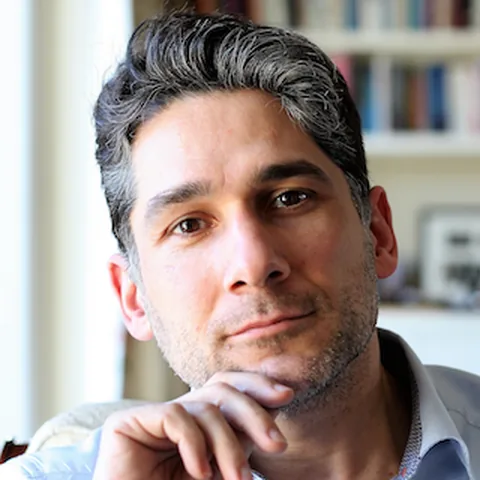
Photo: ellis.eu; Thore Graepel profile photograph; creator not stated. License: Not stated by source. Source: ellis.eu. Cropped to a square and resized. Ask us to remove or replace this photo.