Scott E. Fahlman
Scott E. Fahlman researches knowledge representation and neural learning at Carnegie Mellon. Fahlman developed NETL from his doctoral work in the late 1970s. His 1988 publication introduced Quickprop. With Christian Lebiere, he developed Cascade-Correlation, presented at NIPS 1989 and cited in the 1990 proceedings. It adds trained units to a growing network and preserves their learned incoming weights. His later Scone work concerns practical knowledge-base search and inference, with applications in language and planning.
- Works
- 82
- Citations
- 6,318
- h-index
- 20
Publication numbers from OpenAlex, as of 14 October 2026.
Timeline
-
Late 1970s
Representing knowledge
Fahlman developed NETL for his doctoral thesis in the late 1970s. The system concerned representation and reasoning over knowledge. NETL relates to his later Scone work, which uses a different computing design.
-
1988
A faster-learning method
Faster-Learning Variations on Back-Propagation introduced Quickprop. Fahlman presented the work at the 1988 Connectionist Models Summer School.
-
1989–1990
Growing the network during learning
Fahlman and Christian Lebiere presented Cascade-Correlation at NIPS 1989, with the proceedings cited in 1990. The method starts with a small network, adds trained hidden units and freezes their incoming weights. This lets the learned structure grow during supervised training.
-
As of October 2026
Practical knowledge-base reasoning
Fahlman describes Scone as a knowledge-base system for representing real-world information and performing search and inference on ordinary computers. His group has studied applications in commonsense reasoning, language understanding and planning.
Sources and credits
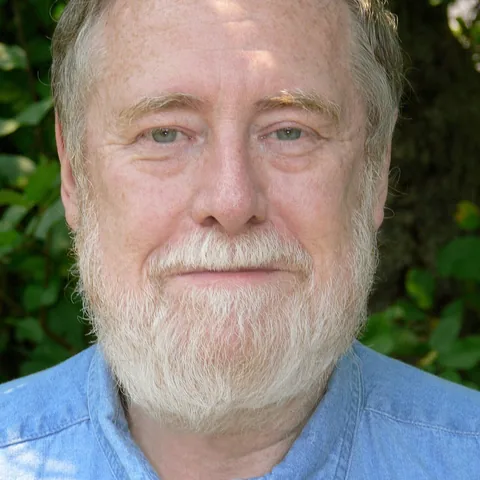
Photo: Scott E. Fahlman's wife, via Wikimedia Commons. License: Public domain. Source: commons.wikimedia.org. Cropped to a square and resized. Ask us to remove or replace this photo.
