Robin Popplestone
Robin Popplestone developed programming tools and robot-control methods for early AI research. He arrived at Edinburgh in 1965 and implemented POP-2. In 1972, he contributed to a hand-eye assembly system and wrote its hand-control program. He moved to UMass Amherst in 1985, where his work with students used geometry and task symmetries in robotics. AAAI elected him a founding fellow in 1990. He retired in 2001 and died in 2004. The robot work was a team effort.
- Works
- 41
- Citations
- 1,190
- h-index
- 14
Publication numbers from OpenAlex, as of 14 October 2026.
Timeline
-
1965
AI programming at Edinburgh
Popplestone joined Edinburgh’s Experimental Programming Unit in 1965. Popplestone designed and implemented POP-2 and its operating system on an Elliott computer. The language supported non-numerical work and the growing AI research program.
-
1972
Vision and assembly
He was part of a small team developing a hand-eye system that could assemble simple boat and car models. The system recognized pieces visually, separated them and placed them together. Popplestone wrote the program that controlled hand movement. The team developed the system.
-
1985
Geometric reasoning in robotics
Popplestone moved to the University of Massachusetts Amherst in 1985 as a professor and director of its Laboratory for Perceptual Robotics. With students, he studied mathematical descriptions of body relationships and task symmetries that could help robot control and planning.
-
1990–2004
Recognition and final years
AAAI elected him a founding fellow in 1990. He retired in 2001 and died on April 14, 2004. His work linked expressive programming tools with perception, spatial reasoning and the control of robot actions.
Sources and credits
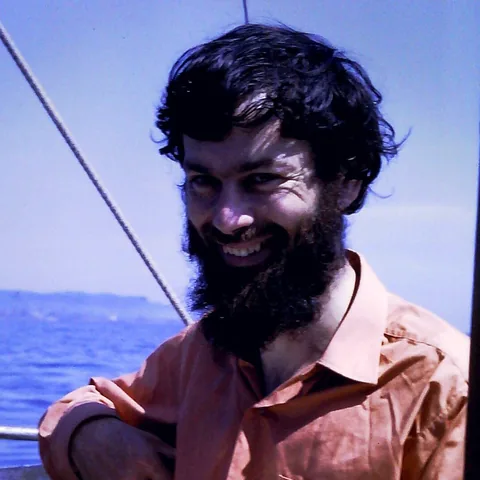
Photo: Murfas, via Wikimedia Commons. License: CC BY 3.0. Source: commons.wikimedia.org. Cropped to a square and resized. Ask us to remove or replace this photo.
