Moshe Tennenholtz
Moshe Tennenholtz researches multi-agent systems, learning and computational game theory. He earned his Weizmann doctorate in 1991, conducted research at Stanford from 1991 to 1993 and joined the Technion in 1993. With Ronen Brafman, he developed R-MAX, published in 2002. It learns an environment model with optimistic initial rewards and updates it through observations. His 2004 program-equilibrium paper studies cooperation when strategies are executable programs. From 2008 to 2014, he was a principal researcher at Microsoft Research.
Timeline
-
1991–1993
Research in mathematics and computing
Tennenholtz received his PhD in applied mathematics and computer science from the Weizmann Institute in 1991. He worked as a postdoctoral researcher and research associate at Stanford from 1991 to 1993, then joined the Technion in 1993. His research themes include learning and protocols in non-cooperative environments.
-
2002
Optimistic models for reinforcement learning
With Ronen Brafman, he introduced R-MAX. The algorithm maintains a complete model of its environment and acts using the model’s optimal policy. Initially, all actions have the highest possible reward; observations then update the model. The paper establishes near-optimal average reward in polynomial time within its formal setting, including zero-sum stochastic games.
-
2004
Cooperation between executable strategies
Tennenholtz’s Program Equilibrium paper treats strategies as programs that can execute and can be read as files. In this setting, it establishes mutual cooperation for a one-shot prisoner’s dilemma and characterizes feasible, individually rational equilibrium payoffs.
-
2008–2014
Research linking agents and economics
He was a principal researcher at Microsoft Research from 2008 to 2014 and founded its basic research activity in Israel. With colleagues and students, he worked on artificial social systems, ranking, reputation, trust and equilibrium concepts.
Sources and credits
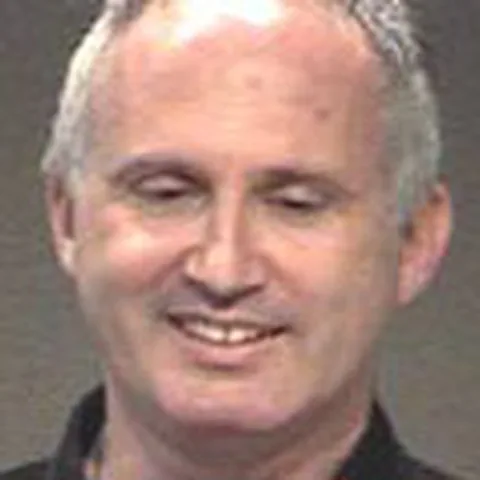
Photo: sigai.acm.org; Moshe Tennenholtz (2012 Autonomous Agents Research Award) - ACM SIGAI; creator not stated. License: Not stated by source. Source: sigai.acm.org. Cropped to a square and resized. Ask us to remove or replace this photo.