Kianté Brantley
Kianté Brantley is a computer scientist whose research uses reinforcement learning to improve language-model alignment and training. He worked on bandit feedback for machine translation, coauthored reinforcement-learning tools and benchmarks for language models, and studied resets for more efficient fine-tuning. He earned a computer science bachelor's degree at UMBC in 2015, completed an M.S. by April 2016, and completed a Ph.D. at Maryland in 2022. As of October 2026, he is an assistant professor at Harvard SEAS, an Institute Investigator at the Kempner Institute, and a Research Scientist at Databricks.
- Now at
- Harvard University and Databricks
- Works
- 48
- Badges
Publication numbers from OpenAlex, as of 27 October 2026. Citations and h-index are hidden because this OpenAlex record may be incomplete or mix in other authors.
Timeline
-
2015
A computer science bachelor's degree
After starting college at the Community College of Baltimore County, he earns a computer science bachelor's degree at UMBC in 2015 in two years.
-
April 2016
An M.S. and doctoral plans
By April 2016, he completes UMBC's one-year M.S. in computer science, prepares for a machine-learning Ph.D. at the University of Maryland, College Park, and works at the U.S. Department of Defense.
-
2017
An NSF doctoral fellowship
As a first-year computer science doctoral student in Maryland's CLIP Laboratory, he receives the National Science Foundation's Louis Stokes Alliance for Minority Participation Bridge to the Doctorate fellowship in 2017 for machine-learning research.
-
2017
Bandit learning for translation
In 2017, he works with Hal Daumé III and CLIP Laboratory colleagues on Bandit Learning for Machine Translation, an EMNLP shared task that trains translation systems from weak or partial feedback.
-
2020
A Microsoft Research grant
In 2020, he receives a $25,000 Microsoft Research Dissertation Grant as a fourth-year computer science Ph.D. student at Maryland. His proposal addresses sample-complexity challenges in reinforcement learning and uses expert annotations to help real systems learn through interaction.
-
2022
RL4LMs, GRUE and NLPO
In 2022, he coauthors Is Reinforcement Learning (Not) for Natural Language Processing, which introduces RL4LMs, a modular library for optimizing language generators with reinforcement learning. The paper also presents GRUE, a six-task benchmark based on reward functions, and NLPO, an algorithm that reduces the action space for language generation.
-
2022–2024
A Maryland Ph.D. and Cornell postdoc
In 2022, he completes a Ph.D. in computer science at the University of Maryland, College Park, with the dissertation Expert-In-The-Loop for Sequential Decisions and Predictions. From 2022 to 2024, he is a postdoctoral associate in Cornell's Department of Computer Science with Thorsten Joachims.
-
July 2024
Joining Harvard and Kempner
In July 2024, he begins as a Kempner Institute Investigator and assistant professor of computer science at Harvard SEAS. His research addresses foundation-model misalignment with algorithms that learn from interactive feedback.
-
August 2025
Resets for LLM fine-tuning
In August 2025, he and his team study resets to reduce the computing cost of reinforcement learning for LLM fine-tuning. The method returns an LLM to a previously generated partial sentence to produce alternative completions, and the team shows that a resetting algorithm can learn without a value model while closely matching results from value-model methods.
-
Since 2026
Research Scientist at Databricks
In 2026, he begins a Research Scientist role at Databricks while continuing as an assistant professor at Harvard SEAS and an Institute Investigator at Kempner. His research includes reinforcement learning, imitation learning, and natural language processing.
Career
- Since 2026DatabricksResearch Scientist
- Since 2024Harvard UniversityInstitute Investigator
- Since 2024Harvard UniversityAssistant Professor of Computer Science
- 2022–2024Cornell UniversityPostdoctoral Associate
Education
- 2022University of MarylandPhD in Computer Science
- 2016University of Maryland, Baltimore CountyM.Sc. in Computer Science
- 2015University of Maryland, Baltimore CountyB.Sc. in Computer Science
- Community College of Baltimore CountyCollege study
Colleagues
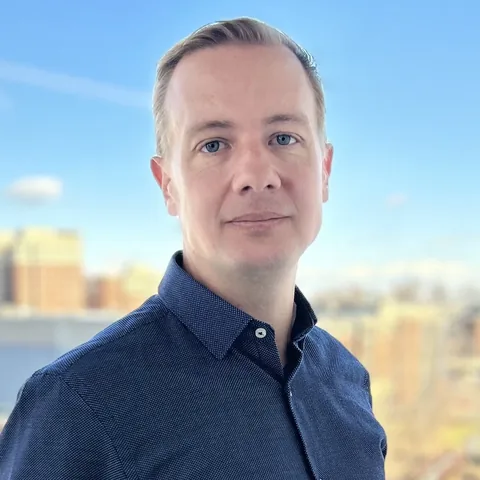
Sources and credits
Photo: We have no published photo of Kianté Brantley yet. Send us a free-licensed photo.
- Kiante Brantley, peer mentor in computer science, to pursue Ph.D. in machine learning
- CLIP Graduate Student Advised by Daumé Awarded Prestigious Fellowship
- CLIP Graduate Student Kianté Brantley Receives Microsoft Research Dissertation Grant
- Is Reinforcement Learning (Not) for Natural Language Processing: Benchmarks, Baselines, and Building Blocks for Natural Language Policy Optimization
- Hal Daumé III - advisees
- Kianté Brantley – Vita
- Kianté Brantley, Yilun Du and Michael Albergo to join the Kempner as Institute Investigators
- How to Optimize the Training of Large Language Models? Use Resets, Says Kempner Institute Investigator Kianté Brantley
- Kianté Brantley - Kempner Institute