Ian Goodfellow
Ian Goodfellow describes himself as a cofounder of a startup operating in stealth. He studied at Stanford and completed doctoral research in Montreal with Yoshua Bengio and Aaron Courville. In 2014, he and seven colleagues proposed generative adversarial networks, which train a generator and discriminator through competition. With Jonathon Shlens and Christian Szegedy, he also studied adversarial examples that can produce model errors. His career includes Google Brain, OpenAI, Apple, and later DeepMind simulation work. He coauthored the Deep Learning textbook and the TORAX paper on modelling plasma in a tokamak.
- Works
- 131
- Citations
- 87,888
- h-index
- 58
Publication numbers from OpenAlex, as of 14 October 2026.
Timeline
-
Doctoral study in Montreal
Joining a research community
He studies deep learning in Montreal with Yoshua Bengio and Aaron Courville.
-
2014
Two models learn through competition
He and seven coauthors propose generative adversarial networks.
-
2014–2015
Finding inputs that fool a model
With Jonathon Shlens and Christian Szegedy, he studies inputs that cause confident model errors.
-
2024 paper; DeepMind work described in April 2025
Writing the simulator for fusion research
He coauthors TORAX, a simulator for plasma transport in fusion research.
-
As of 10 October 2026
A startup with a limited public description
He describes himself as a cofounder of a startup operating in stealth.
Sources and credits
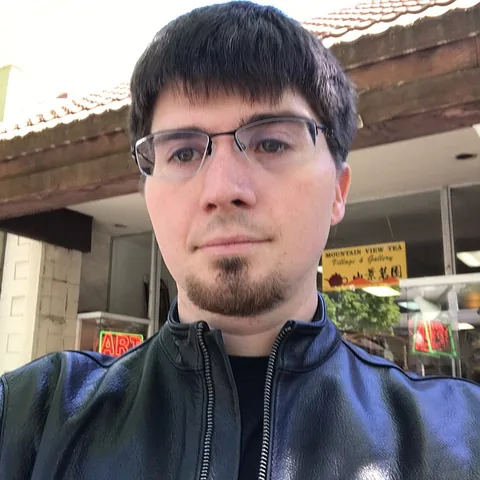
Photo: Ian Goodfellow, via Wikimedia Commons. License: CC BY-SA 4.0. Source: commons.wikimedia.org. Cropped to a square and resized. Ask us to remove or replace this photo.

- Ian Goodfellow: personal biography
- Mila: Goodfellow interview, 23 April 2025
- Original GAN paper, submitted 10 June 2014
- Explaining and Harnessing Adversarial Examples, 2014–2015
- Deep Learning: authors' online edition
- OpenAI: Team++, 31 March 2016
- Goodfellow: Research at Google and ICLR 2017
- TORAX: tokamak simulator paper
- Ian Goodfellow: original public X profile