Björn Schuller
Also known as Björn W. Schuller, Björn Wolfgang Schuller
Björn Schuller is a researcher in AI and speech processing whose work connects audio analysis with health care. He trained in electrical engineering and information technology at TUM, led its Intelligent Audio Analysis Group, and studied affective and social signals at CNRS-LIMSI. His work includes the openSMILE feature extractor and the company audEERING, alongside professorships at Passau, Augsburg, TUM, and Imperial College London. ISCA named him a Fellow in 2020 for contributions to computational paralinguistics and speech community leadership.
- Now at
- audEERING, Imperial College London and Technical University of Munich
- Works
- 1,658
- Citations
- 58,033
- h-index
- 107
Publication numbers from OpenAlex, as of 14 October 2026.
Timeline
-
1999–2012
Training at TUM
At TUM, he completes a diploma in electrical engineering and information technology in 1999 and a doctorate in 2006, then earns his habilitation in 2012.
-
2006–2010
Tracking affect in speech
From 2006, he leads TUM’s Intelligent Audio Analysis Group as a tenured senior researcher and lecturer in pattern recognition and speech processing. At CNRS-LIMSI in Orsay, he studies affective and social signals in speech from 2009 to 2010.
-
2010
A toolkit for audio features
He visits Imperial College London as a visiting scientist to study audiovisual behaviour recognition. With Florian Eyben and Martin Wöllmer, he co-authors the 2010 openSMILE audio feature extractor. The toolkit extracts audio and video features for machine learning, with an emphasis on emotion recognition from speech.
-
2012
Turning audio research into a company
He co-founds audEERING, which grows from his AI research group at TUM. He serves as the company’s current CSO.
-
Since 2013
Professorships across Germany
He has been at Imperial College London since 2013 and is now Professor of Artificial Intelligence there. He held full professorships at the University of Passau (2014–2017) and the University of Augsburg (2017–2023), then became Full Professor of Health Informatics at TUM in 2023.
-
2020
A speech community fellowship
ISCA named him a Fellow for contributions to computational paralinguistics and research and leadership in the speech processing community.
-
As of October 2026
AI for health decisions
His health research evaluates acoustic, visual, and other data. He applies AI methods to support prevention, diagnosis, decision support, and intervention.
Sources and credits
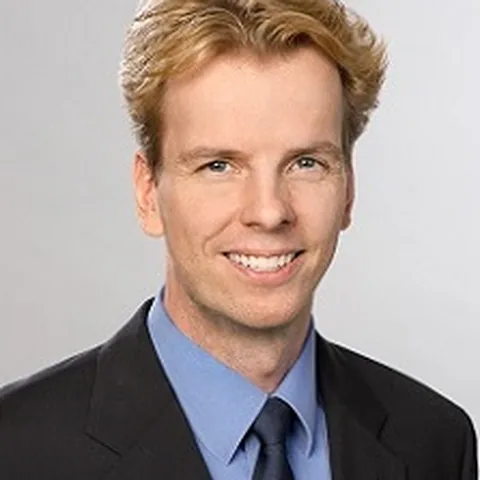
Photo: Ingo Vanderslice, via Wikimedia Commons. License: CC BY-SA 4.0. Source: commons.wikimedia.org. Cropped to a square and resized. Ask us to remove or replace this photo.
