Arthur Samuel
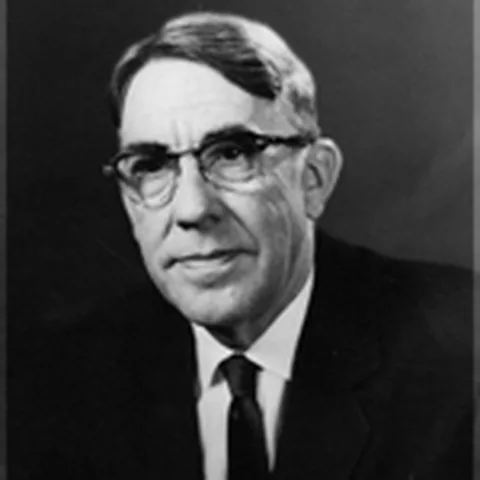
Arthur Samuel was an early AI researcher who used computer checkers to study learning. After electronic-computer work at Illinois, he joined IBM in 1949 and built a checkers program on the IBM 701. His research adjusted move-selection criteria using annotated games and explored rote learning and generalization. He moved to Stanford after retiring from IBM in 1966 and became a research professor in 1974. At Stanford, he later worked on speech recognition and software. He died in 1990.
- Works
- 25
- Citations
- 7,176
- h-index
- 13
Publication numbers from OpenAlex, as of 14 October 2026.
Timeline
-
1946–1949
From electronic computers to checkers
Samuel worked on an electronic-computer project at Illinois before joining IBM’s Poughkeepsie laboratory in 1949. Samuel envisioned checkers as a way to demonstrate computation and completed a checkers program on the IBM 701.
-
1950s–early 1960s
Learning which moves to choose
Samuel’s research used annotated games to adjust move-selection criteria. His methods included rote learning, generalization and changing evaluation functions. A game in which the program faced a strong human player was included in the AI anthology Computers and Thought.
-
1966–1974
A later career at Stanford
Samuel retired from IBM in 1966 and joined Stanford as a lecturer and research associate. He became a research professor in 1974. He continued checkers research and worked on speech recognition, operating-system software and the TeX typesetting system.
-
1990
Fellowship and checkers research
Samuel died in July 1990. AAAI elected him a Fellow in 1990, and Stanford’s memorial explains the learning techniques behind his checkers work.
Sources and credits
Photo: legacy.cs.stanford.edu; creator not stated. License: Not stated by source. Source: legacy.cs.stanford.edu. Cropped to a square and resized. Ask us to remove or replace this photo.