Andrew Witkin
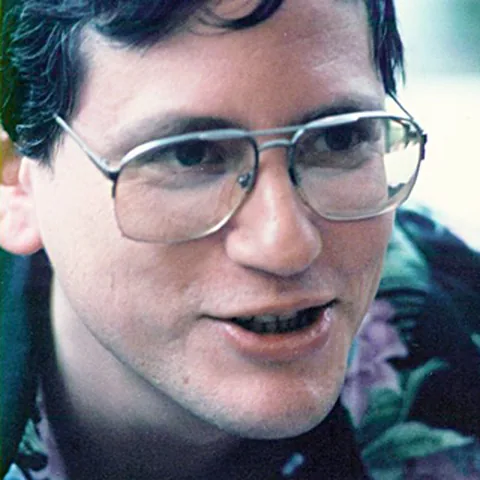
Andrew Witkin studied computer vision and physical models, with research that also entered computer graphics and animation. Witkin received his bachelor’s degree from Columbia in 1975 and doctorate from MIT in 1980. He led perception and graphics groups at Schlumberger’s Palo Alto Research Lab before Carnegie Mellon. With William Welch, Witkin published work on animation and control of non-rigid structures in 1990. With David Baraff, he published simulation of flexible bodies in 1992. With Zoran Popović, he published Motion Warping in 1995. These papers document a later sequence of graphics and animation research.
- Works
- 82
- Citations
- 32,759
- h-index
- 44
Publication numbers from OpenAlex, as of 14 October 2026.
Timeline
-
1975–1980
Education and research settings
Witkin received his bachelor’s degree from Columbia in 1975 and doctorate from MIT in 1980. He led perception and graphics groups at Schlumberger’s Palo Alto Research Lab before Carnegie Mellon.
-
1981–1983
Texture, shape and scale
In 1981, Witkin published a paper on recovering surface shape and orientation from texture. In 1983 he published Scale Space Filtering at IJCAI. He also coauthored work with J. M. Tenenbaum on perceptual organization and the role of structure in vision.
-
1986–1988
Matching and deformable models
Witkin, Demetri Terzopoulos and Michael Kass published work on signal matching through scale space at AAAI in 1986. Their later papers studied constraints on deformable models for shape and motion. Witkin and Kass published Spacetime Constraints in 1988.
-
1990–1995
Animation and physical simulation
With William Welch, Witkin published work on animation and control of non-rigid structures in 1990. With David Baraff, he published simulation of flexible bodies in 1992. With Zoran Popović, he published Motion Warping in 1995.
Sources and credits
Photo: Malcolm Slaney, via Wikimedia Commons. License: CC BY-SA 3.0. Source: commons.wikimedia.org. Cropped to a square and resized. Ask us to remove or replace this photo.
