Alex Graves
Also known as Alexander Graves
Alex Graves is an AI researcher whose work spans sequence learning, memory-augmented networks, speech generation, reinforcement learning and generative models. Early in his career, he studied theoretical physics at the University of Edinburgh and artificial intelligence at IDSIA, then held a postdoctoral post with Geoffrey Hinton at the University of Toronto. His research includes Connectionist Temporal Classification, Neural Turing Machines, WaveNet, Bayesian Flow Networks and protein sequence modeling. In 2026, ICML gave the Test of Time Award to his coauthored paper on asynchronous deep reinforcement learning.
- Works
- 90
- Citations
- 89,767
- h-index
- 47
Publication numbers from OpenAlex, as of 14 October 2026.
Timeline
-
By 2025
From physics into AI
He earned a BSc in theoretical physics at the University of Edinburgh and a PhD in artificial intelligence at IDSIA under Jürgen Schmidhuber. He held a postdoctoral post with Geoffrey Hinton at the University of Toronto.
-
2004–2013
Labeling sequences directly
At ICML 2006, he coauthored Connectionist Temporal Classification, a method for training recurrent networks to label unsegmented sequences directly. His sequence-labeling algorithms were widely used for commercial speech and handwriting recognition.
-
2014–2016
Giving networks memory
His 2014 Neural Turing Machine linked neural networks to external memory and learned simple algorithms such as copying and sorting. Graves also contributed to DeepMind’s later Differentiable Neural Computer, a memory-augmented model that learned to answer questions about structured data.
-
2016
Generating natural speech
The WaveNet paper lists Graves as a coauthor and describes a neural network that generates raw audio waveforms. For text-to-speech, it reports human listeners rated the output as more natural than leading parametric and concatenative systems in English and Mandarin.
-
2016
Learning with parallel actors
He coauthored the paper Asynchronous Methods for Deep Reinforcement Learning. Its strongest actor-critic version surpassed the current Atari result while training for half the time on a single multicore CPU.
-
2023
Building Bayesian Flow Networks
In 2023, he and coauthors introduced Bayesian Flow Networks, a generative model that updates independent distributions through Bayesian inference and passes them to a neural network.
-
2025
Applying generation to proteins
By 2025, he was a senior staff researcher at InstaDeep focused on generative AI for biology; earlier, he served as chief scientist at NNAISENSE and a senior researcher at DeepMind. He coauthored ProtBFN, a 650M-parameter model trained on UniProtKB protein sequences to generate novel, structurally coherent proteins.
-
2026
An award for asynchronous learning
ICML gave its 2026 Test of Time Award to Asynchronous Methods for Deep Reinforcement Learning, listing Graves among the authors.
Sources and credits
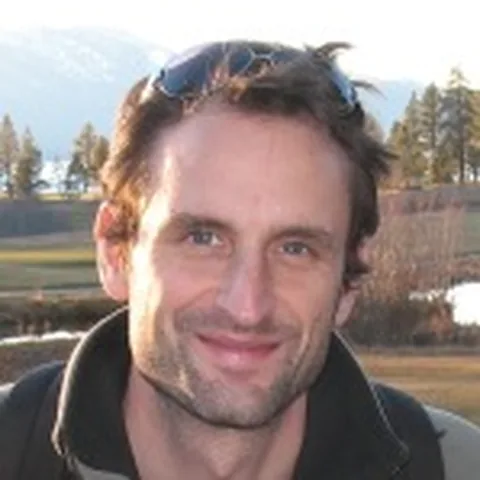
Photo: cs.toronto.edu; Home Page of Alex Graves; creator not stated. License: Not stated by source. Source: cs.toronto.edu. Cropped to a square and resized. Ask us to remove or replace this photo.
- MenaML - Speakers
- Connectionist Temporal Classification: Labelling Unsegmented Sequence Data with Recurrent Neural Networks
- Neural Turing Machines
- Differentiable neural computers
- WaveNet: A Generative Model for Raw Audio
- Asynchronous Methods for Deep Reinforcement Learning
- Bayesian Flow Networks
- Protein sequence modelling with Bayesian flow networks
- ICML 2026 Awards