Alan Bundy
Alan Bundy develops ways for computers to reason mathematically, with work on proof planning, symbolic calculation and the evolution of knowledge representations. Bundy coauthored work on algebraic rewrite rules in 1980 and wrote The Computer Modelling of Mathematical Reasoning in 1983. Later publications described incidence calculus for probabilistic reasoning and the PRESS system for solving symbolic equations. He received the IJCAI Research Excellence Award and CADE Herbrand Award in 2007. His later work studied ontology repair and evolution, including a 2018 paper on automated reasoning in the age of the internet.
- Now at
- University of Edinburgh
- Works
- 660
- Citations
- 10,002
- h-index
- 38
Publication numbers from OpenAlex, as of 14 October 2026.
Timeline
-
1980–1989
Representing mathematical reasoning
Bundy coauthored work on algebraic rewrite rules in 1980 and wrote The Computer Modelling of Mathematical Reasoning in 1983. Later publications described incidence calculus for probabilistic reasoning and the PRESS system for solving symbolic equations.
-
1990–1991
Building automated reasoning at Edinburgh
He became a professor of automated reasoning in 1990. In 1991, he and collaborators published experiments with proof plans for induction. The research connected explicit plans for a proof with automated mathematical reasoning.
-
1998–2005
Research leadership and rippling
Bundy was Edinburgh’s founding head of informatics from 1998 to 2001. In 2005, he coauthored Rippling: Meta-level Guidance for Mathematical Reasoning with David Basin, Dieter Hutter and Andrew Ireland, documenting a shared approach to guiding proofs.
-
2007–2018
Recognition and evolving representations
He received the IJCAI Research Excellence Award and CADE Herbrand Award in 2007. His later work studied ontology repair and evolution, including a 2018 paper on automated reasoning in the age of the internet.
Sources and credits
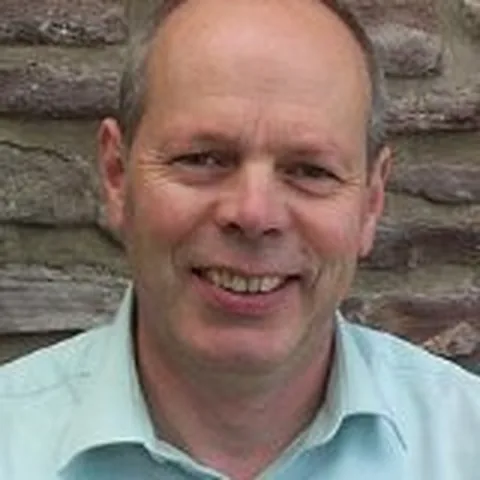
Photo: www.research.ed.ac.uk; Alan Bundy profile photograph; creator not stated. License: Not stated by source. Source: research.ed.ac.uk. Cropped to a square and resized. Ask us to remove or replace this photo.