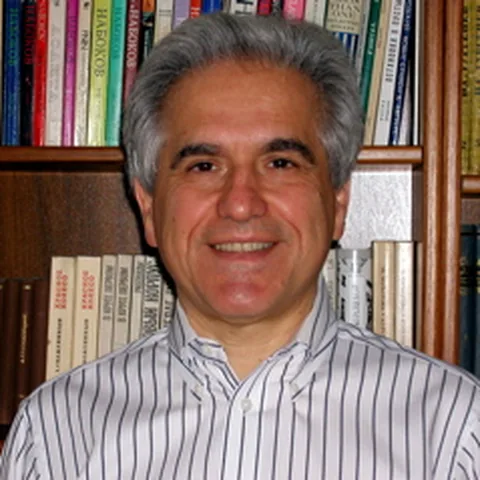
Vladimir Lifschitz
Vladimir Lifschitz researches computational logic and knowledge representation. He earned a mathematics degree in 1968 and a Steklov doctorate in 1969. With Michael Gelfond, he introduced stable-model semantics for logic programming in 1988. His later work explains answer set programming as a way to express difficult search problems through logical rules and compute solutions with specialized solvers. At UT Austin, his work covers action languages and formal reasoning with the Texas Action Group.
- Works
- 235
- Citations
- 15,786
- h-index
- 51
Publication numbers from OpenAlex, as of 14 October 2026.
Timeline
-
1968–1969
Mathematical training
Lifschitz earned a mathematics degree at Leningrad State University in 1968 and a mathematics doctorate at the Steklov Institute in 1969 under Nikolai Shanin.
-
1988
Stable models for logic programs
He coauthored The Stable Model Semantics for Logic Programming with Michael Gelfond in 1988. Lifschitz’s later introductory paper explains that this semantics provides the basis for answer set programming and its treatment of logical rules.
-
2008
Explain answer set programming
His 2008 paper describes answer set programming as declarative programming for difficult search problems. Programs express rules and solvers compute stable models as solutions. It connects nonmonotonic knowledge representation with methods developed for satisfiability solving.
-
As of October 2026
Reason about actions and their effects
The Texas Action Group works on action languages and logic programming under answer set semantics. The group aims to reason formally about the effects of actions, connecting logical foundations with descriptions of changing worlds.
Sources and credits
Photo: cs.utexas.edu; AI-Lab People - Vladimir Lifschitz; creator not stated. License: Not stated by source. Source: cs.utexas.edu. Cropped to a square and resized. Ask us to remove or replace this photo.